
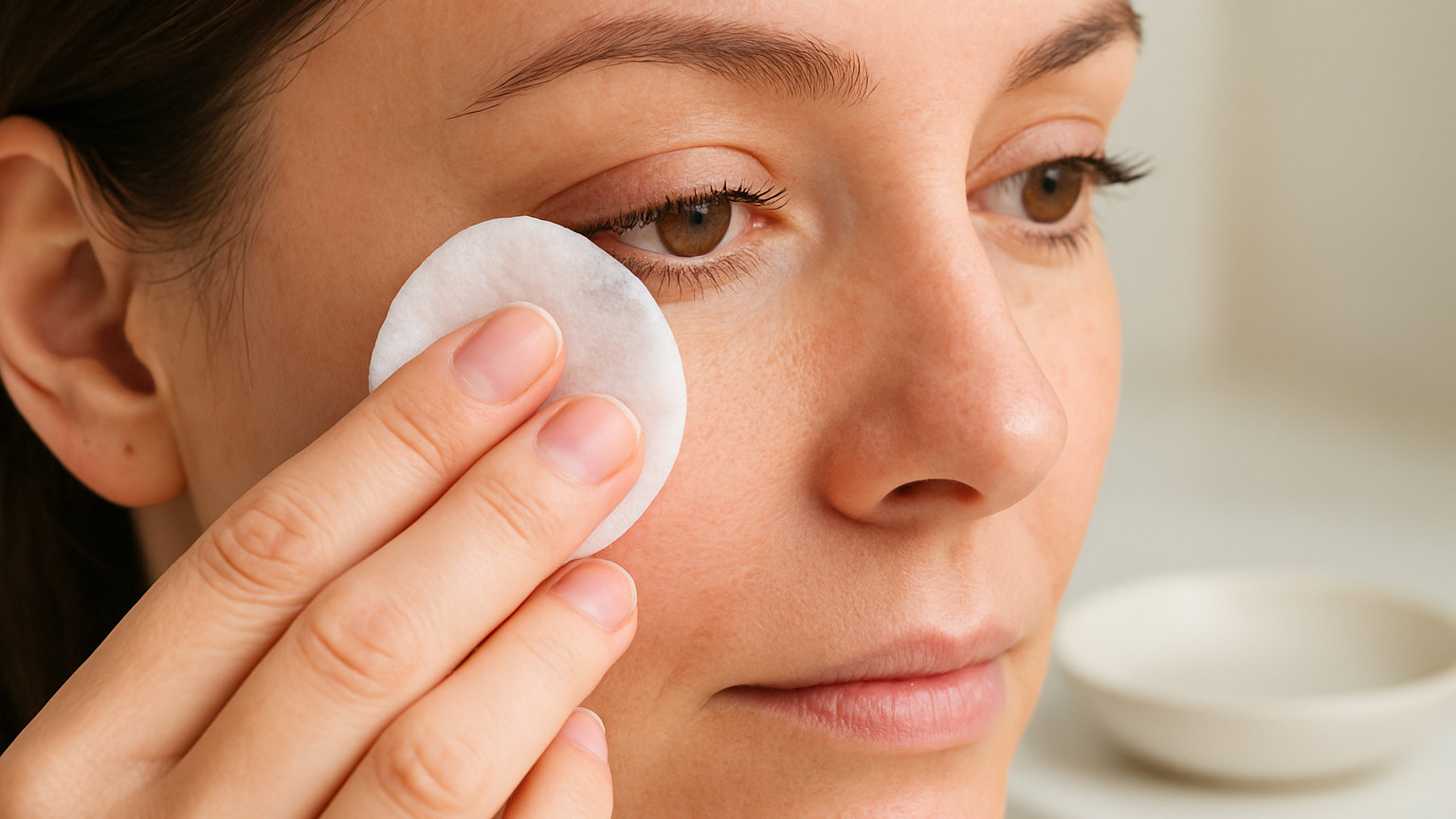
Eyelashes are short, fine and replaced every few months, which means damage shows quickly and recovers reasonably fast. Almost all of that damage comes from how makeup is removed.
How does mascara removal cause damage?
By friction and force. Rubbing at mascara with a dry cotton pad drags lashes, snapping them and pulling some out at the root.
Waterproof formulas are the main culprit, since they resist water by design and require more effort. Repeated over years, that is a significant amount of mechanical trauma.
The skin around the eye is also the thinnest on the body, so the rubbing contributes to laxity there as well.
What is the right way to remove it?
Dissolve rather than scrub. Micellar water, a bi-phase remover or a cleansing oil on a cotton pad, held against the closed eye for twenty to thirty seconds.
That waiting period does the work. Wipe downward in one direction rather than back and forth, and repeat with a fresh pad if needed.
Use a cotton bud with remover for anything left along the lash line, which is where mascara accumulates and where blepharitis starts.
Never sleep in mascara, which makes lashes brittle and increases breakage, and which leaves the lash line clogged.
Does an eyelash curler damage lashes?
Used properly, no. Used badly, yes, and the errors are specific.
Curl before mascara, never after. Mascara stiffens the lashes, and clamping them once stiff snaps them.
Do not pull or tug while clamping. Hold for a few seconds, release, and move slightly along the lash rather than forcing a single hard crimp.
Replace the rubber pad when it becomes worn or grooved, since a hard edge cuts lashes. Most curlers come with spares and almost nobody uses them.
Heated curlers are gentler in the sense of no clamping and cause heat damage if used daily.
What about mascara itself?
Ordinary mascara does not damage lashes. What causes problems is what surrounds it.
Replace mascara every three months, since the wand carries bacteria into the tube each time and eye infections are the most common consequence of expired eye makeup.
Do not pump the wand, which forces air in and dries the product. Do not share mascara.
Reserve waterproof formulas for occasions rather than daily use, since removal is where the damage happens.
Do conditioning treatments help?
Modestly, and mostly by reducing breakage rather than increasing growth.
A peptide-based lash serum, a lash conditioner, or a small amount of castor oil applied to the lash line at night all keep lashes more flexible, and flexible lashes snap less.
Castor oil has essentially no evidence for growth despite its reputation, and it does condition. Apply a tiny amount with a clean spoolie rather than a dropper, since anything running into the eye causes irritation.
Which habits break lashes?
Rubbing your eyes, which is the largest single cause and is often a hay fever problem rather than a beauty one.
Sleeping face down. Pulling off strip lashes without solvent. Picking at extensions. Removing eye makeup in the shower with facial cleanser, which is harsh on the eye area.
And using a lash curler after mascara, which is worth repeating because it is so common.
How long do lashes take to grow back?
The lash growth cycle is short: a growth phase of around four to ten weeks, then a resting phase, then shedding. A full replacement takes roughly two to three months.
That means damage recovers relatively quickly, which is encouraging, and it also means you cannot grow lashes long, since the growth phase ends before they get there.
When is lash loss worth investigating?
Losing a few lashes daily is normal. Noticeable thinning, a bald patch along the lash line, or losing lashes from both eyes over weeks is not.
Causes include blepharitis, thyroid disease, alopecia areata, trichotillomania and reactions to eye products. A GP appointment is reasonable, particularly if brows are thinning too.


