
Men's brow grooming has a different aim from shaping: the goal is tidy rather than redesigned. Almost everything that goes wrong comes from removing hair that should have been trimmed.
What actually needs doing?
Three things, in most cases. Trimming hairs that have grown noticeably longer than the rest. Removing hair between the brows. And tidying obvious strays well outside the natural line.
That is the whole job. Anything beyond it starts to redesign the brow, which is where results begin to look done rather than tidy.
How do you trim rather than pluck?
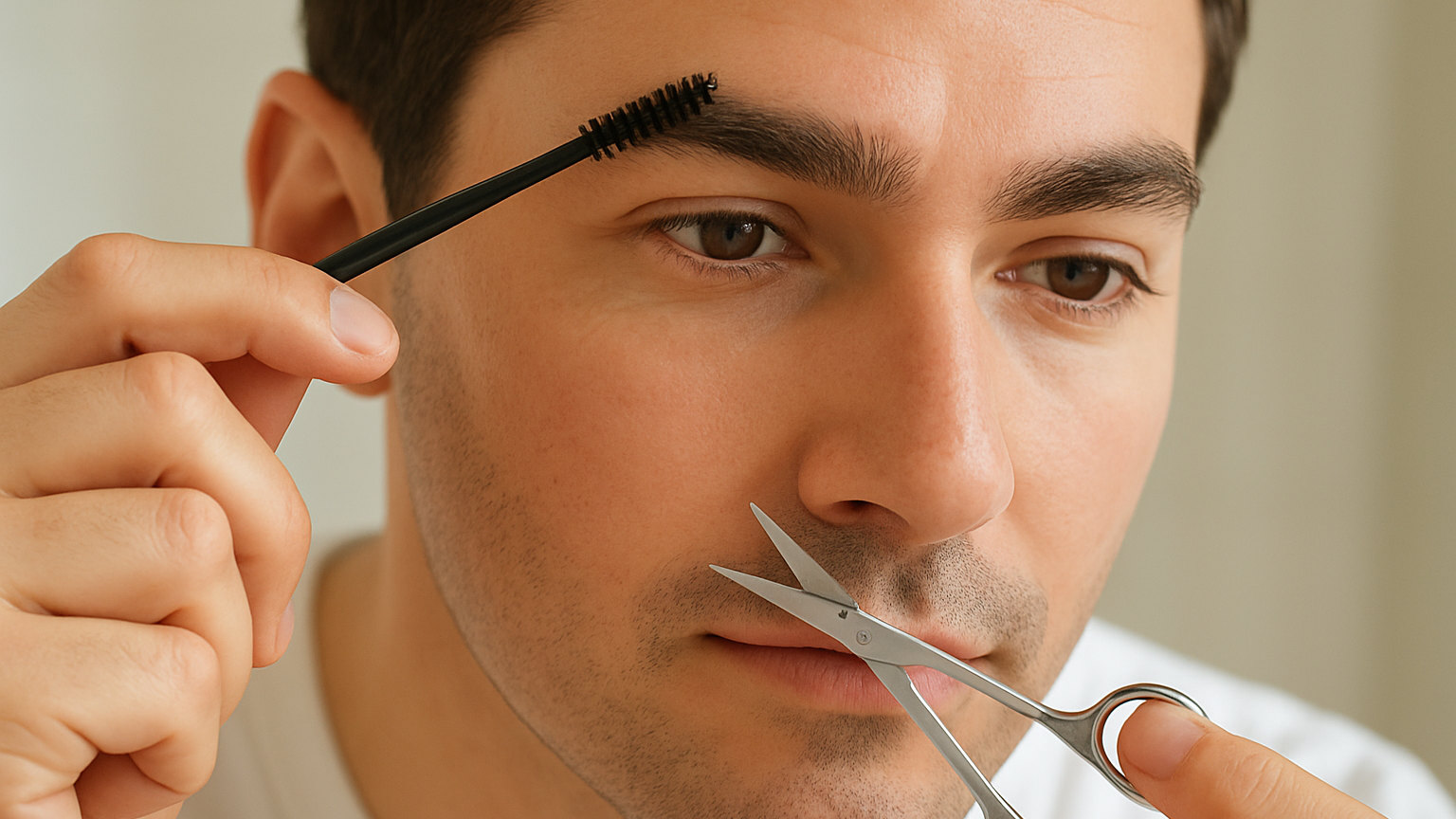
Brush the brows upward with a spoolie or a small comb, which lifts the long hairs above the natural top line.
Trim only what protrudes, using small scissors, cutting a little at a time. Then brush downward and repeat for anything hanging below the line.
Trimming preserves density, which is the point. Plucking those same hairs thins the brow permanently over years, and brow hairs regrow slowly.
A trimmer with a very short guard works and gives less control than scissors.
What about a monobrow?
The hair between the brows is the one area where removal rather than trimming is generally appropriate.
Find the natural start point by holding a pencil vertically against the side of the nose. Hair inside that line can come off; hair outside it should stay.
Tweezing is the most controlled method. A brow razor or a small trimmer works and regrows within days. Threading and waxing both work and remove more than intended if you are not specific.
Removing too much between the brows is the most common error and makes the eyes look further apart.
How much should come off?
Considerably less than you think on a first attempt. Bushy brows read as tidy once trimmed; thinned brows read as done.
Work in good natural light, remove a few hairs, and step back from the mirror. Almost all over-plucking happens close up in magnifying light.
Do not attempt to make the two match, since brows are naturally asymmetrical and forcing symmetry costs density.
What about the area above the brow?
Leave it alone, apart from genuinely isolated strays well above the line.
The top edge defines thickness, and removing from above is how brows become permanently thin. Any shaping should come from underneath, and even then sparingly.
How often should you do it?
Trimming every three to four weeks. Tidying between the brows every two to three weeks, depending on growth.
Little and often is safer than an occasional major tidy, which is when people take too much off.
Should you go to a barber?
Many barbers include brow tidying as part of a cut, and it is worth asking for specifically rather than assuming.
Being clear about what you want helps: tidied and trimmed rather than shaped is a useful phrase, since some will otherwise create a defined line.
Threading at a salon is precise and quick, and worth one visit to establish a shape you can then maintain yourself.
What about brows that have thinned?
Thinning with age is common in men too, particularly at the outer third, and the same causes apply as elsewhere.
Stop removing anything and let them recover for three months. A tinted brow gel or a light powder fills gaps if you want it to.
And loss of the outer third specifically, or sudden patchy loss, is worth a GP appointment rather than a grooming solution, since thyroid disease and alopecia areata both present that way.
What tools are worth having?
Very few. A pair of small scissors, a spoolie or a fine comb, and a decent pair of slant-tipped tweezers covers everything described here.
A dedicated brow trimmer is useful if scissors feel awkward, though it removes more than intended if the guard slips. What is not worth buying is any of the stencils, shaping kits and razors marketed for the purpose, since the aim is to trim what you have rather than to impose a shape on it.


