
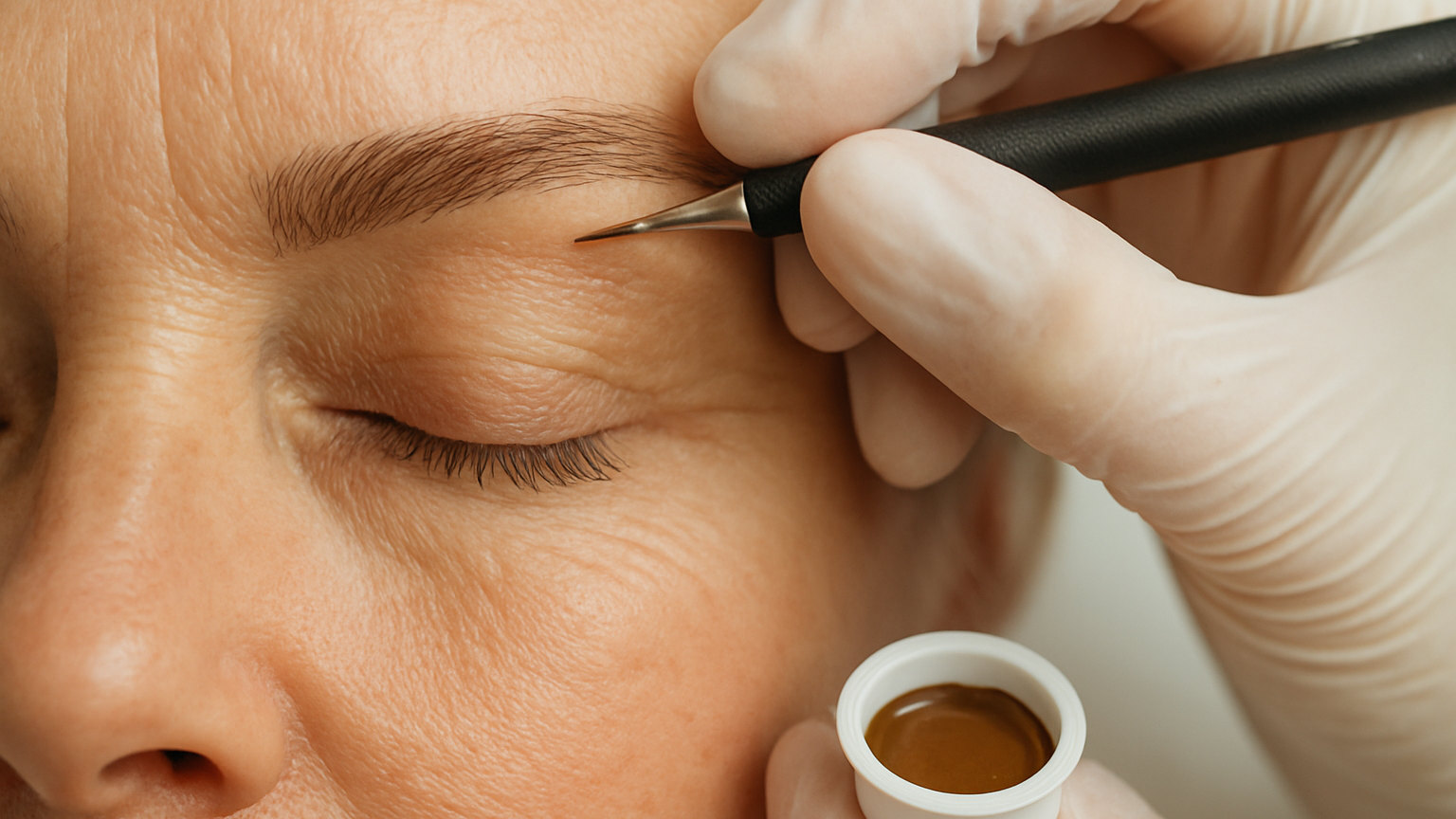
Microblading deposits pigment into the skin with a hand-held blade of fine needles, creating strokes that mimic individual brow hairs. It is a tattoo, applied more superficially than a conventional one, and that framing is the most useful thing to hold onto before booking.
How does it differ from other brow tattooing?
Microblading uses a manual tool to cut fine strokes and works best on normal to dry skin with reasonable existing brow hair.
Powder or ombre brows use a machine to deposit pigment in a soft shaded effect. This suits oily skin considerably better, since crisp strokes blur and fade unevenly on oily skin.
Nano brows use a machine with a single fine needle to create strokes, combining the look of microblading with the durability of machine work.
A good practitioner will recommend based on your skin type rather than offering one technique for everyone.
How long does it last?
Twelve to eighteen months for microblading, and up to two or three years for powder brows, before fading to the point of needing redoing.
A top-up appointment four to eight weeks after the first is part of the process rather than an extra, since pigment retention is uneven as it heals.
Annual colour boosts are typical thereafter. Oily skin, sun exposure, exfoliating acids and retinoids all shorten it.
What does the process involve?
A consultation and patch test for pigment allergy, at least twenty-four to forty-eight hours beforehand.
At the appointment, the shape is drawn on and agreed before anything permanent happens. This is the moment to speak up, since it is the last easily reversible point.
Numbing cream is applied, then the strokes are made and pigment worked in. It takes two to three hours and is generally described as uncomfortable rather than painful.
What does healing look like?
Considerably darker and sharper for the first week, which alarms people who were not warned. It settles substantially.
Days three to seven bring scabbing and flaking, and the brows look patchy. Days seven to fourteen they can look too light, as the healed pigment sits under a new layer of skin.
The true colour appears at four to six weeks, which is why the top-up is scheduled then.
Do not pick the scabs, which pulls pigment out and causes patchy results.
What is the aftercare?
Keep them dry for the first week: no washing over them, no steam, no swimming, no heavy sweating.
Apply whatever balm the practitioner provides, sparingly. Avoid makeup on the brows, sun exposure, and any exfoliating product.
Long term, sunscreen on the brows prevents premature fading and colour shift, and keeping retinoids and acids away from them extends the result considerably.
What are the risks?
Infection, since the skin is being broken. Allergic reaction to the pigment, which is why patch testing matters.
Colour shifting over time, most commonly to grey, blue or orange as pigment breaks down. Modern pigments are better than older ones and it still happens.
Scarring, particularly if the strokes were made too deep. Keloid formation in susceptible people.
And a shape or colour you do not like, which is the most common regret and the hardest to fix.
How do you choose a practitioner?
This matters more than anything else in this article. Look for local authority registration and insurance, which are legal requirements for skin piercing treatments in the UK.
Ask to see healed results rather than freshly done photographs, which look very different. Ask specifically for healed work on skin like yours.
Be wary of unusually low prices and of anyone who does not patch test, does not draw the shape first, or promises a result that lasts forever.
Can it be removed?
Partially and with difficulty. Saline removal and laser tattoo removal both work to a degree and both take multiple sessions.
Laser can cause pigment to shift colour rather than clear, particularly with older or unusual pigments, and it must be done by someone experienced with cosmetic tattoo specifically.
The honest position is that removal is slow, expensive and imperfect, which is the strongest argument for choosing carefully in the first place.


