
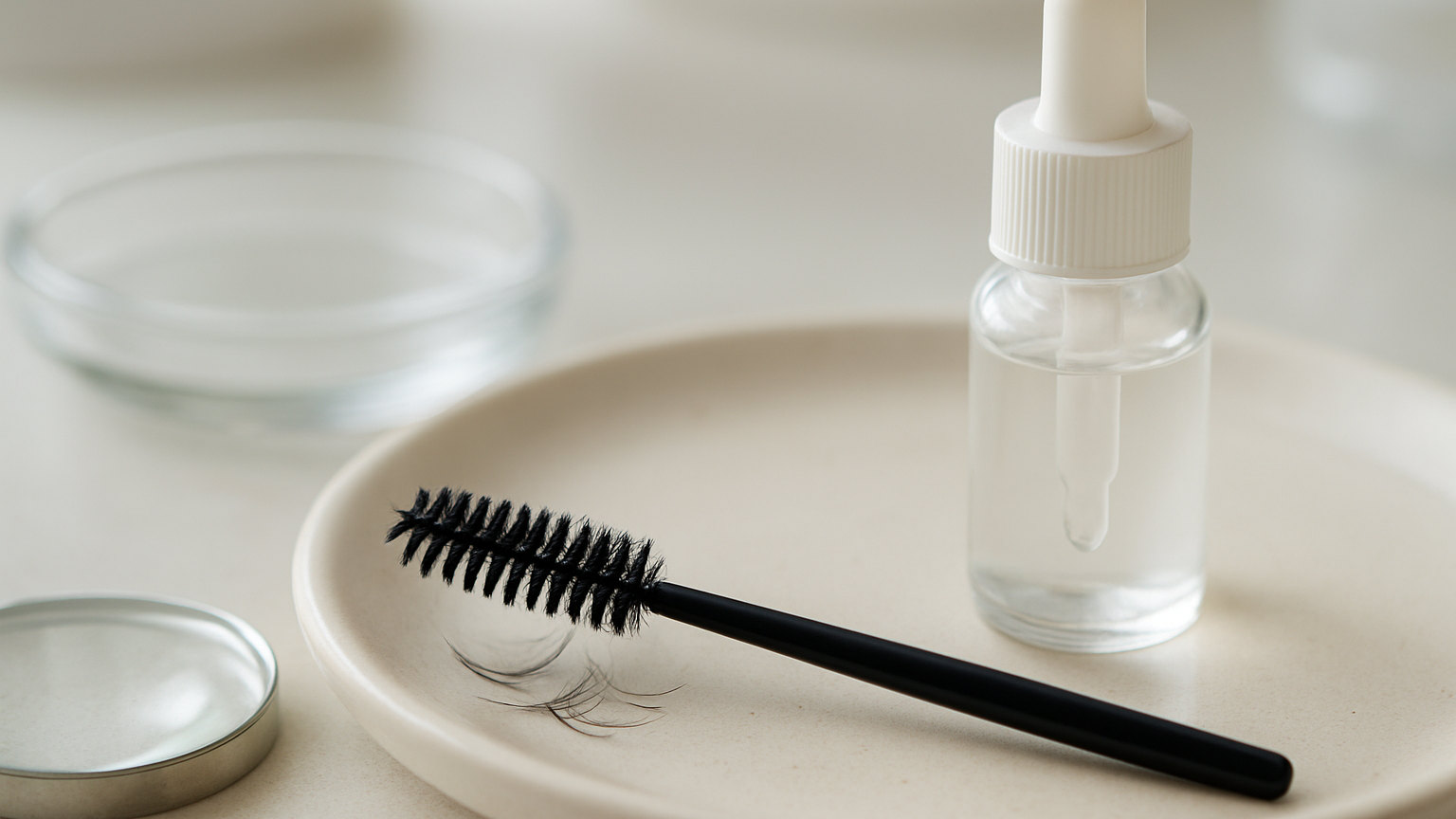
You have around 90 to 160 lashes on each upper lid and 70 to 80 on each lower, and each is replaced every two to three months. Losing a few a day is entirely normal. Noticeable thinning is not, and the causes are a manageable list.
How much loss is normal?
One to five lashes a day, which mostly go unnoticed. Because the growth cycle is short, roughly a tenth of lashes are in the resting phase at any time.
What is not normal is visible thinning, gaps along the lash line, both eyes affected over a few weeks, or lashes that come away in a clump when you touch them.
What are the mechanical causes?
These are the most common and the easiest to fix.
Rubbing the eyes, which is frequently a hay fever or dry eye problem rather than a habit. Removing mascara by scrubbing rather than dissolving. Sleeping in mascara.
Using a lash curler after mascara, which snaps stiffened lashes. A curler with a worn rubber pad.
Eyelash extensions that were too heavy or too long, or removed by pulling. Strip lashes pulled off without solvent.
What are the medical causes?
Blepharitis, inflammation of the lid margin, which is very common and frequently undiagnosed. It produces crusting at the lash line, gritty irritation and gradual lash loss, and it responds to lid hygiene.
Thyroid disease, particularly an underactive thyroid, which causes loss of lashes and classically the outer third of the eyebrows.
Alopecia areata, which can affect lashes and brows alone. Trichotillomania, a compulsive pulling condition that frequently targets lashes.
Iron deficiency and other nutritional deficiencies. Some medications, including chemotherapy, retinoids and some others.
Rarely, a lid tumour, which is why any loss confined to one small area with a lump or a non-healing sore needs assessment.
What is blepharitis and how do you treat it?
Inflammation of the eyelid margins, either from bacterial overgrowth or blocked oil glands. It is chronic and common, and it is the most frequently missed cause of lash problems.
Signs are crusting at the base of the lashes, redness, itching, gritty eyes, and lashes that fall or grow in odd directions.
Treatment is lid hygiene: warm compresses for five to ten minutes, then gently cleaning the lash line with a dedicated lid wipe or diluted baby shampoo on a cotton bud, daily.
It is managed rather than cured, and consistent daily hygiene keeps it settled.
Can products cause it?
Yes. Contact dermatitis from eye makeup, particularly mascara, eyeliner and eyeshadow, produces itching, swelling and lash loss.
Lash serums containing prostaglandin analogues can cause irritation. Lash extension adhesive is a common allergen.
Old mascara harbours bacteria, which is why replacing it every three months matters.
If loss began within weeks of a new product, stop it for a fortnight and see what happens.
Do they grow back?
Usually yes, over two to three months, provided the follicle is intact and the cause has been addressed.
Loss from a burn, a deep injury or long-standing scarring inflammation may be permanent. Loss from repeated extension damage over years can be permanent.
Regrowth is often finer at first and thickens over subsequent cycles.
What helps while waiting?
Stop whatever is causing it, which is the main intervention. Give the area a break from extensions, curlers and heavy makeup.
Treat blepharitis if present. Condition with a peptide serum or a small amount of castor oil at the lash line.
Bimatoprost on prescription is the only treatment with strong evidence for increasing lash growth, and it comes with a permanent iris pigmentation risk worth discussing with a prescriber.
When should you see a GP?
Sudden or patchy loss. Loss from both eyes over a few weeks. Loss alongside brow thinning, which points toward thyroid disease.
Persistent crusting, redness or a lump on the lid. Any non-healing sore. Loss accompanied by hair loss elsewhere. And loss with no obvious mechanical cause, which is worth investigating rather than waiting out.


