
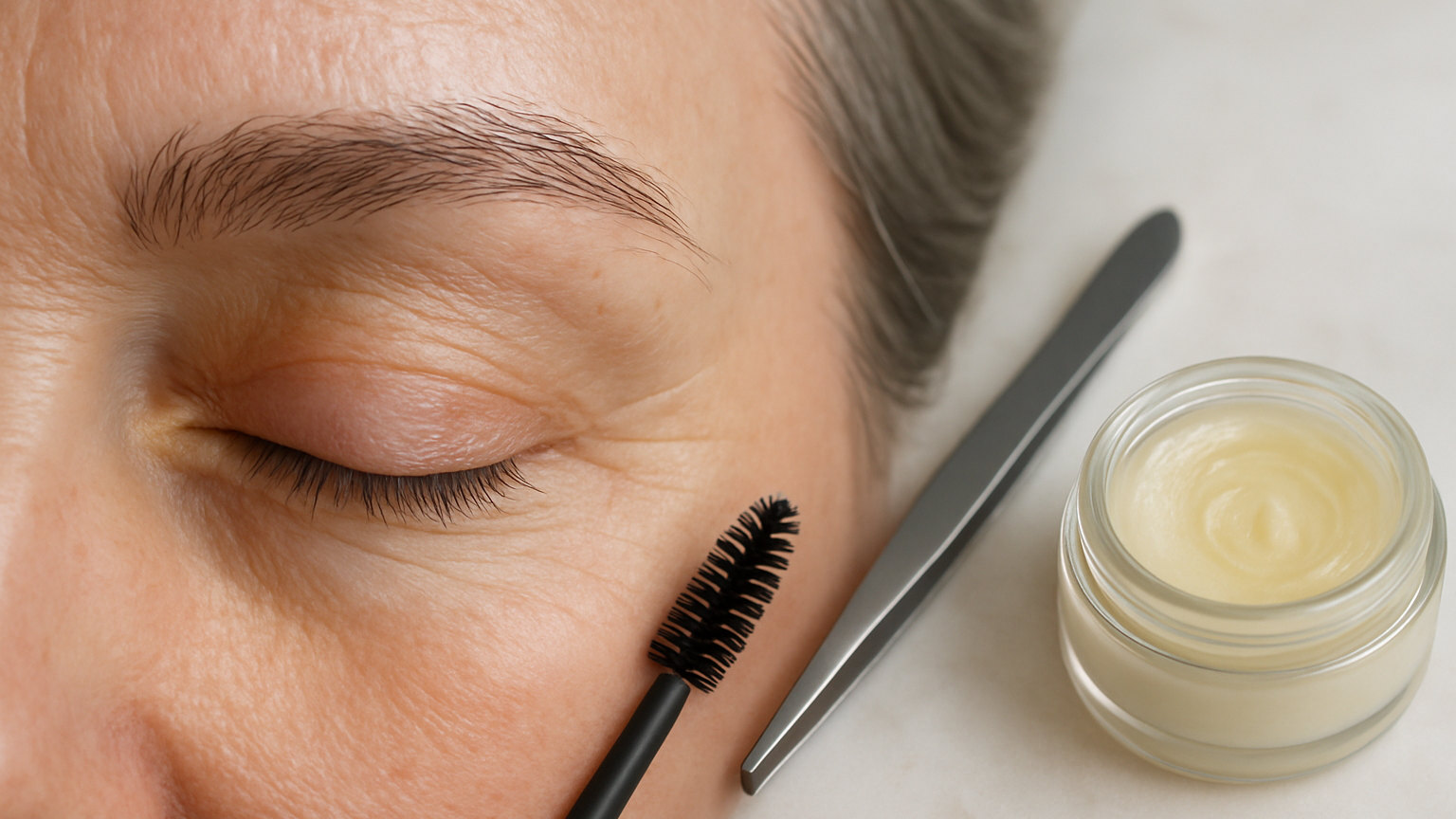
Brows change in four ways with age: they thin, they lose pigment, individual hairs become coarser and grow in unexpected directions, and the shape drops as the surrounding skin does. Only some of that is caused by plucking.
Why do they thin?
The same process that thins scalp hair. Follicle density reduces gradually across adult life, growth phases shorten, and each hair becomes finer in diameter.
Hormonal change accelerates it. Falling oestrogen after menopause affects hair follicles generally, and brows are among the first places it shows.
Decades of plucking, waxing and threading contribute genuinely, since repeated follicle trauma can eventually cause scarring. Both causes are usually present, and separating them is not possible after the fact.
Why do the remaining hairs get coarser?
This is the change people find most puzzling: brows thin overall while individual hairs become thick, wiry and unusually long.
Those are terminal hairs responding to a shifting balance between oestrogen and androgens. As oestrogen falls, androgen-sensitive follicles on the face respond by producing coarser hair, which is the same process that produces chin hairs.
Brow follicles also lose the regulation that keeps growth phases short, so occasional hairs grow considerably longer than the rest.
Why do they go grey?
Melanocytes at the base of each follicle stop producing pigment, exactly as they do in scalp hair. Once a follicle stops, every hair it produces afterwards is white.
Grey brow hairs are also often coarser and more wiry, since the cells producing pigment also influence the structure of the shaft.
They catch the light differently, which is why sparse grey brows can look thinner than they are.
Why does the shape change?
The skin and underlying tissue of the upper face lose volume and elasticity, and the brow sits on that structure.
The tail typically drops first, which can make the eyes look heavier or more tired. The arch flattens as the supporting tissue changes.
This is a structural change rather than a hair one, which is why shaping alone does not fully address it.
What should you change about shaping?
Take less off. A brow that suited you at twenty-five with a defined arch will look thin at fifty with the same amount removed.
Let the tail sit slightly higher rather than following the drop, which lifts the eye visually.
Stop removing hair from above the brow entirely, since thickness is the scarce commodity now.
Trim the long wiry hairs rather than plucking them, which preserves the follicle and the density.
How should you fill them?
Lighter than you think. Grey and thinning brows are frequently over-corrected with a dark pencil, which reads as harsh against softer colouring.
Taupe and soft grey-brown shades suit grey hair better than trying to match an original colour. Powder is more forgiving than pencil on sparse brows.
A tinted brow gel alone is often enough and is the lightest-touch option.
What treatments help?
Tinting, which darkens grey hairs and makes existing brows read as fuller. Every three to four weeks.
Brow lamination, which redirects hairs to cover gaps, though it suits coarser brows better than fragile thinning ones.
Microblading or powder brows, which suit this situation well since they add the appearance of density that no product can.
Bimatoprost on prescription, which improves growth in follicles that still exist.
When is it worth investigating?
If the outer third has thinned specifically, which is a recognised sign of an underactive thyroid.
If loss is sudden, patchy or accompanied by scalp hair loss. If there is redness, scaling or scarring, particularly a receding hairline alongside, which can indicate frontal fibrosing alopecia and needs early diagnosis.
Do they change in other ways?
Two smaller changes people notice and rarely connect. The skin under the brow becomes thinner and drier, so tinting and waxing can irritate where they never used to, and a patch test is worth doing again even with a familiar salon.
Brow hairs also become more brittle, which means lamination and repeated tinting carry more risk of breakage than they did a decade earlier. The treatments that suited your brows at thirty may not suit the same brows at fifty, and that is a change in the hair rather than in the technician.


