
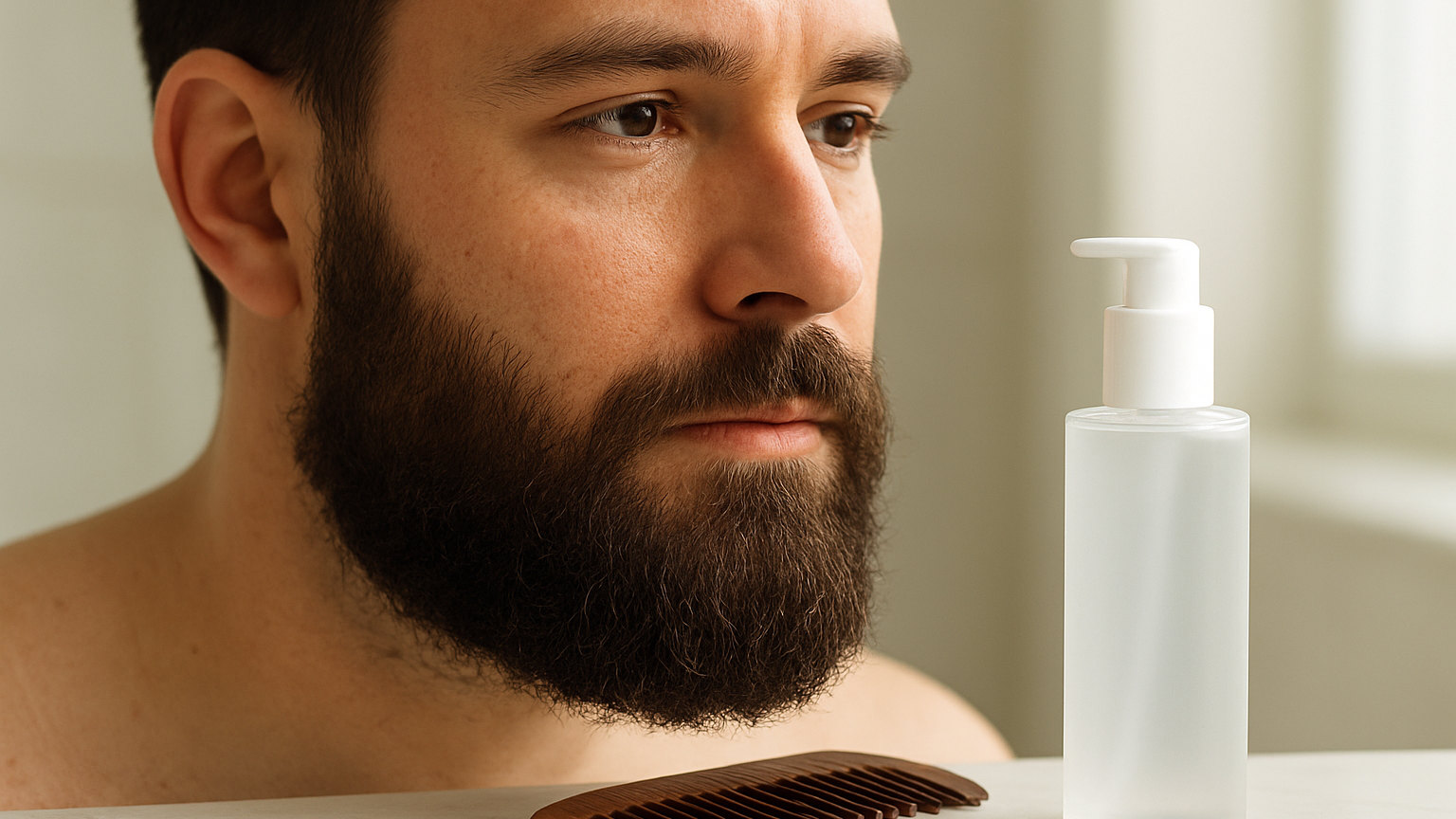
Growing a beard changes the environment of the skin beneath it. It becomes warmer, more humid, less easily cleaned and less easily moisturised, and it stops being shaved. Some of those changes help and some cause problems.
What are the benefits?
No shaving, which removes the main cause of irritation, razor burn and ingrown hairs on the face. For anyone with pseudofolliculitis barbae or chronic razor burn, this is a substantial improvement.
Some ultraviolet protection. A full beard has been estimated to block a meaningful proportion of ultraviolet radiation reaching the skin beneath, which may reduce photoageing on the covered area.
Some protection from wind and cold, and a modest barrier against airborne particulates.
Does a beard cause acne?
Not by itself, and it can contribute. The skin underneath is warmer and more occluded, and sebum, dead skin and product residue accumulate more readily.
The most common culprits are heavy beard oils and balms, particularly coconut-based ones, which are comedogenic on facial skin. Products designed for the hair are frequently applied to skin that does not suit them.
Infrequent washing contributes. So does touching and stroking the beard, which transfers oil and bacteria from the hands.
If spots appear along the jawline or under the beard after starting a new product, that product is the first suspect.
Are beards unhygienic?
No more than any other hair, and the studies that produced alarming headlines were widely misreported.
Beards carry bacteria because all skin and hair carry bacteria. Comparisons finding beards to have more bacteria than dog fur were small, poorly designed and not intended as public health guidance.
A beard washed regularly is not a hygiene problem. One that is never washed accumulates food, skin and product, which is a grooming issue rather than a health scandal.
What about sun protection?
Partial and unreliable. A dense beard blocks a reasonable proportion of ultraviolet light; a sparse one blocks considerably less.
Crucially, the areas around it are unprotected: the cheekbones above the beard line, the nose, the forehead and the ears. Those are common sites for sun damage and skin cancer.
Sunscreen still applies. Apply it to the exposed skin and along the parting of the beard if it is thin enough to see scalp-like skin through.
What conditions are more common under a beard?
Seborrhoeic dermatitis, which produces flaking and itching, since the warm oily environment suits the yeast involved. It responds to antifungal shampoo used on the beard.
Folliculitis, particularly at the neckline where shaving continues.
Tinea barbae, a fungal infection of the beard area producing scaly patches and hair loss, which is uncommon and needs antifungal treatment.
And ingrown hairs at the edges where trimming and shaving happen.
Does skincare change?
Yes, and most beard routines ignore it. The skin underneath still needs cleansing and moisturising, and it is harder to reach.
Use a cleanser worked down to the skin rather than only over the beard. Apply moisturiser or oil with fingertips at skin level.
Continue any facial routine on the exposed areas. Anyone using retinoids or acids should apply them carefully around the beard rather than through it.
Does it affect ageing?
Possibly, modestly, on the covered area. Reduced ultraviolet exposure is the main plausible mechanism, and it has not been well quantified.
The uncovered upper face ages at its normal rate, which can produce a visible difference over decades. That is an argument for sunscreen on the exposed areas rather than for growing a beard.
What is the practical summary?
A beard is neutral to positive for skin if it is washed regularly, if the products used on it suit facial skin, and if the skin underneath is treated as skin rather than as a base for hair.
Most beard-related skin problems come from doing none of those three things.
Does it affect how masks and equipment fit?
Worth knowing for anyone whose work requires it. Tight-fitting respirators and some medical masks need a seal against the skin, and facial hair crossing that seal line prevents it working as intended.
Workplaces requiring fit-tested respirators generally require a clean-shaven seal area, and that is a genuine safety requirement rather than a preference. Styles that keep hair away from the seal, such as a moustache or a soul patch, are usually acceptable, and it is worth checking the specific policy rather than assuming.


