
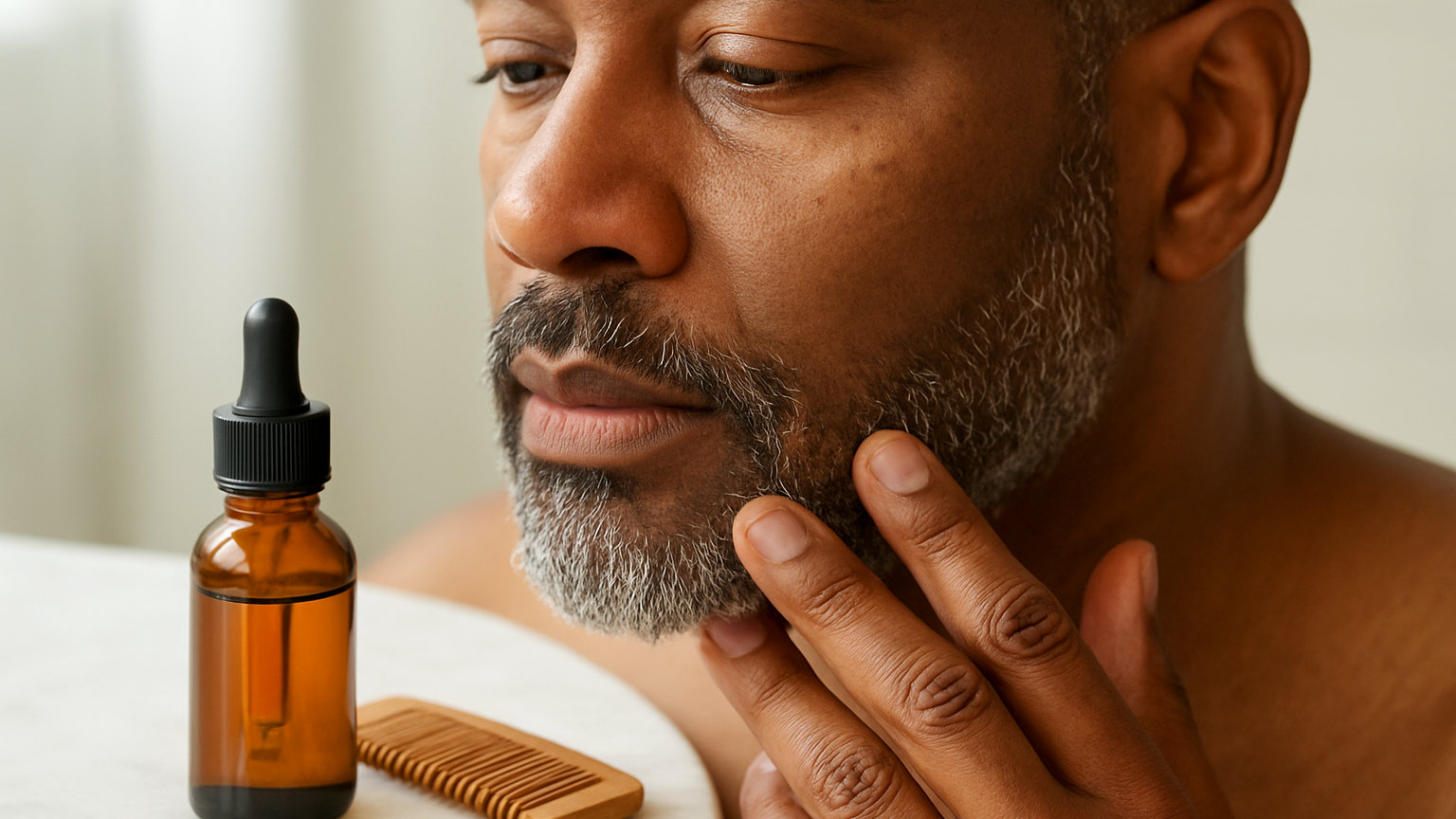
Beard oil is the most-sold product in this category and is marketed on the one thing it does not do. Separating the three claims makes it easy to judge whether it is worth having.
Does it stimulate growth?
No. Beard oil sits on the skin and hair, and growth happens at the follicle under hormonal and genetic control.
No topical oil has been shown to stimulate facial hair growth. Products marketed as beard growth oil are conditioning oils with a claim on the label, sometimes with added essential oils that have no meaningful evidence behind them.
The only topical with reasonable evidence for beard growth is minoxidil, which is a medication used off-label rather than a cosmetic oil.
What does it genuinely do?
Moisturises the skin underneath, which is its most valuable function and the one least often mentioned.
Skin beneath a beard is difficult to reach with ordinary moisturiser, dries out from washing, and is where itching and flaking originate. An oil applied down to the skin addresses that directly.
It also conditions the hair, softening a coarse beard and making it more manageable, and it reduces frizz and flyaways. Both of those are real and both are cosmetic.
Which ingredients matter?
Carrier oils do the work. Jojoba is the standout, since it is structurally similar to human sebum, absorbs well and rarely causes problems. Argan is light and conditioning. Grapeseed and sweet almond are light and inexpensive.
Coconut oil penetrates the shaft and is comedogenic on facial skin for many people, which makes it a poor choice for an area prone to spots.
Essential oils provide fragrance and are the most common cause of irritation. Tea tree and cedarwood appear frequently and neither has evidence for growth.
Vitamin E is often included and acts mainly as an antioxidant preservative for the oil rather than doing much for the beard.
How should you apply it?
To clean, damp skin after washing, which is when it absorbs best.
Three to five drops for a short beard, six to ten for a longer one. Warm between the palms, then work fingers down through the hair to the skin and massage there before smoothing over the surface.
Applying it only to the hair is the most common mistake, since the skin is where it does most good.
Once daily is usually enough. Twice in cold weather or for very dry skin.
When should you start using it?
From around week two or three of growth, which is when the itchy stage arrives and when the skin underneath starts drying out.
On stubble it is unnecessary, since a facial moisturiser reaches the skin easily. On a long beard it becomes more important, since the skin is fully covered.
Should you use oil or balm?
Oil for conditioning and skin care. Balm for the same plus light hold and shape.
A short to medium beard usually needs only oil. A longer or unrulier beard benefits from balm on top, applied after the oil.
Using both is reasonable; using balm alone means the skin gets less benefit, since balms sit more on the surface.
Can it cause problems?
Yes, in two ways. Heavy oils on skin prone to acne can contribute to congestion, particularly coconut-based formulations.
And oil feeds the malassezia yeast involved in seborrhoeic dermatitis, so anyone with a flaking, itchy beard may find that oil worsens it rather than helping. In that case treat the flaking with an antifungal wash first and reintroduce oil afterwards, or use a lighter formulation.
Is an expensive one better?
Rarely. The carrier oils doing the work cost very little, and the price difference at the top of the market is fragrance, packaging and branding.
What is worth paying attention to is the ingredient list. A short list of light carrier oils with minimal fragrance is a better product than an elaborate blend, particularly for anyone with sensitive skin.


