
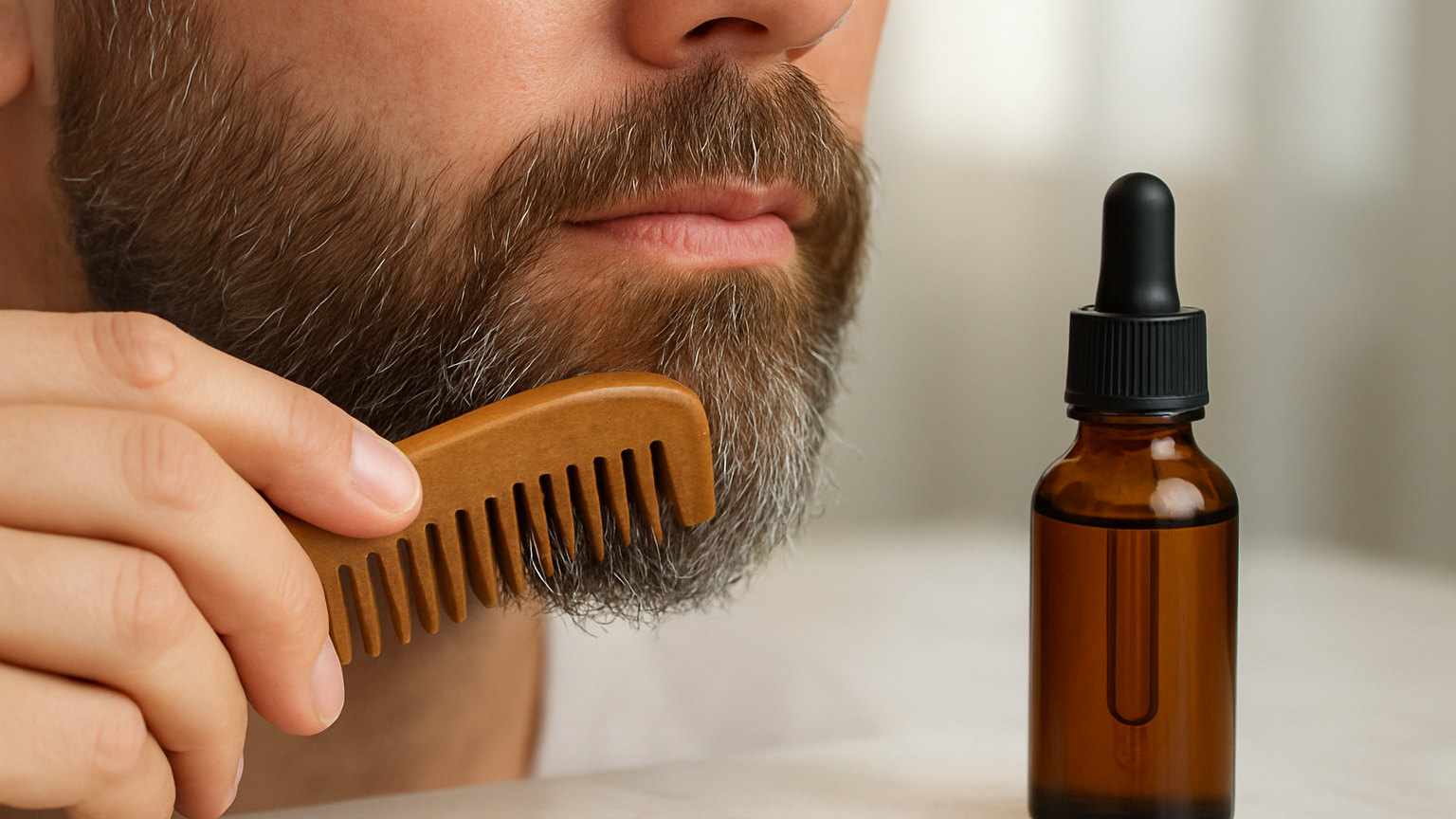
Most beard problems are skin problems. The hair sits on facial skin that is now covered, less easily cleaned and less easily moisturised, and the routine that matters most is the one addressing that.
What should you wash it with?
Not ordinary shampoo, which is formulated for a scalp producing considerably more sebum and is too stripping for facial skin.
A dedicated beard wash, or a gentle facial cleanser worked through the beard, or a mild conditioner-based wash for longer beards.
Frequency depends on length and lifestyle. Two or three times a week for most, daily if you work somewhere dusty or greasy. Daily stripping washing causes dryness and itching.
Rinse thoroughly, since residue trapped in a beard is a common cause of flaking and irritation.
Does it need conditioning?
Beyond stubble length, yes. Beard hair is coarser and drier than scalp hair, and sebum struggles to travel along a curly shaft.
A beard conditioner or a small amount of ordinary conditioner on longer beards, rinsed out. For shorter beards, oil after washing does the same job.
Conditioning softens the hair, which reduces the scratchiness that affects both the wearer and anyone who comes near them.
What does beard oil actually do?
Two things: it conditions the hair, making it softer and more manageable, and it moisturises the skin underneath, which is the more important function.
It does not stimulate growth, despite the marketing. What it does is prevent the dryness and flaking that make beards uncomfortable.
Apply to damp skin after washing, a few drops warmed between the palms, worked down to the skin rather than only over the surface of the hair. Three to five drops for a short beard, more for a long one.
What is the difference between oil, balm and butter?
Oil is lightest, absorbs and conditions without hold. It suits all lengths and is the essential one.
Balm contains wax and butter alongside oil, so it conditions and provides light hold and shape. It suits medium to long beards and unruly growth.
Beard butter sits between the two, heavier than oil and softer than balm, offering conditioning with minimal hold.
Wax is for moustache shaping rather than beard conditioning.
What about the skin underneath?
This is where most problems originate and where most routines stop.
Dead skin accumulates under a beard and produces beard dandruff. The skin dries out because washing strips it and moisturiser rarely reaches it.
Applying oil or moisturiser to the skin rather than the hair addresses it. For flaking with redness, an antifungal shampoo used on the beard once or twice a week treats the seborrhoeic dermatitis that causes most of it.
Should you brush or comb it?
Both, for different purposes. A comb detangles and is used for shaping and for longer beards.
A boar bristle brush distributes oil from the skin through the hair, exfoliates the skin underneath, and trains the growth direction. Daily brushing genuinely improves how a beard sits, particularly one that grows in several directions.
Brush downward from the cheeks and outward from the neck, and do it after applying oil so the oil distributes.
How often should it be trimmed?
Every two to four weeks for shape, even if you are growing it longer. Trimming the neckline and cheek line keeps a growing beard looking intentional.
Trim the ends every four to six weeks to remove split ends, since beard hair splits like any other hair.
What is worth skipping?
Beard growth supplements and serums, which do not work. Beard shampoos at premium prices, which are conditioning washes with a beard on the label.
Beard straighteners used frequently, which cause the same heat damage as any other iron on hair that is already coarse and dry.
And any product applied only to the hair while the skin underneath is ignored, which is the most common way a beard routine fails.
Does a beard need washing after meals?
Rinsing, sometimes, and not with product. Food and drink genuinely do get trapped in a beard of any real length, and a rinse with water and a quick comb through deals with most of it.
What is worth avoiding is washing with cleanser every time, which strips the skin. Keeping a comb to hand is more useful than another product, and drying the beard afterwards matters, since a damp beard left to dry slowly is one of the conditions the yeast behind flaking prefers.


