
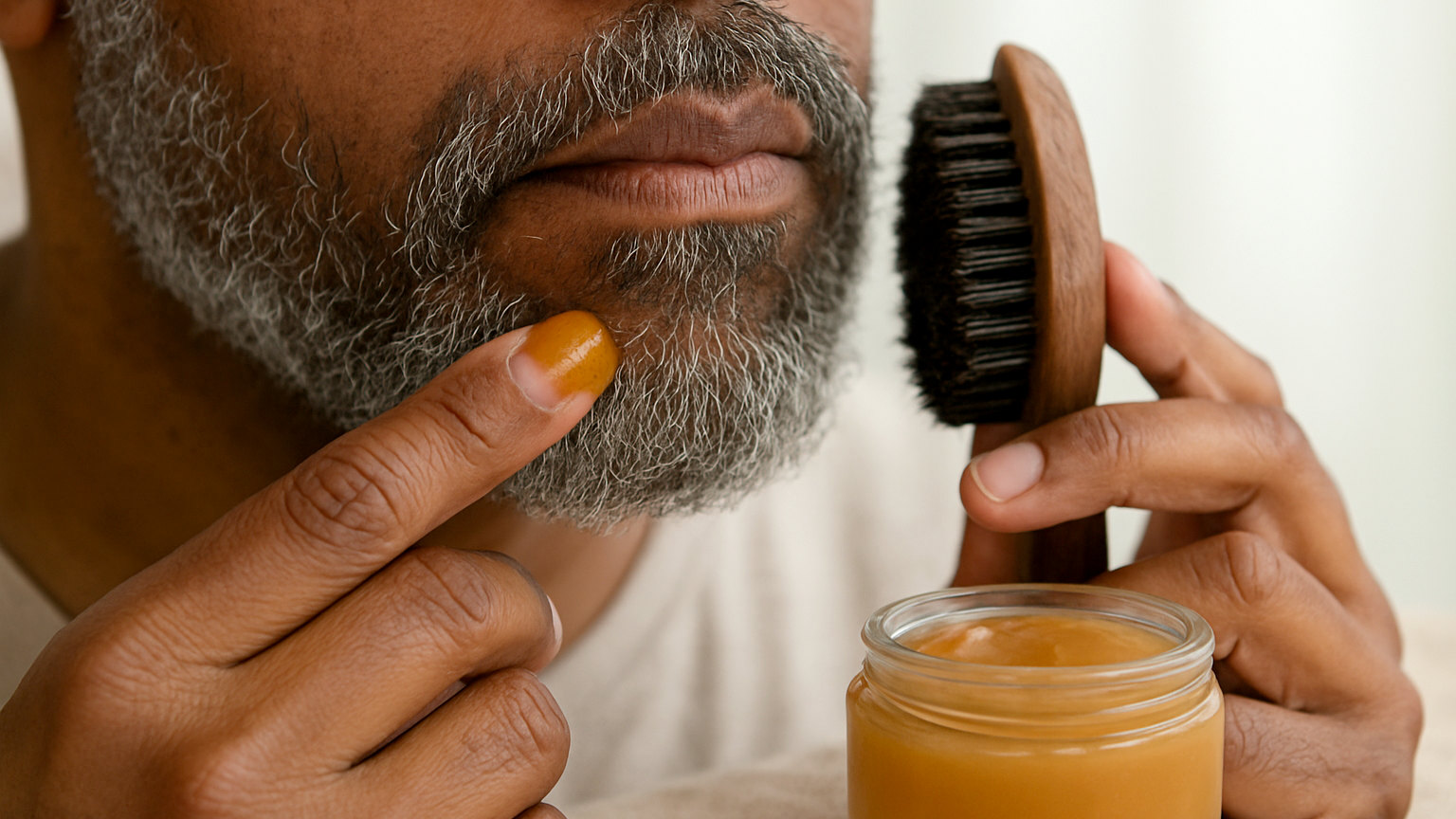
Beard hair is naturally coarser than scalp hair, with a thicker shaft and often a more oval cross-section, which makes it wiry. It cannot be made into scalp hair, and it can be made considerably softer.
Why is beard hair so coarse?
Because the follicles are androgen-driven and produce terminal hair with a larger diameter than scalp hair. The shaft is thicker and more rigid.
The cross-section is frequently oval rather than round, which produces the curl and kink that makes a beard feel scratchy against skin.
Sebum also struggles to travel along a curved shaft, so beard hair is drier than scalp hair, and dry hair is stiffer.
What softens it most?
Moisture, applied consistently. A dry beard is a stiff beard, and most of the improvement available comes from conditioning rather than from any specialist product.
Beard oil daily, worked down to the skin as well as through the hair. Beard conditioner or a beard butter for longer growth.
A weekly deep conditioning treatment for coarse beards, using an ordinary hair conditioner left on for several minutes then rinsed.
Expect four to six weeks of consistent conditioning before the difference is obvious.
Does washing affect it?
Considerably, and usually for the worse. Ordinary shampoo strips the oils that soften the hair, and washing daily with it produces a noticeably stiffer beard.
Use a beard wash or a gentle cleanser two or three times a week rather than daily, and follow with oil while the beard is still damp.
Rinse with lukewarm rather than hot water, which strips less.
Does brushing help?
Genuinely, and it is the most under-used step. A boar bristle brush distributes sebum and applied oil from the skin along the length of the hair, which is the natural conditioning route that a curved beard hair blocks.
It also trains the direction of growth over weeks, so hairs lie flat rather than sticking outward, which is a large part of what makes a beard feel scratchy.
Brush daily after applying oil, downward from the cheeks and outward along the jaw. Two or three minutes.
Does length change the texture?
Yes, and it works in your favour. Short stubble is the scratchiest stage, because each hair is a stiff cut end with no length to bend.
As the beard grows past a centimetre or so, the hairs bend rather than poke and the beard softens considerably without any change in routine.
This is why the two to four week stage feels worst, and why growing through it rather than trimming back resolves a good deal of the discomfort.
Do trimming habits matter?
Some. A blunt trimmer blade cuts raggedly and leaves ends that catch, so replacing or sharpening blades helps.
Trimming with scissors on longer beards produces a softer end than a trimmer does. And removing split ends every four to six weeks reduces the roughness that damaged ends create.
What about a beard straightener?
Heated beard brushes and small straighteners do soften and flatten the beard visibly, and they cause the same heat damage as any iron.
Used occasionally at a moderate temperature with a heat protectant, they are a reasonable tool for an occasion. Used daily on coarse dry hair, they cause breakage and split ends that make the beard rougher over time.
Blow drying downward with a brush on a cool or warm setting achieves much of the same with less damage.
What does not work?
Beard softening supplements, which do nothing that adequate nutrition does not.
Products applied only to the surface of the hair while the skin and roots are ignored, which is the most common reason a beard stays stiff despite a full shelf of products.
And expecting a coarse beard to become genuinely soft. Managed and comfortable is achievable; fine and silky is not, and the texture is set by the follicle.
Does hard water make it worse?
Noticeably, in hard water areas. Calcium and magnesium deposit on the hair shaft and leave it rough and coated, and beard hair shows it more than scalp hair because it is coarser to begin with.
A chelating shampoo used on the beard once a month removes mineral build-up that ordinary washing does not, followed by a conditioner. If your beard feels stiff despite daily oil and you live somewhere with visible limescale, that is worth trying before buying anything else.


