
Past three or four inches a beard stops behaving like facial hair and starts behaving like long hair. The ends are old, dry and prone to splitting, it tangles, and the skin underneath is fully covered.
How old are the ends?
At roughly a centimetre a month, a six-inch beard is around fifteen months old at the tips. Those hairs have been through more than a year of washing, sun, weather and food.
That is why the ends split, feel rougher than the growth near the skin, and need conditioning that the roots do not.
The practical consequence is treating the beard in two zones: the skin and roots, and the lengths and ends.
How should you wash it?
Two or three times a week with a beard wash or gentle cleanser, worked down to the skin rather than only over the surface.
Follow with a beard conditioner or an ordinary hair conditioner on the lengths, left for two or three minutes, then rinsed. Long beards genuinely need conditioner in a way short ones do not.
Rinse thoroughly. Residue trapped in a dense beard is a common cause of flaking and itching, and it is difficult to detect.
Dry it properly, squeezing with a towel rather than rubbing, and comb it out while damp. A beard left damp for hours encourages the yeast behind flaking.
How do you detangle it?
With a wide-tooth beard comb, working from the ends upward in sections, exactly as with long hair.
Apply oil or a leave-in first for slip. Never drag a comb from the skin downward through tangles, which pushes them into a larger knot.
A boar bristle brush after combing distributes oil and smooths the surface.
Daily detangling prevents the matting that a few days of neglect produces in a long beard.
What about split ends?
They form in beard hair exactly as in scalp hair, and they travel up the shaft if left.
Trim the ends every six to eight weeks, taking off half a centimetre or so. Scissors rather than a trimmer, which crushes coarse hair.
Conditioning reduces how quickly they form. So does reducing heat styling and avoiding tight beard bands worn daily.
Which products does it need?
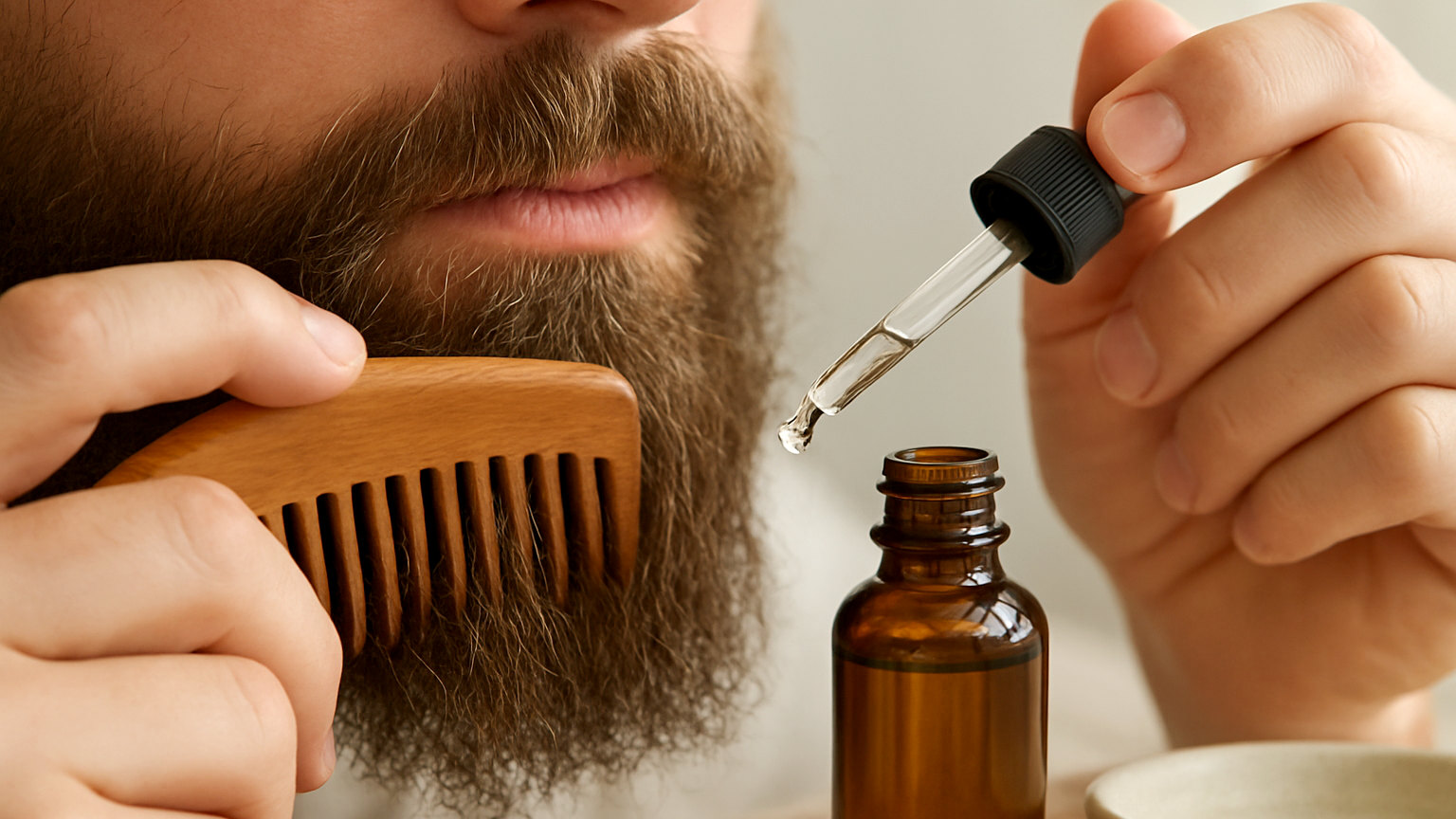
Oil daily, applied to the skin first and then worked through. More than a short beard needs, typically six to ten drops.
Balm or butter for hold, shape and additional conditioning, applied over the oil.
A weekly deep conditioner or mask for coarse or damaged beards.
Wax only if you are shaping a moustache, since it is too firm for the beard itself.
How do you keep the skin healthy underneath?
This is the part that gets progressively harder as the beard lengthens, and it matters more, not less.
Work oil down to the skin with fingertips rather than applying it to the hair. Wash the skin, not just the beard.
Exfoliate gently once a week with a soft brush, which clears the dead skin that becomes beard dandruff.
Watch for flaking with redness, which is seborrhoeic dermatitis and needs an antifungal wash rather than more oil.
Should you sleep with it loose?
A long beard tangles overnight in the same way long hair does. A loose plait or a beard band prevents most of it, and a satin pillowcase reduces friction.
Avoid anything tight worn every night, which causes traction at the follicle and can lead to breakage along the same line.
What about weight and shape?
Beyond a certain length, a beard is pulled straight by its own weight, which is why very long beards look different from the same hair at half the length.
Trimming the sides shorter than the front creates shape and prevents the triangular appearance that unshaped long beards develop. That is worth having a barber do at least once, since judging the shape yourself in a mirror is difficult.
Does a long beard need protecting outdoors?
More than people expect. Ultraviolet degrades the keratin in beard hair exactly as it does scalp hair, lightening the ends and making them dry and brittle, and the ends are already the oldest and most fragile part.
Wind causes tangling and friction. Cold dry air and central heating both dehydrate it. A leave-in conditioner or oil applied before going out in strong sun or wind is a reasonable habit, and tucking a very long beard inside a coat in winter prevents a good deal of breakage.


