
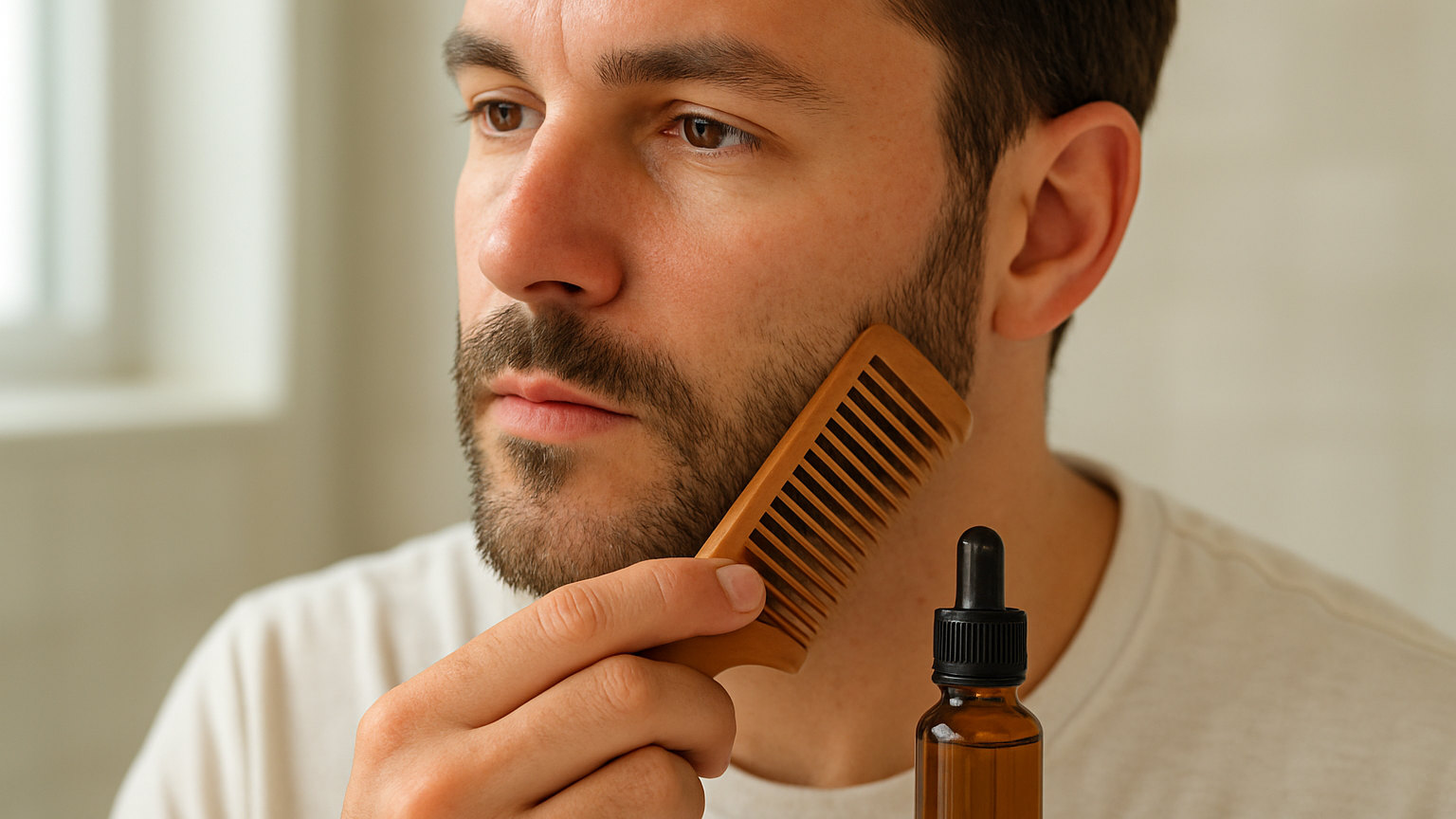
Patchiness is the most common beard complaint and usually the least correctable, since the pattern is set by where follicles exist and how sensitive they are to androgens. That said, some patchiness is temporary and a small proportion of it is medical.
What causes it?
Follicle distribution, primarily. Beard follicles are not spread evenly across the face, and the density and pattern are inherited. Some people have sparse cheeks and dense chins, some the reverse.
Androgen sensitivity, which determines how vigorously each follicle responds. This is why beard density continues developing into the late twenties.
Growth cycle asynchrony, which makes a beard look patchier than it is. Different areas are at different stages, so a four-week beard shows gaps that fill by week eight.
Does it fill in with age?
Frequently, yes. Beard development is a slow process that continues well past the age most people expect it to finish.
A patchy beard at eighteen or twenty is often noticeably fuller at twenty-five and fuller again at thirty. Waiting is a legitimate strategy, and it is the most common thing that works.
By the mid-thirties the pattern is generally settled, and further change is unlikely.
Is a discrete bald patch different?
Yes, and worth distinguishing. Generalised sparseness is normal variation. A discrete, smooth, round patch of complete hair loss appearing over days is alopecia areata.
Alopecia barbae is the beard version and is common enough to be worth knowing about. It affects the beard specifically, often regrows spontaneously within six to twelve months, and can recur.
It is autoimmune rather than a grooming problem, and it warrants a GP appointment rather than a growth product. Regrowth often comes back white before regaining colour, which is normal.
What else causes patches?
Fungal infection of the beard area, which produces scaly patches with hair loss and needs antifungal treatment.
Folliculitis and repeated ingrown hairs, which cause inflammation and, if severe and prolonged, scarring that destroys follicles permanently.
Scarring from injury, burns or surgery. And traction from persistently pulling or twisting the beard.
How do you style around it?
Keeping it shorter is the most effective approach, since a short beard shows density more evenly and gaps become far less visible.
Growing the surrounding hair longer to comb over sparse areas works to a degree at moderate lengths, and it looks obvious if pushed too far.
Trimming the cheek line lower rather than trying to grow high cheek coverage that is not there. Defining the neckline and edges sharply, which makes the whole thing read as deliberate.
Considering a style that suits the density you have: a goatee, a moustache, or a stubble beard rather than a full one.
Does anything genuinely help growth?
Topical minoxidil is the only option with meaningful evidence, used off-label. It takes six to twelve months and gains reverse if stopped, so it is an ongoing commitment.
Microneedling has limited evidence, mostly in combination with minoxidil rather than alone.
Beard oils, supplements and growth serums do not stimulate follicles. They improve condition and appearance, which is worth something and is not what is being sold.
What about beard transplants?
They work, using the same follicular unit extraction technique as scalp transplants, taking hair from the back of the head.
Results are permanent and the cost is substantial. It is worth waiting until at least the late twenties, when the natural pattern has settled, before considering one.
Choose a practitioner carefully and be sceptical of clinics abroad offering it cheaply, since the aesthetic judgement about direction and density matters as much as the surgery.
When should you see a GP?
Sudden discrete patches. Scaling, redness or pustules in the affected area. Patches accompanied by hair loss elsewhere.
Any area where the skin looks smooth and shiny without visible follicle openings, which suggests scarring and needs prompt assessment.
Does the cheek connection matter?
Less than the internet suggests. A high cheek line where beard growth meets sideburns is largely genetic, and a great many people simply do not have dense growth that high.
Trying to grow into a connection that is not there produces stray wispy hairs rather than fullness. Trimming the cheek line lower, to where the growth is genuinely dense, reads as a deliberate style rather than as a gap, and it is what most barbers would recommend.


