
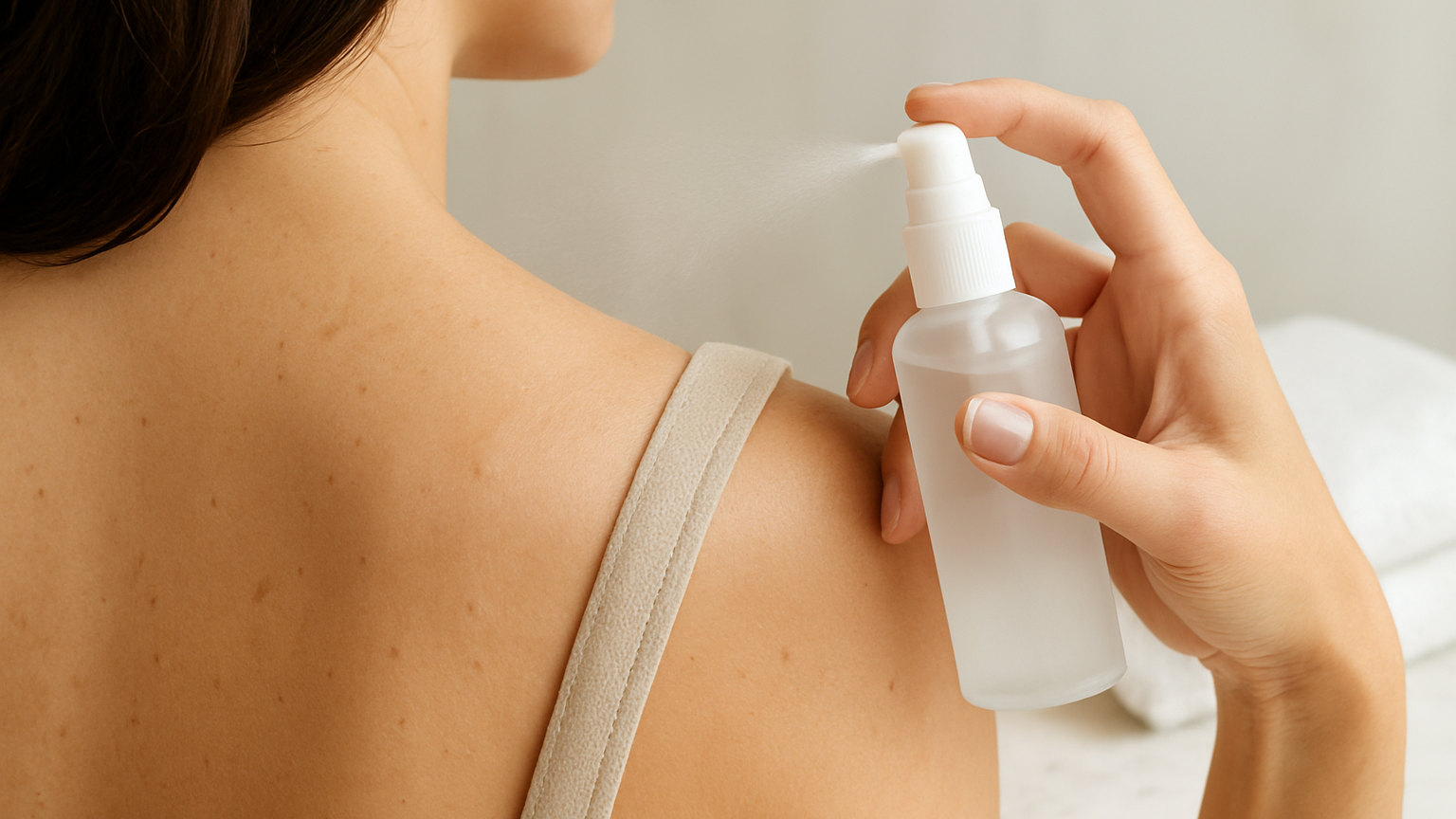
Spots on the back, chest and shoulders are common and respond to the same ingredients as facial acne. What differs is delivery, since the skin is thicker and the area is larger, and one frequent cause is mechanical rather than hormonal.
Why the back and chest?
Because those areas have a high density of sebaceous glands, second only to the face.
They are also covered for most of the day, which traps heat and sweat, and they experience friction from clothing, bags and seats.
The skin is thicker, which means lesions tend to be deeper and slower to resolve, and marks last longer.
Is it definitely acne?
Not always, and the distinction changes the treatment.
Acne produces a mix of blackheads, whiteheads and inflamed spots of varying sizes.
Bacterial folliculitis produces small pustules each centred on a hair follicle, usually uniform, often after sweating or friction.
Fungal folliculitis, caused by malassezia yeast, produces strikingly uniform itchy bumps with no blackheads, clustered rather than scattered. It is common on the back and chest, worsens in heat and humidity, and does not respond to acne treatment. It responds to antifungal shampoo used as a body wash.
Keratosis pilaris produces rough small bumps on the upper arms and thighs and is not acne at all.
What causes it mechanically?
Friction and occlusion, which produce acne mechanica. Backpacks, sports equipment, tight clothing, car seats and gym benches all contribute.
Sweat left to dry in place, particularly under synthetic fabric after exercise.
Hair products running down the back in the shower, which is a genuine and under-recognised cause. Conditioner and styling products are frequently comedogenic on body skin.
This is why washing the body after washing the hair, rather than before, is worth doing.
What treatments work?
Salicylic acid body wash, used two or three times a week, which clears follicle openings. Leave it on for a minute before rinsing rather than washing off immediately.
Benzoyl peroxide wash at two point five to five per cent, which is effective and bleaches fabric, so use white towels and rinse thoroughly.
A leave-on treatment for stubborn areas, using the same ingredients as facial acne. Body-sized packaging exists and is more economical.
Azelaic acid for the marks left behind, which are the longest-lasting part on body skin.
Antifungal shampoo used as a body wash twice weekly if fungal folliculitis is suspected, left on for five minutes.
What should change day to day?
Shower promptly after exercise rather than letting sweat dry. If that is impossible, change out of damp kit and rinse as soon as you can.
Natural or technical fabrics rather than tight synthetics. Wash gym clothes properly, since bacteria persist in synthetic fibres.
Change bedding weekly, particularly pillowcases and sheets if you sleep on your back.
Wash the body after rinsing conditioner out.
Avoid heavy body oils and butters on affected areas.
What about scrubbing?
Counterproductive, and it is the most common instinct. Physical scrubbing irritates inflamed skin, spreads bacteria and worsens the marks.
Chemical exfoliation with salicylic or glycolic acid does the job without friction. A soft cloth is fine; a stiff brush or loofah is not.
Loofahs and sponges also harbour bacteria and should be replaced regularly or avoided.
How long does it take?
Eight to twelve weeks for meaningful improvement, the same as facial acne, and often slower because the skin is thicker.
Marks take considerably longer, frequently six to twelve months, and longer in deeper skin tones. Sunscreen on exposed areas helps them fade.
When should you see a GP?
If it is widespread, painful, or leaving scars, since prescription treatment including oral antibiotics and isotretinoin is considerably more effective for moderate to severe body acne.
If deep nodules or cysts are forming, which scar readily on the back and chest.
If twelve weeks of over-the-counter treatment has not helped, or if the pattern suggests fungal folliculitis and antifungal treatment has not worked either.


