
Sensitive skin is usually treated by buying gentler versions of the same number of products. The more effective approach is fewer products, since every additional one is another set of ingredients and another chance to react.
What does sensitive actually mean?
Two quite different things that get conflated.
Irritation is dose-dependent, immediate and affects anyone with enough exposure. It stings or burns, appears within minutes to hours, and improves when you reduce the concentration or frequency.
Allergy is an immune response requiring prior sensitisation. It itches rather than stings, appears twelve to forty-eight hours later, can spread beyond where the product was applied, and once established occurs at any amount.
The distinction matters: irritation means using less, and allergy means never again.
Which ingredients cause most reactions?
Fragrance, by a considerable distance, including the components of essential oils. Linalool, limonene, citral and geraniol are all plant-derived and all common allergens.
Preservatives, particularly methylisothiazolinone, which caused a substantial rise in contact allergy before restrictions.
Paraphenylenediamine in hair dye, which causes the most severe reactions in this whole area.
Cocamidopropyl betaine, a surfactant found in many products marketed as gentle. Lanolin. Some sunscreen filters.
What should you change first?
Go fragrance-free across everything, which resolves a large share of problems on its own.
Note that unscented is not the same: it can mean a masking fragrance was added. Fragrance-free is the phrase, and the ingredient list is the confirmation.
Reduce to the minimum: cleanser, moisturiser, sunscreen. Nothing active, nothing exfoliating, nothing new, for two to four weeks.
Lukewarm water, no scrubbing, pat rather than rub.
How do you identify the culprit?
Stop everything introduced in the previous month and return to a short routine.
Reintroduce one product at a time with a week between each. Keep the packaging rather than discarding it, since the ingredient list is the evidence.
Patch test anything new: apply to the inner forearm or behind the ear twice daily for five to seven days. Repeated application matters, since allergic reactions require sensitisation and a single dab reveals nothing.
If reactions recur across several unrelated products, ask a GP about referral for clinical patch testing, which uses standardised allergen panels and identifies the specific compound.
What about shaving and hair removal?
The highest-risk activities for sensitive skin, since they abrade the barrier directly.
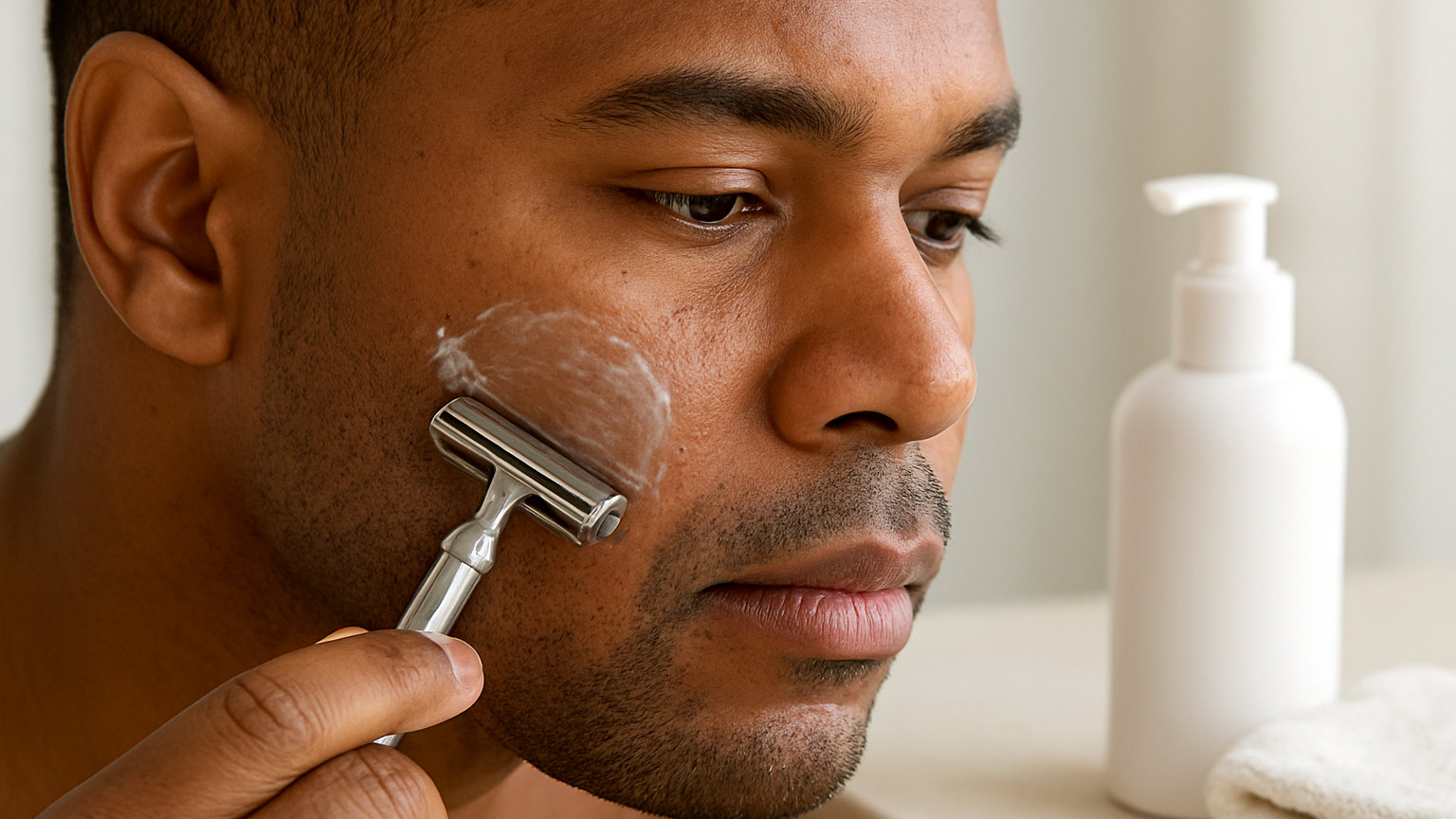
Fewer blades, with the grain, one pass, fresh blade. An electric shaver is the gentlest option and worth trying if irritation happens every time.
Fragrance-free cream rather than aerosol foam. No alcohol-based aftershave.
For hair removal, avoid waxing while using retinoids or acids, which risks lifting the skin. Depilatory creams need a patch test every time, not just the first.
What about hair and teeth?
Scalp reactions frequently present somewhere else entirely: eyelid dermatitis, a rash behind the ears or on the upper back, since product runs down during rinsing.
A fragrance-free shampoo and avoiding methylisothiazolinone resolves much of it. Hair dye needs an allergy alert test forty-eight hours beforehand every single time.
For teeth, sodium lauryl sulfate in toothpaste triggers mouth ulcers in some people, and SLS-free toothpaste helps if you get them repeatedly. Strong flavourings can irritate.
When is it a condition rather than sensitivity?
Persistent redness across the central face suggests rosacea. Itchy, dry, flexural patches suggest eczema. Greasy flaking around the nose and brows suggests seborrhoeic dermatitis.
All three respond to treatment rather than to a gentler cleanser, and all three are frequently managed for years as sensitive skin.
A GP appointment is worth having if a simplified routine has not helped after a month.
What is the general principle?
Less does more. The most common cause of reactive skin is a routine that grew until something in it caused a problem, followed by additions intended to fix it.
Stripping back to three products for a month is uncomfortable and is the single most effective intervention available, and it costs nothing.


