
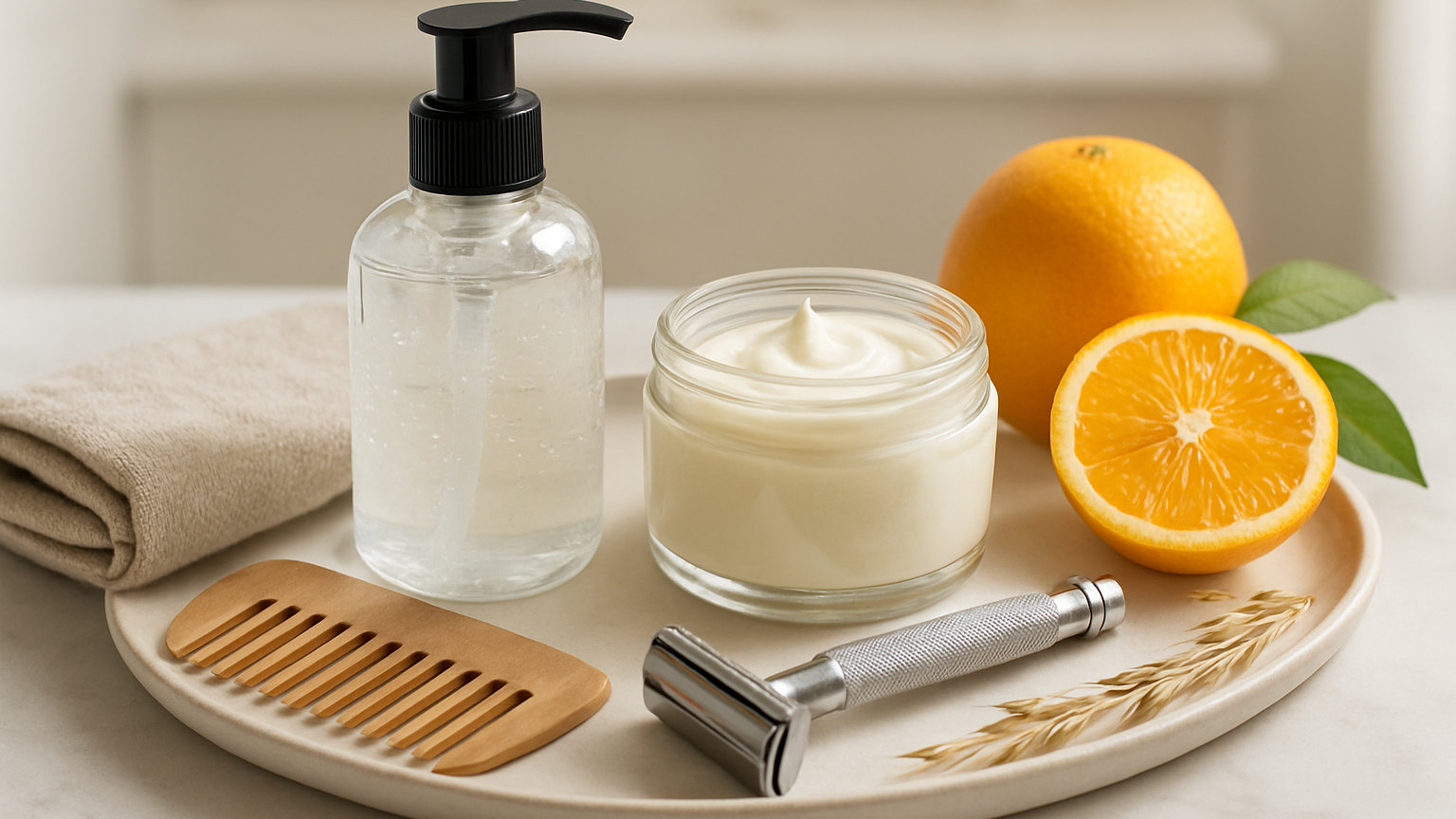
The structure of a routine does not change across the year. What changes is the weight of the products and the emphasis, and the transitions between seasons cause more trouble than either extreme.
What changes in winter?
Cold air holds very little moisture and central heating drops indoor humidity sharply, sometimes below twenty per cent. Skin loses water to both.
Move from lotions to creams and from creams to ointments where needed. Add an occlusive layer at night.
Reduce exfoliation, often by half, since the barrier is already under strain. Shorter, cooler showers.
Pay attention to hands, lips and feet, which crack first. Keep sunscreen going, since ultraviolet A persists year-round and snow reflects a substantial proportion of it.
What changes in summer?
Heat and humidity increase sebum production measurably, so skin and scalp are oilier regardless of type.
Lighter textures: gel moisturisers, fluid sunscreens, lighter hair conditioners. More frequent washing, particularly of hair and the body.
Considerably more sunscreen and more reapplication, since exposure rises sharply.
More attention to sweat: prompt showering after exercise, breathable fabrics, and treating body acne and folliculitis, both of which peak in warm weather.
Why are spring and autumn harder?
Because the weather changes before the routine does, and both directions catch people out.
In spring, ultraviolet rises sharply while it still feels cool, which produces more unexpected sunburn than midsummer. A winter cream also starts to feel heavy and congest skin producing more oil.
In autumn, skin dries out while people are still using summer products, and the first weeks of central heating cause a wave of dryness and flaking.
Following the skin rather than the calendar is the practical answer. Tightness after cleansing means it is time for something richer; heaviness and congestion mean it is time for something lighter.
What stays the same?
Sunscreen every morning. Fluoride toothpaste and interdental cleaning. Gentle handling of hair and skin.
Any active you use for a specific concern, which continues year-round with adjustments to frequency rather than replacement.
What about the scalp and hair?
Winter brings static, dryness and more friction from hats and collars. Richer conditioning and a leave-in help.
Summer brings ultraviolet damage to the hair shaft, chlorine, salt water and more sebum. A chelating shampoo every few weeks and a hat matter more.
Seborrhoeic dermatitis flares in cold weather for most people, so an antifungal shampoo weekly through winter prevents a good deal of flaking.
What about shaving?
Winter skin is drier and more easily irritated, so the same razor and technique produce more razor burn. Extra lubrication and a fresh blade matter more.
Summer brings more frequent shaving of more areas, and sweat on freshly shaved skin causes folliculitis. Shaving in the evening rather than before a hot day helps.
Is it worth owning two of things?
Two moisturisers, two sunscreens and two hair conditioners cover most of it. A lighter and a richer version of each.
Buy smaller sizes rather than large ones, since a product sitting unused for six months in a warm bathroom is often past its best when you return to it.
Cleanser is the third most useful thing to duplicate, since a foaming gel that suits July strips skin in January.
What about travel?
Effectively a season change compressed into a day, and it catches people out for the same reason.
A hot humid climate behaves like an extreme summer; a cold dry one or a flight behaves like an extreme winter. Cabin humidity is frequently below twenty per cent.
Taking your usual products in travel sizes rather than buying substitutes matters, since a new routine and a new climate at once makes any problem impossible to attribute.
Does anything else follow the seasons?
Hay fever, which drives eye rubbing and is a substantial cause of lash loss and irritation around the eyes in spring and summer. Treating the allergy addresses what looks like a grooming problem.
Nails, which grow slightly faster in warm weather and become more brittle in winter with repeated wetting and cold. Body acne and folliculitis, which peak in heat and humidity.
And chapped lips, which are largely a winter and wind problem and respond to a plain occlusive balm rather than anything medicated.


