
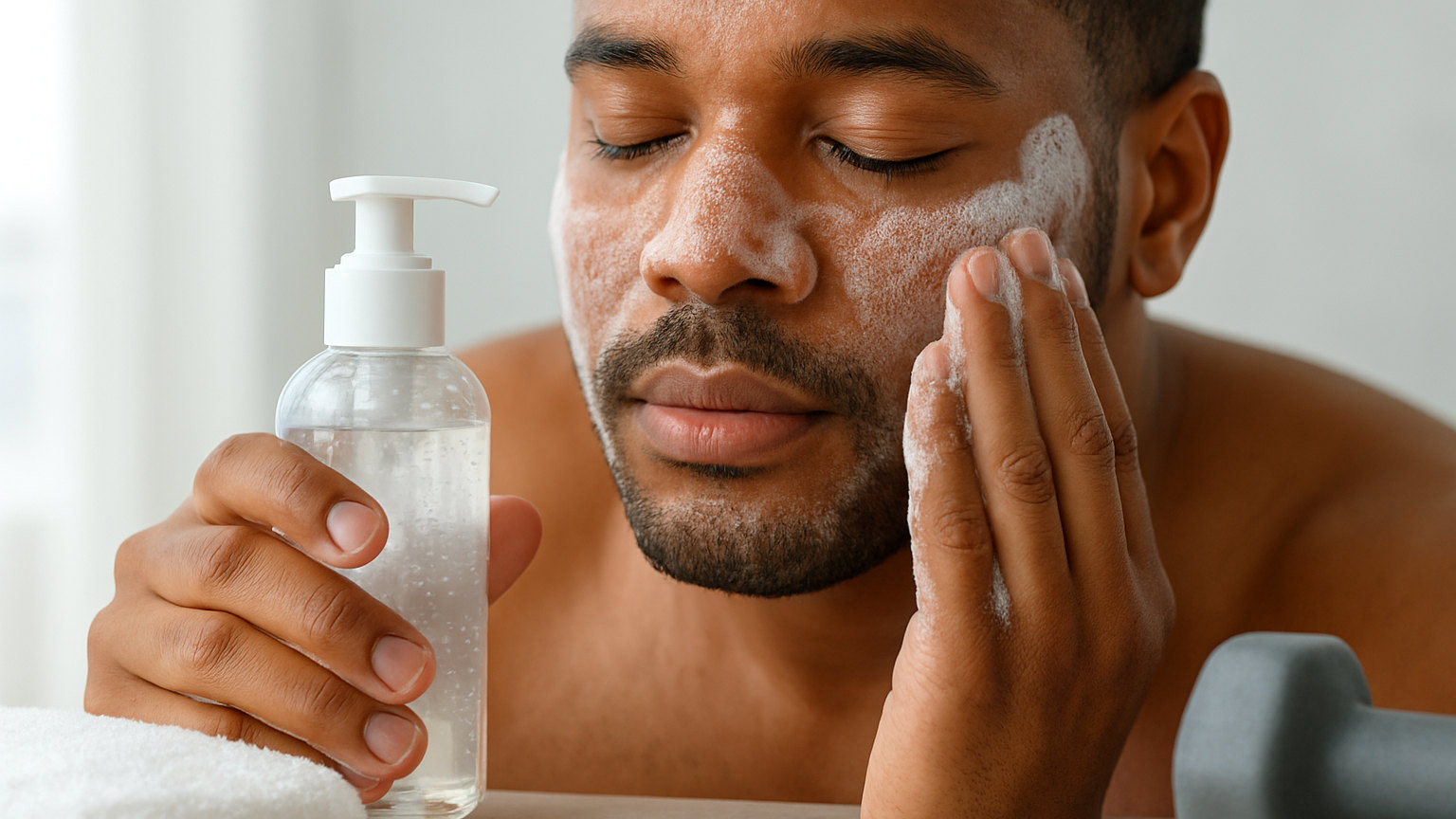
Sweat itself is largely harmless to skin. What causes problems is sweat left in place, friction, shared surfaces and the products already on your face when you start.
What should you do before?
Remove makeup, or at least remove foundation. Sweating under a base traps sebum and bacteria against the skin, and it is a common cause of gym-related breakouts.
A quick cleanse or a micellar wipe is enough. Tinted sunscreen or a light SPF is fine and is worth keeping on if you are training outdoors.
Tie hair back off the face, since hair products transferring to sweaty skin contributes.
Apply nothing heavy: no rich creams, no oils, no thick sunscreen indoors.
Does sweating cause acne?
Not directly. Sweat is mostly water and salt and does not block pores.
What causes trouble is sweat combined with sebum, makeup, bacteria and friction, left in place for hours. That mixture sits on the skin and in follicle openings.
Friction from equipment, mats, straps and tight clothing produces acne mechanica, which appears where the pressure was.
Wiping your face with a shared towel or your hands transfers bacteria from surfaces you have touched.
What should you do during?
Blot rather than wipe, with a clean towel of your own. Rubbing irritates skin that is already warm and dilated.
Avoid touching your face, which is the most effective single habit and the hardest, since equipment surfaces carry bacteria.
Wipe equipment before use as well as after, which most people do only in one direction.
Drink water, which matters for skin less than for everything else and matters.
What should you do afterwards?
Shower promptly, or at minimum rinse and change out of damp clothing. Sweat drying in synthetic fabric is where body acne and folliculitis come from.
Cleanse the face with a gentle cleanser rather than something harsh, since skin is already warm and slightly compromised.
Moisturise, and apply sunscreen if you are going back outside.
If a full shower is not possible, a clean towel, a change of clothes and a facial cleansing wipe covers most of the risk.
What about the feet?
Gym changing rooms and showers are the main route for athlete's foot and verrucas, both of which are common and both of which are avoidable.
Wear flip-flops in communal showers and changing areas without exception.
Dry thoroughly between the toes afterwards, which is where athlete's foot starts.
Do not share towels. Change socks after training rather than wearing the same pair home.
What else is worth knowing?
Do not shave immediately before the gym, since freshly shaved skin has open follicles and sweat and equipment surfaces are a poor combination. Shave afterwards.
Swimming pools mean chlorine, which dries skin and hair. Rinse immediately afterwards and moisturise, and wet hair with clean water before swimming so it absorbs less.
Saunas and steam rooms increase blood flow and are worth avoiding immediately after any treatment, waxing or facial, since follicles are open.
Chafing responds to a barrier balm applied before rather than treatment afterwards.
Does exercise help skin?
On balance, yes. Improved circulation delivers oxygen and nutrients to the skin, and regular exercise reduces stress hormones that worsen acne, eczema and psoriasis.
Better sleep, which follows from regular exercise, has a measurable effect on skin barrier function.
The negatives in this article are all avoidable with a shower and a clean towel. The benefits are not conditional on anything.
When does something need attention?
Persistent itchy uniform bumps on the back or chest, which suggests fungal folliculitis rather than acne and needs antifungal treatment.
Spreading redness, painful lumps or boils, which need a pharmacist or GP, since skin infections spread readily in gym environments.
Ringworm, which presents as a scaly ring and is common in contact sports, and needs antifungal treatment and avoiding training until treated.
What should be in a gym bag?
A clean towel of your own, used only for your face if you can manage two. Flip-flops for the showers.
A gentle facial cleanser or micellar wipes, a small moisturiser, and sunscreen if you train outdoors or leave in daylight.
A spare pair of socks and, if you cannot shower, a change of top so damp fabric is not against your skin for the journey home. None of that is expensive and it prevents most of what this article describes.


