
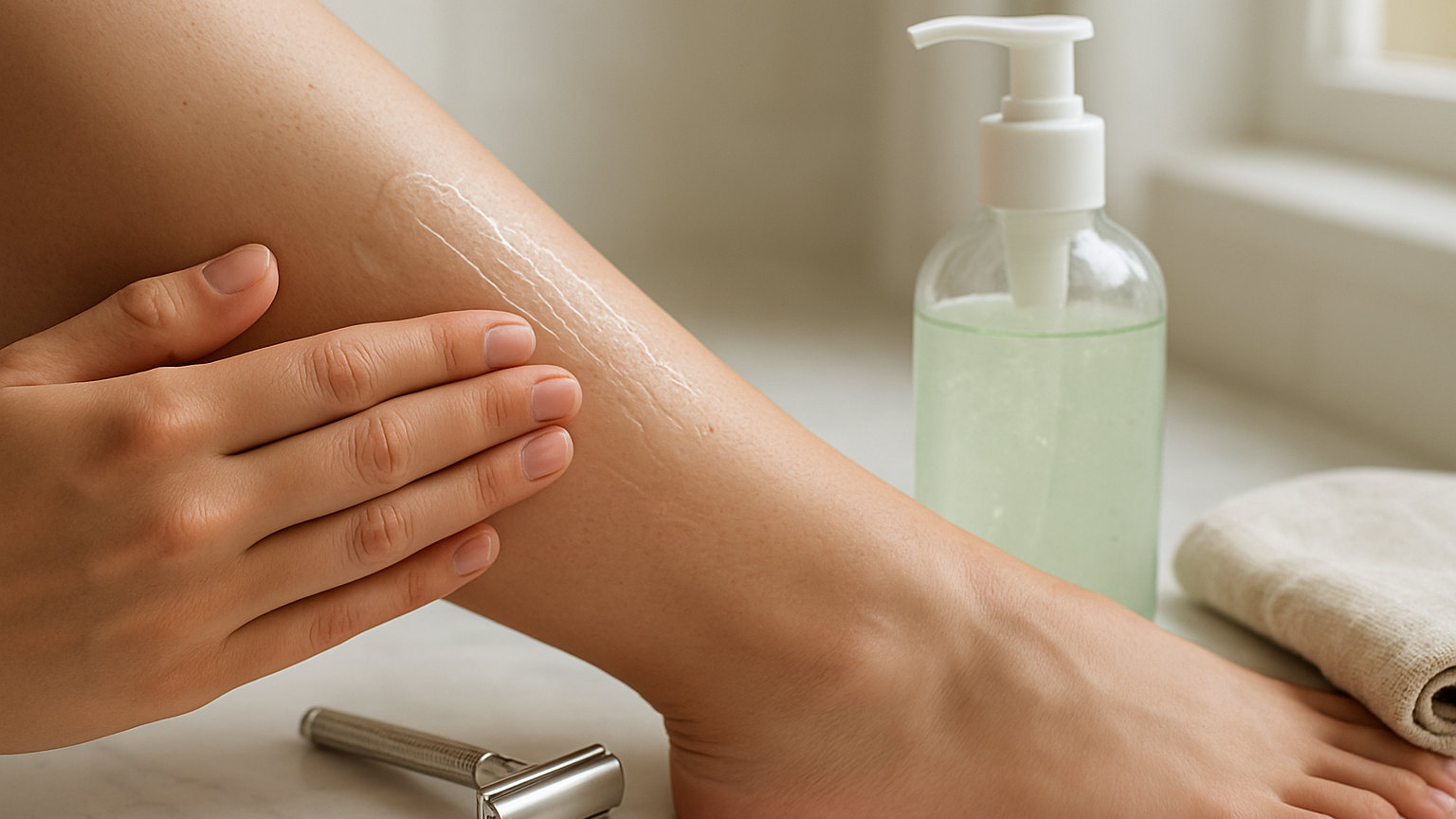
Every method of hair removal leaves the follicles open and the skin barrier disturbed, whether by a blade, wax, chemicals or a laser. The first twenty-four hours determine whether the result is smooth skin or a week of bumps.
What is happening to the skin?
Follicles that have had hair removed from them are effectively small open channels in the skin surface, and they take several hours to close.
The barrier has also been disrupted: shaving and creams remove surface cells, and waxing lifts them off with the wax.
Warm, moist environments and bacteria are therefore a problem in a way they are not on intact skin, which explains most of the aftercare advice.
What should you avoid in the first day?
Heat: hot baths, showers, saunas, steam rooms and hot tubs. Warmth encourages bacteria and increases inflammation.
Heavy exercise, since sweat on open follicles is a common cause of folliculitis. Swimming, for the same reason plus chlorine.
Sun exposure and sunbeds, since freshly treated skin burns readily and pigments more.
Tight clothing, particularly after bikini or underarm removal. Fragranced products, including body sprays and perfumed lotions.
And touching the area, which transfers bacteria from hands to open follicles.
What should you apply?
Something bland and fragrance-free. Aloe vera gel for immediate soothing. A simple emollient for barrier repair.
Avoid anything with alcohol, fragrance, essential oils or active ingredients. This is not the moment for retinoids, acids or scrubs.
For waxing, a post-wax oil removes residue without scrubbing. For shaving, moisturise while the skin is still slightly damp.
When should you start exfoliating again?
Two to three days afterwards, then two or three times a week consistently.
This is the single most effective thing you can do to prevent ingrown hairs, and it needs to happen between sessions rather than immediately before or after one.
A chemical exfoliant with salicylic or glycolic acid works better than a scrub, since it clears the follicle opening rather than abrading the surface. Products sold as ingrown hair solutions are usually exactly this.
Why do bumps appear afterwards?
Three different things, and they need distinguishing.
Immediate redness and small bumps within hours are irritation and histamine response, and they settle within a day.
Pustules with a hair at the centre appearing one to three days later are folliculitis, a bacterial infection of the opened follicle.
Tender bumps appearing days to a week later, each with a hair visible beneath, are ingrown hairs.
How do you treat folliculitis?
Keep the area clean and dry. Warm compresses for ten minutes several times a day. An antibacterial wash can help.
Do not squeeze, which spreads it to adjacent follicles and increases the risk of scarring.
Most cases settle within a week. See a pharmacist or GP if it spreads, becomes painful, or produces larger boil-like lumps.
Does it differ by method?
The principles are the same and the emphasis shifts.
After waxing and epilation, avoid heat and friction for a full twenty-four hours, since follicles are widest open.
After shaving, moisturise promptly and avoid deodorant on underarms for at least half an hour.
After depilatory creams, avoid soap and any other product for several hours, since the skin pH has been raised.
After laser, avoid heat and sun for longer, typically forty-eight hours, and use sunscreen on exposed areas for weeks.
When should you see someone?
Blistering, weeping or open skin, which suggests a burn from wax or a depilatory cream.
Spreading redness, warmth, swelling or fever, which suggests infection beyond a few follicles.
Bumps that persist for weeks, recurrent boils in the same area, or any lasting change in skin colour or texture at a treated site.
What should you keep on hand?
Very little, and having it ready matters more than what it is. A fragrance-free emollient, aloe vera gel, and a chemical exfoliant for use between sessions covers almost everything.
For waxing, an oil to remove residue. For anything that might nick the skin, an antiseptic cream. What is not worth buying is the extensive range of post-treatment products sold alongside removal kits, most of which are moisturiser with a different label and some of which contain the fragrance you should be avoiding.


