
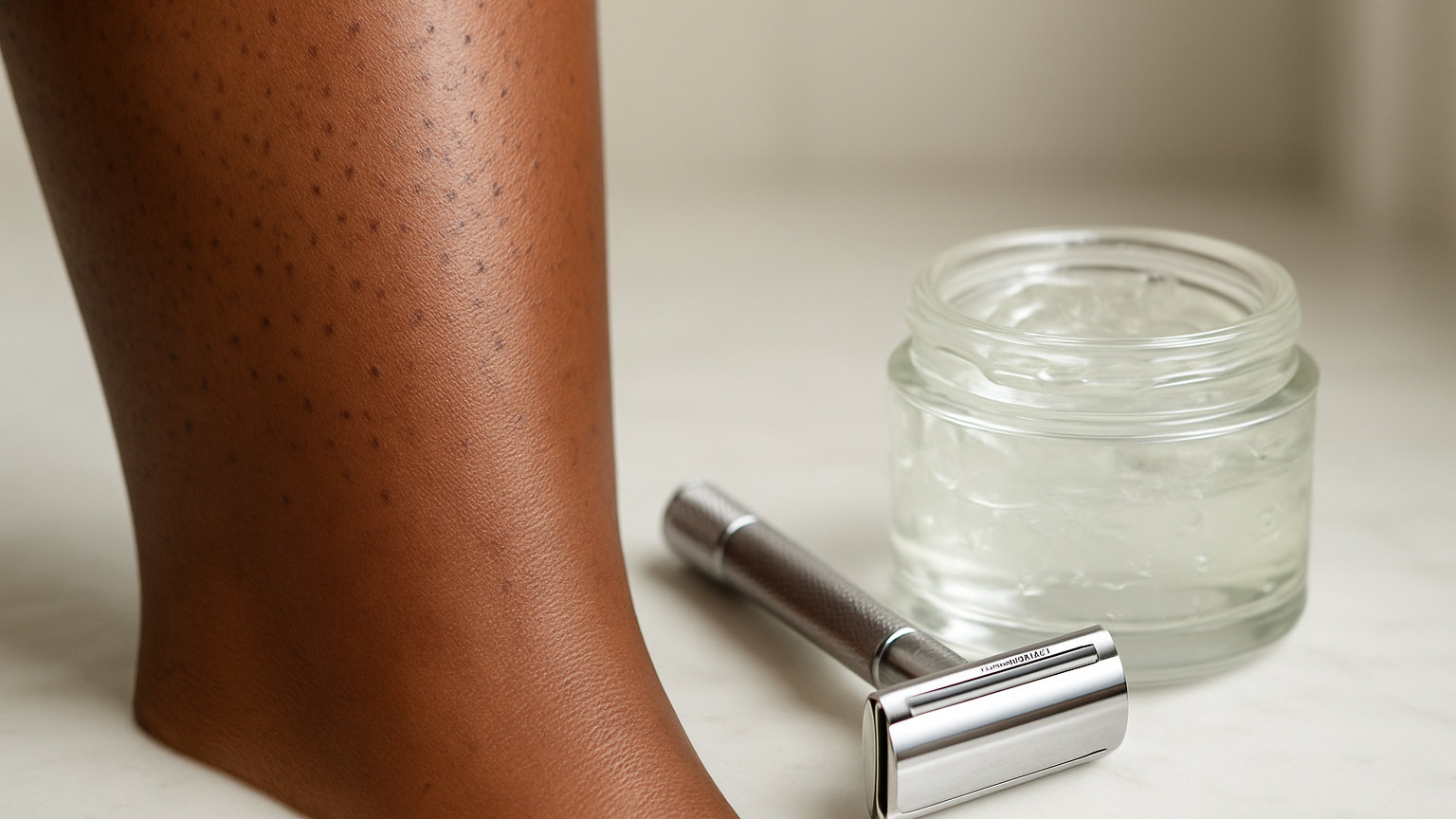
Dark marks left behind after hair removal are pigment produced in response to inflammation, not staining and not dirt. That single fact determines both how to prevent them and how to treat them.
What causes them?
Post-inflammatory hyperpigmentation. Any inflammation in the skin stimulates melanocytes to produce more pigment, and that pigment is deposited in the surrounding cells.
Hair removal causes inflammation through friction, pulling, chemical irritation or heat, depending on the method. Repeated over months, that produces persistent darkening.
Ingrown hairs and folliculitis make it considerably worse, since each one is a separate episode of inflammation.
Why are some people more affected?
Melanocytes in deeper skin tones are more active and more responsive to inflammation, so the same irritation produces more pigment and it lasts longer.
This is why underarm and bikini line darkening is a far more common concern in medium and deep skin tones, and why advice written for lighter skin frequently misses the point.
It is a matter of biology rather than of hygiene or how well someone looks after themselves, which is worth stating plainly given how much shame attaches to it.
Is all darkening pigment?
No, and distinguishing them matters because the treatments differ.
Stubble beneath thin skin reads as a shadow, particularly on underarms, and is not pigment at all. Removing hair more completely, or by the root, resolves it.
Thickened skin from friction can look darker. Acanthosis nigricans produces velvety darkening in body folds and is associated with insulin resistance, warranting a GP appointment rather than a cosmetic approach.
Deodorant residue and product build-up can also contribute.
How do you prevent it?
By reducing inflammation, which is the whole strategy.
Use a sharp blade and proper lubricant. Shave with the grain. Do not shave daily on areas prone to marking.
Exfoliate gently between sessions to prevent ingrown hairs, which are a major contributor. Do not pick at bumps.
Avoid applying deodorant immediately after shaving underarms, and choose fragrance-free where possible.
Consider a method that causes less irritation for you specifically, which may be trimming, an electric shaver, or laser.
What fades existing marks?
Time, primarily. Post-inflammatory pigmentation fades over three to twelve months provided the area is not re-inflamed, which is the difficult part when hair removal continues.
Azelaic acid, which inhibits pigment production and is well tolerated. Niacinamide, which blocks pigment transfer. Both are suitable for body skin.
Gentle chemical exfoliation with glycolic or lactic acid two or three times a week, which speeds clearance of pigmented cells.
Sunscreen on exposed areas, since ultraviolet restimulates the same melanocytes and extends how long marks take to fade.
What should you avoid?
Scrubbing, which causes friction and therefore more inflammation and more pigment. This is the most common self-inflicted error.
Skin lightening creams bought without prescription, particularly from unregulated sources, which frequently contain mercury or potent steroids and cause lasting harm.
Strong acids and peels on already irritated skin, which trigger rebound pigmentation. In deeper skin tones this can be worse than the original problem.
How long should it take?
Three to six months for superficial marks with consistent treatment, and up to a year or more for deeper or long-standing ones.
Photographs every fortnight in the same light are more reliable than daily observation, which detects gradual improvement poorly.
When should you see a GP?
If darkening appeared without hair removal or irritation. If it is velvety and thickened rather than flat, which suggests acanthosis nigricans.
If it is spreading, or accompanied by other symptoms. And if nothing has improved after six months of consistent care, since prescription options including hydroquinone and stronger azelaic acid are available.
Does laser help or make it worse?
Both are possible, which is why practitioner experience matters more here than anywhere else in this category.
Removing the hair removes the repeated irritation causing the pigment, so over time laser frequently improves darkening substantially. But the heat itself can trigger pigmentation in deeper skin tones if the wrong device or settings are used. Ask specifically which laser will be used, insist on a test patch, and be wary of any clinic that does not raise the question first.


