
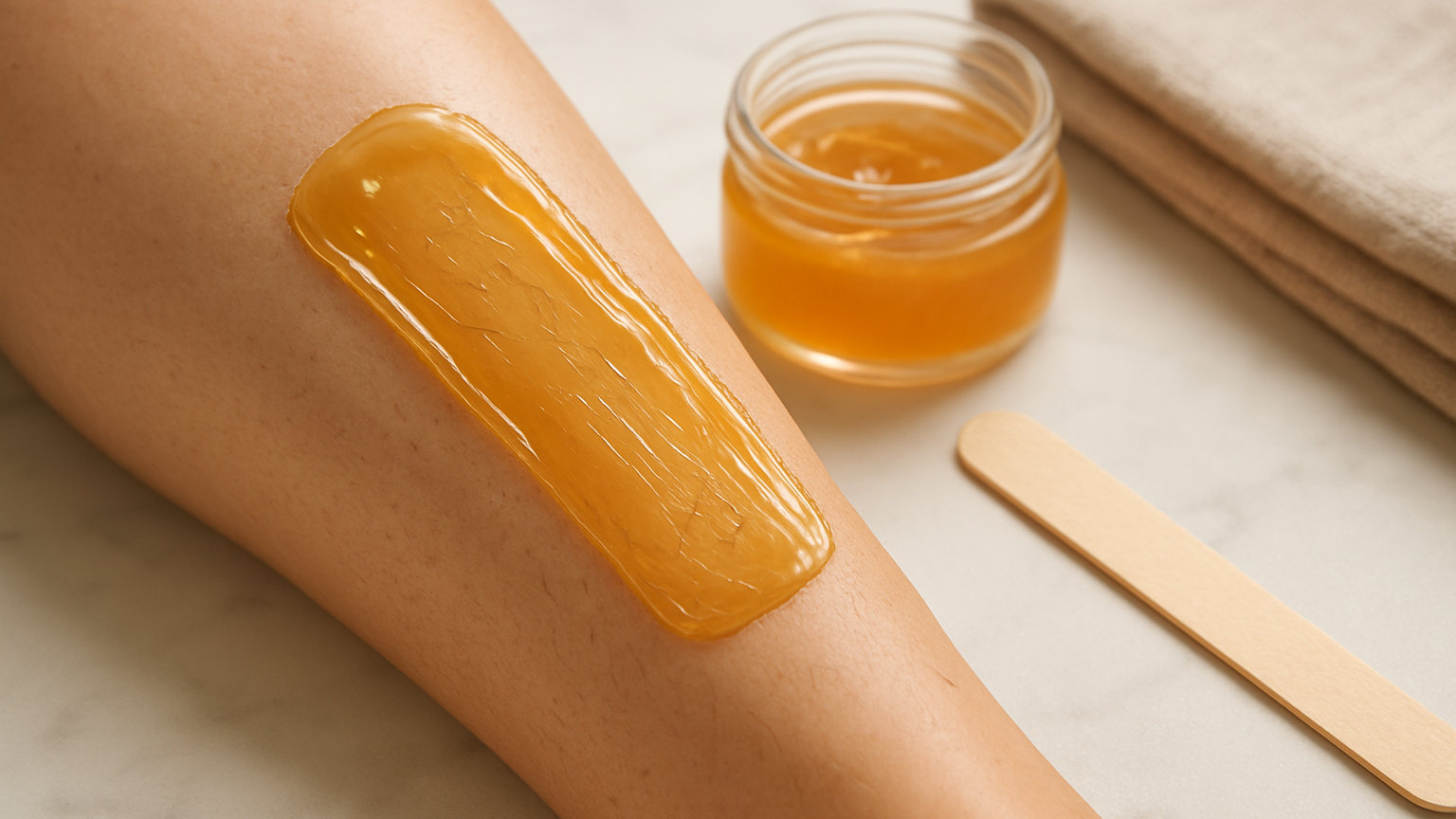
Waxing removes hair from the root rather than cutting it at the surface, which is why the result lasts weeks rather than days. It is also why preparation matters more here than with any other method, and why several common products make it go wrong.
What actually happens?
Wax adheres to the hair, and when it is pulled away the hair comes with it, including the bulb at the base.
The follicle is left empty and has to produce a new hair from the beginning of the growth cycle, which takes two to six weeks depending on the area and the individual.
Because the new hair grows from scratch, it emerges with a naturally tapered tip rather than a blunt cut end, which is why regrowth after waxing feels softer than stubble after shaving.
How long do results last?
Three to six weeks for most people, with legs at the longer end and the face at the shorter.
Regrowth is uneven at first, because hairs are at different stages of their cycle and only those currently growing are removed. After three or four regular waxes the cycles synchronise somewhat and results become more even.
That synchronisation is why waxing regularly gives better results than waxing occasionally.
What is the difference between hot and strip wax?
Strip wax, also called soft wax, is applied thinly and removed with a fabric or paper strip. It adheres to skin as well as hair, so it exfoliates and can be more painful and more irritating.
Hot wax, also called hard wax, is applied thicker, sets, and is peeled off without a strip. It adheres mainly to the hair rather than the skin, so it is gentler and better for sensitive areas such as the face, underarms and bikini line.
Salons generally use hard wax for sensitive areas and soft wax for legs and larger areas.
How does sugaring compare?
Sugar paste is made from sugar, lemon and water, applied at body temperature and flicked off in the direction of hair growth rather than against it.
Because it adheres to hair rather than skin and is removed with the grain, it is generally less painful and less likely to cause breakage or irritation. It also washes off with water, which makes cleaning up easier.
It removes shorter hair than wax can, from around two millimetres, and it is a reasonable choice for sensitive skin.
How should you prepare?
Let the hair grow to around half a centimetre, roughly two weeks of regrowth. Wax cannot grip hair shorter than that.
Exfoliate gently a day or two beforehand, not on the day, which clears dead skin without adding irritation.
Do not moisturise on the day, since oil and cream stop the wax adhering. Arrive with clean dry skin.
Take a painkiller half an hour beforehand if you find it difficult, and avoid caffeine, which can increase sensitivity.
What should you avoid beforehand?
This is the part that causes genuine harm and is frequently not asked about.
Topical retinoids, acids and prescription retinoid creams thin the outer skin layer, and waxing over them can lift the skin off. Stop them five to seven days before, longer for strong prescriptions.
Oral isotretinoin makes skin extremely fragile, and waxing is generally contraindicated during treatment and for six months after finishing.
Sunburnt, broken, irritated or recently treated skin. Recent chemical peels or laser. Active cold sores near the area.
Tell the therapist about any medication and any skin treatment, since they cannot see it and the consequences of not knowing are real.
What should you do afterwards?
Avoid heat for twenty-four hours: no hot baths, saunas, steam rooms or heavy exercise, since follicles are open and warmth encourages bacteria.
No sun exposure or sunbeds for a day or two, since freshly waxed skin burns and pigments readily.
Wear loose clothing, particularly after a bikini wax. Apply a soothing fragrance-free moisturiser or aloe.
Start exfoliating gently again after two or three days, two or three times a week, which is the main defence against ingrown hairs.
Who should not wax?
Anyone on isotretinoin, or using strong topical retinoids in the area. Anyone with very fragile skin, uncontrolled diabetes with poor healing, or on blood thinners without advice.
Anyone with an active skin infection, eczema flare or psoriasis in the area. Varicose veins should be avoided directly.
And anyone who has had a bad reaction before, which is worth investigating rather than repeating.


