
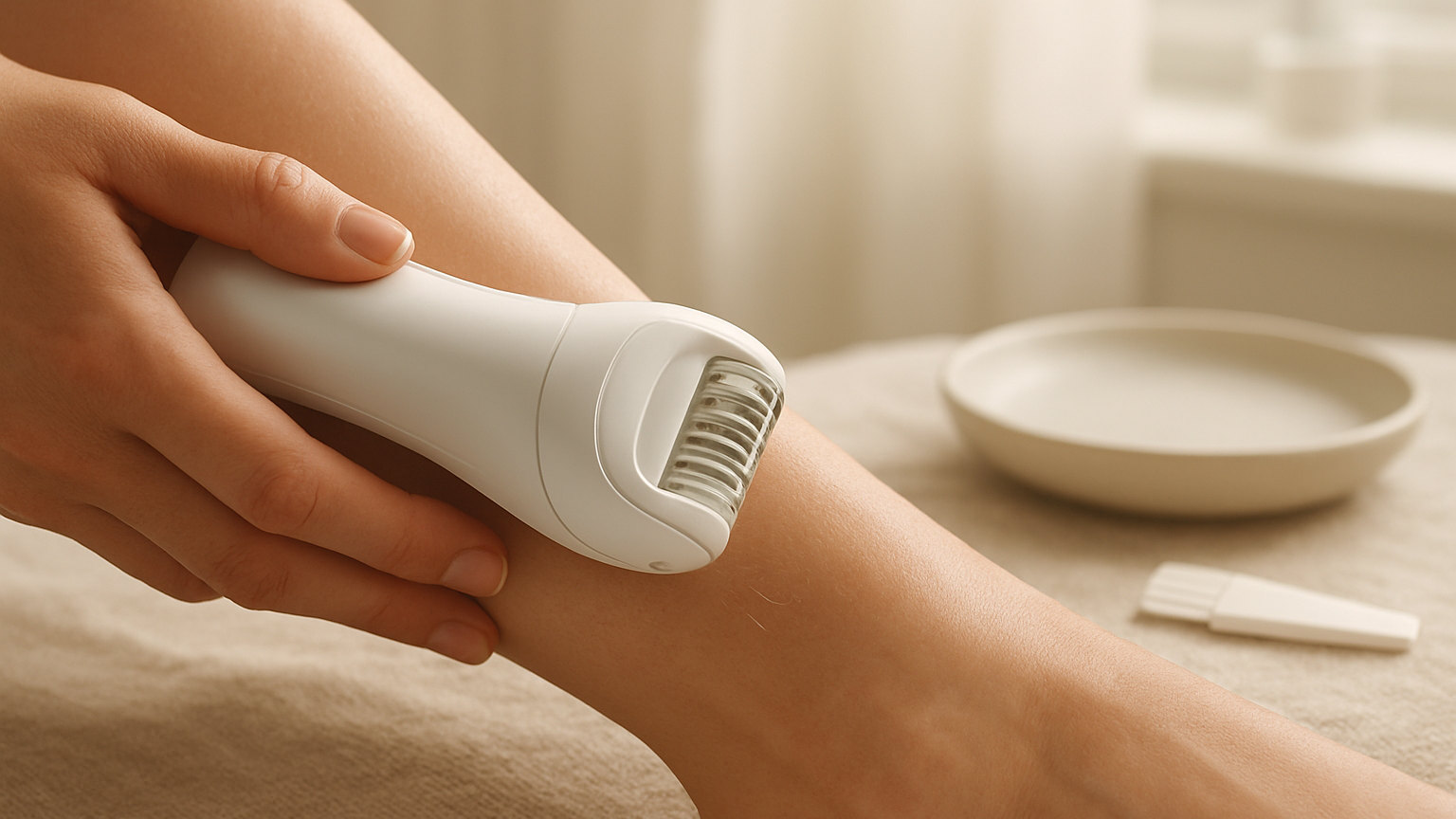
An epilator is a handheld device with rotating tweezers that grip and pull hairs out at the root. It gives waxing-length results for the cost of the device, and the first use is genuinely unpleasant, which is why most sit unused in drawers.
How does it compare with waxing?
The result is similar, since both remove hair from the root and regrowth takes two to four weeks.
Epilation removes shorter hair than wax can, from around half a millimetre, so there is less waiting between sessions. It also costs nothing after the initial purchase.
It takes considerably longer than waxing, since it works hair by hair rather than in strips. A full leg session might take thirty to forty minutes.
The pain is spread over that period rather than concentrated in a few pulls, which some people find easier and others harder.
Does it hurt?
The first time, yes, noticeably. It reduces substantially with regular use as hair grows back finer and the skin adapts.
Several things help. Epilate in or immediately after a warm bath or shower, when skin is soft and follicles are relaxed. Exfoliate beforehand.
Hold the skin taut with the free hand. Move the device slowly rather than quickly, since rushing means hairs are broken rather than pulled cleanly.
Start on legs rather than sensitive areas, and start with a shorter session rather than attempting everything at once.
What is the technique?
Hold the epilator at ninety degrees to the skin, or as the manufacturer specifies, and move it against the direction of hair growth.
Go slowly. Moving it quickly is the most common error and leaves hair behind while causing more pain.
Keep the skin taut. Work in small sections and go over each one once rather than repeatedly.
Do not press hard, which pinches skin rather than gripping hair.
Wet or dry?
Wet-capable epilators used in the bath or shower are noticeably less painful, since warm water softens the skin and relaxes follicles.
Dry epilation is faster and grips better, since wet hair can slip. It is also more uncomfortable.
For a first attempt, wet is considerably kinder. Many people move to dry once they have adjusted.
Which areas suit it?
Legs, which is what most are designed for and where the technique is easiest.
Arms and underarms, with a smaller head and more care, since underarm hair grows in several directions.
The bikini line, using a dedicated attachment, with caution. The face, using a facial epilator designed for it rather than a body one.
Not suitable for eyebrows, where precision matters and tweezing or threading is better.
How do you avoid ingrown hairs?
Exfoliate two or three times a week between sessions, which is the main defence. A chemical exfoliant with salicylic or glycolic acid works better than a scrub.
Moisturise daily, since dry skin makes it harder for hair to break through.
Move slowly during epilation, since hairs broken rather than pulled cleanly are more likely to become ingrown.
Avoid tight clothing over the area for a day afterwards.
What should you do afterwards?
Apply a soothing fragrance-free moisturiser or aloe gel. Avoid heat, sun and heavy exercise for twenty-four hours, since follicles are open.
Expect redness and small bumps for a few hours, which is normal. Persistent pustules suggest folliculitis and need attention.
How do you maintain the device?
Clean the head after every use with the brush provided, since trapped hair and skin reduces grip and harbours bacteria.
Wash removable heads if the model allows. Replace heads when the tweezers become blunt, which shows as more pulling and more broken hairs.
Do not share an epilator, for the same reasons as a razor.
Is it worth buying an expensive one?
Up to a point. What matters is the number of tweezers, which determines speed, and whether it is wet-capable, which determines comfort.
Beyond that, the added attachments for face, bikini and body exfoliation are convenience rather than performance. A mid-range wet-capable model with a good tweezer count does everything most people need, and the premium versions mainly add accessories that end up in the drawer alongside the device.


