
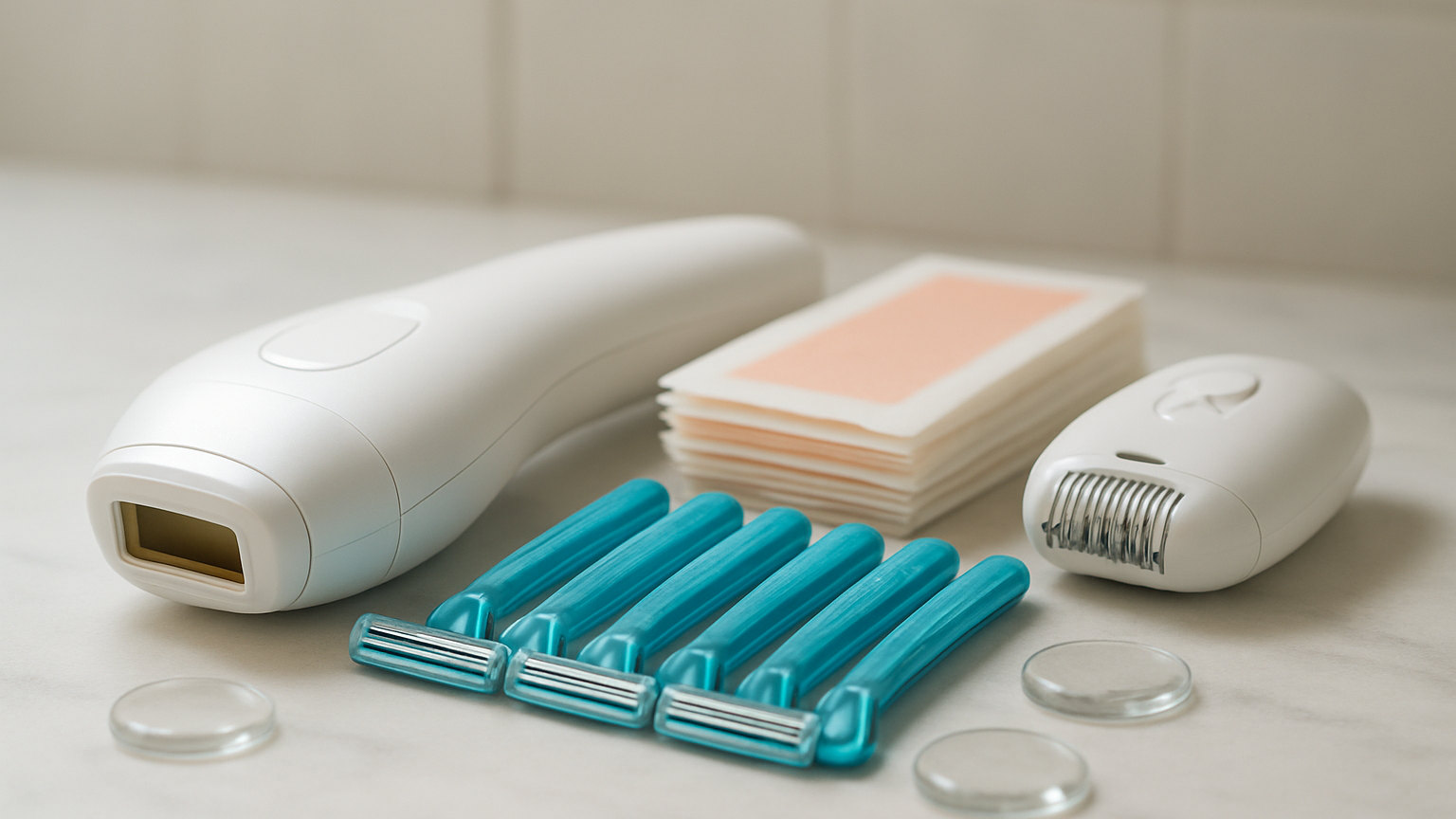
The cheapest method per use is rarely the cheapest over a decade, and running the numbers changes how the more expensive options look. These are indicative UK figures rather than precise ones, and the relative comparison is the useful part.
What does shaving cost?
Cartridges are the expensive part. At two or three pounds each, replaced weekly, that is well over a hundred pounds a year before shaving cream.
Over thirty years, cartridge shaving of legs or a face runs into several thousand pounds.
A safety razor changes this substantially. Blades cost a few pence each, so annual blade cost drops to under ten pounds, and the razor itself lasts decades. That is the single largest saving available in this category.
Disposables sit between the two and are the worst value once you account for how quickly they dull.
What does waxing cost?
Salon waxing of legs might run to thirty to fifty pounds a session, every four to six weeks. That is roughly three hundred to six hundred pounds a year for one area.
A bikini wax adds similar. Underarms less. Someone maintaining legs and bikini professionally is spending in the region of a thousand pounds a year.
Home waxing reduces that to the cost of the kit, perhaps thirty pounds a year, at the cost of time and the areas you cannot reach.
What does laser cost?
A course of six to ten sessions varies widely by area and location. Underarms might be a few hundred pounds for a course; full legs considerably more.
Maintenance sessions once or twice a year afterwards add a smaller ongoing cost.
Set against salon waxing of the same area, laser frequently pays for itself within three to five years, and after that the comparison is not close. Set against shaving with a safety razor, it does not.
What does electrolysis cost?
Charged by time, and the total depends entirely on the area. Small areas such as an upper lip may run to several hundred pounds over a year of sessions.
Larger areas become impractical on cost grounds as much as on time. For grey or fair hair, where laser does not work, it is the only permanent option and the comparison is against a lifetime of plucking or waxing.
What are the cheapest options over a lifetime?
Trimming, which costs the price of a trimmer every several years and nothing else.
Safety razor shaving, at a few pounds a year in blades. Home epilation, at the price of a device lasting years. Home waxing.
Leaving hair alone, which costs nothing and is worth including in the list rather than assumed away.
What hidden costs are there?
Shaving cream, moisturiser, exfoliants and ingrown hair treatments, which add up quietly.
Time, which is rarely counted. Shaving legs weekly for thirty years is a substantial number of hours.
And the cost of problems: treating folliculitis, dealing with pigmentation, and replacing products that irritated the skin.
How should you decide?
By area rather than in general. Laser makes financial sense for areas you would otherwise wax professionally, and rarely for areas you would shave with a cheap blade.
Consider how long you expect to keep removing the hair. Someone in their twenties committing to thirty more years of waxing has a stronger case for laser than someone in their sixties.
And consider whether the current method is causing problems, since chronic ingrown hairs and pigmentation have their own costs that are not on any receipt.
Is the expensive option ever the cheap one?
Frequently, over a long enough horizon. Laser for underarms or a bikini line, paid once, against thirty years of monthly waxing is not a close comparison.
The obstacle is that one is a single large payment and the other is spread thinly enough to be invisible, which is why most people never make the comparison at all.
How do you reduce what you spend now?
Switch to a safety razor if you shave regularly, which is the largest single saving available and takes a few weeks to learn.
Buy blades and cartridges in bulk rather than singly. Use a shaving cream from a tube rather than an aerosol, which lasts several times longer for the same price. Home wax rather than salon wax on straightforward areas.
And question whether every area needs doing. A good deal of hair removal is habit rather than decision, and the cheapest session is the one you skip.


