
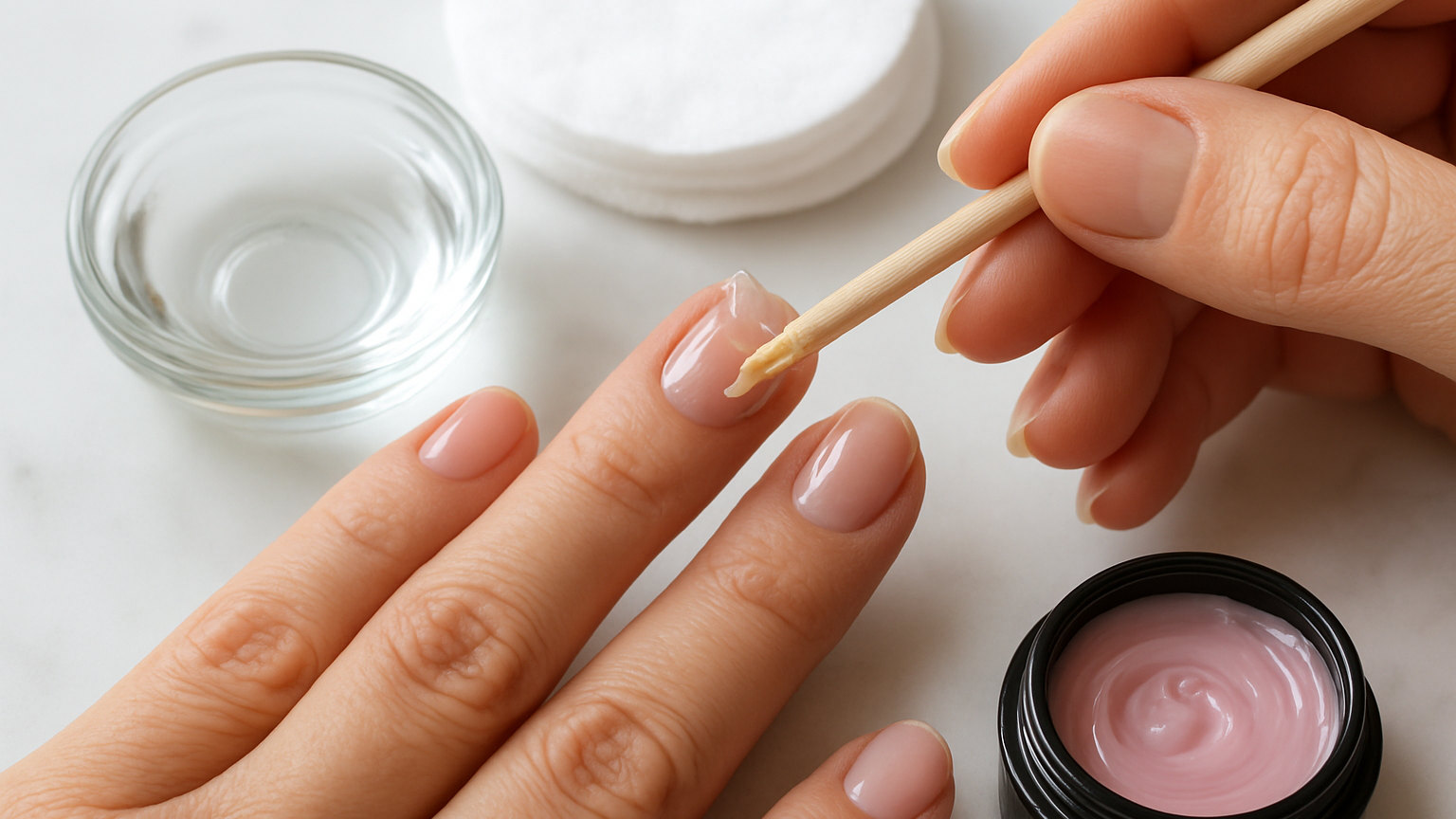
Gel and acrylic nails are not inherently damaging. What damages nails is how they are removed, and a specific ingredient has produced a genuine rise in allergic reactions that is worth understanding before your next appointment.
What is the difference between them?
Gel polish is applied like varnish and cured under a UV or LED lamp, lasting two to three weeks. Removed by soaking in acetone.
Hard gel and acrylic are used to build extensions or add strength. Acrylic is a powder and liquid mixed to form a hard layer; hard gel is cured under a lamp.
All three are cured or set on the nail, and all three require either acetone soaking or filing to remove.
What actually causes the damage?
Removal, in almost every case. Picking or peeling gel off is the worst thing you can do, since the product bonds to the top layers of the nail plate and takes them with it.
That is why nails look thin, white and flaky after a peeled-off manicure. Those layers do not grow back quickly, since a fingernail takes around six months to replace itself entirely.
Over-filing during preparation or removal thins the nail plate directly. Prolonged acetone soaking dehydrates it.
Aggressive cuticle work damages the matrix, which is where the nail is made, and can cause permanent ridging.
What is the HEMA problem?
Hydroxyethyl methacrylate is a common ingredient in gel products, and allergic contact dermatitis to it has risen sharply.
The reaction can develop after months or years of uneventful use, and it presents as itching, redness and swelling around the nails, lifting of the nail from the bed, and sometimes rashes on the face and eyelids from touching.
Once sensitised, the allergy is permanent. It also extends to other methacrylates, which are used in dental materials and some medical adhesives, so it has consequences beyond manicures.
The risk is highest with home kits, where uncured product contacts the skin around the nail. Professional application keeps product off the skin and cures it fully, which reduces though does not eliminate the risk.
Dermatologists have called for restrictions on home gel kits for this reason.
Are UV lamps safe?
The exposure is small and it is not zero. Nail lamps emit UVA, and the doses involved are far lower than a sunbed.
Studies assessing skin cancer risk have generally found it very low, and the evidence is limited rather than reassuringly comprehensive.
The sensible precaution costs nothing: apply sunscreen to the backs of the hands before an appointment, or wear fingerless UV-protective gloves. Repeated exposure over decades is the concern rather than any single session.
How should removal be done?
Gel polish: the surface layer is filed to break the seal, then acetone-soaked cotton is held against each nail with foil for ten to fifteen minutes. The product should then slide off with gentle pressure.
Anything requiring scraping or force is not ready, and forcing it removes nail plate.
Acrylics and hard gel are usually filed down and soaked. This is harder to do well at home.
Never peel. If a corner lifts, have it removed properly rather than picking at it.
How do you reduce the damage?
Take breaks. Two to three weeks off between sets allows the nail to rehydrate, and a month or two once or twice a year does more.
Apply nail oil daily, including over gel, which keeps the surrounding skin and the free edge conditioned.
Ask for minimal filing during preparation and for the cuticle to be pushed back rather than cut.
Have removal done professionally, or learn to do it properly with time set aside rather than in a hurry.
What are the warning signs?
Itching, redness or swelling around the nails, which suggests allergy rather than damage and means stopping rather than switching brands.
The nail lifting from its bed. Persistent white patches, which may be superficial damage or a fungal infection.
Green discolouration, which indicates a bacterial infection under the product and needs the product removed and the nail seen.
Any of these warrants stopping and, for the last two, a GP or pharmacist.


