
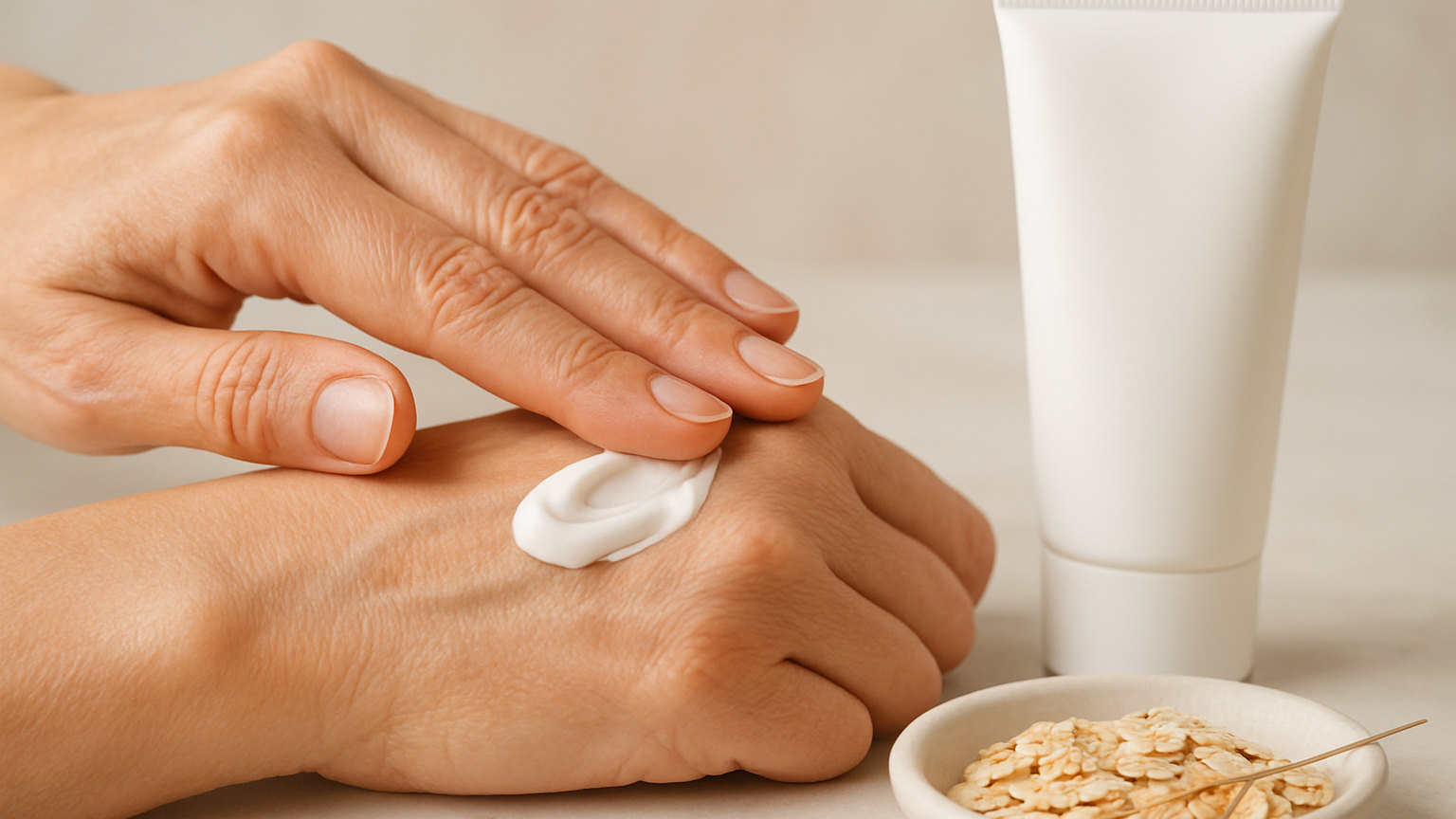
Hand creams do work, and the range between an effective one and a pleasant one is wide. It is determined by the ingredients rather than the price, which is why some of the most effective options cost a few pounds from a pharmacy.
What should a hand cream contain?
Three categories, and the best products contain all three.
Humectants draw water into the skin: glycerin, urea, hyaluronic acid, lactic acid and panthenol.
Emollients smooth and soften: shea butter, squalane, plant oils and fatty alcohols.
Occlusives prevent water leaving: petrolatum, dimethicone, lanolin, beeswax and mineral oil.
A cream containing glycerin and shea butter but nothing occlusive will feel nice and lose most of its effect within an hour, particularly after the next hand wash.
Why is urea different?
Because it does two things depending on concentration, and it is the most useful single ingredient for genuinely dry hands.
At five to ten per cent it is a humectant, drawing water into the skin and improving barrier function.
At twenty per cent and above it is keratolytic, breaking down the bonds between dead skin cells, which softens thickened, rough or cracked skin.
For hands that are simply dry, ten per cent is a good target. For hands with thickened rough patches, higher concentrations work considerably better than any conventional cream.
What works for cracked hands?
An ointment rather than a lotion. Lotions are mostly water and evaporate; ointments are largely occlusive and stay.
Petrolatum-based products applied thickly at night, with cotton gloves over the top, which is the most effective treatment available and costs very little.
Urea at twenty to forty per cent for thickened skin around cracks.
Fragrance-free, since cracked skin allows more penetration and fragrance is a common cause of contact dermatitis on damaged skin.
How often should you apply it?
After every hand wash, which is the crucial habit and the difficult one.
Each wash strips the barrier, and the skin does not fully recover before the next. Applying cream immediately, while hands are still slightly damp, both replaces what was lost and traps the remaining water.
Keeping a tube at every sink you use makes more difference than choosing a better cream, since the limiting factor is almost always frequency rather than formulation.
What about at night?
The most valuable application, since hands are not being washed for eight hours.
A rich cream or ointment, applied generously. Cotton gloves over the top for anyone with cracking, which prevents it transferring to bedding and keeps it in contact.
This alone resolves a great deal of winter hand dryness within a fortnight.
Do expensive hand creams work better?
Rarely in proportion to the price. Glycerin, urea, petrolatum and dimethicone are inexpensive commodity ingredients, and a pharmacy cream containing them outperforms most luxury products.
What money buys is texture, fragrance and packaging. Those are legitimate things to want, particularly for a product used many times daily, and knowing that is what you are paying for is useful.
The one exception is medicated or high-urea preparations, where the formulation genuinely differs.
What about hand creams with SPF?
Worth having, since the backs of the hands accumulate substantial ultraviolet exposure and are almost never protected.
The limitation is that it washes off with every hand wash, so a single morning application provides little protection through a day. Reapplying with each wash is the only way it works, which makes a combined product more realistic than a separate sunscreen.
When is cream not enough?
If hands are itchy, blistered, weeping or cracked deeply enough to bleed, that suggests hand eczema rather than dryness.
Eczema needs treating, usually with a short course of topical steroid from a GP, alongside emollients and barrier protection. Moisturiser alone will not settle it.
Persistent hand eczema warrants patch testing, since contact allergy to something specific is a common cause and identifying it changes the management entirely.
Does the format matter?
More than people expect. A pump bottle by a sink gets used; a tube in a drawer does not, and frequency is the limiting factor rather than formulation.
Tubes suit bags and pockets. Tubs hold thicker ointments and are the least hygienic, since fingers go into them repeatedly.
The practical answer is owning several: a light cream where you wash your hands, something portable, and a thick ointment by the bed for overnight. That is a few pounds in total and does considerably more than one expensive product used occasionally.


