
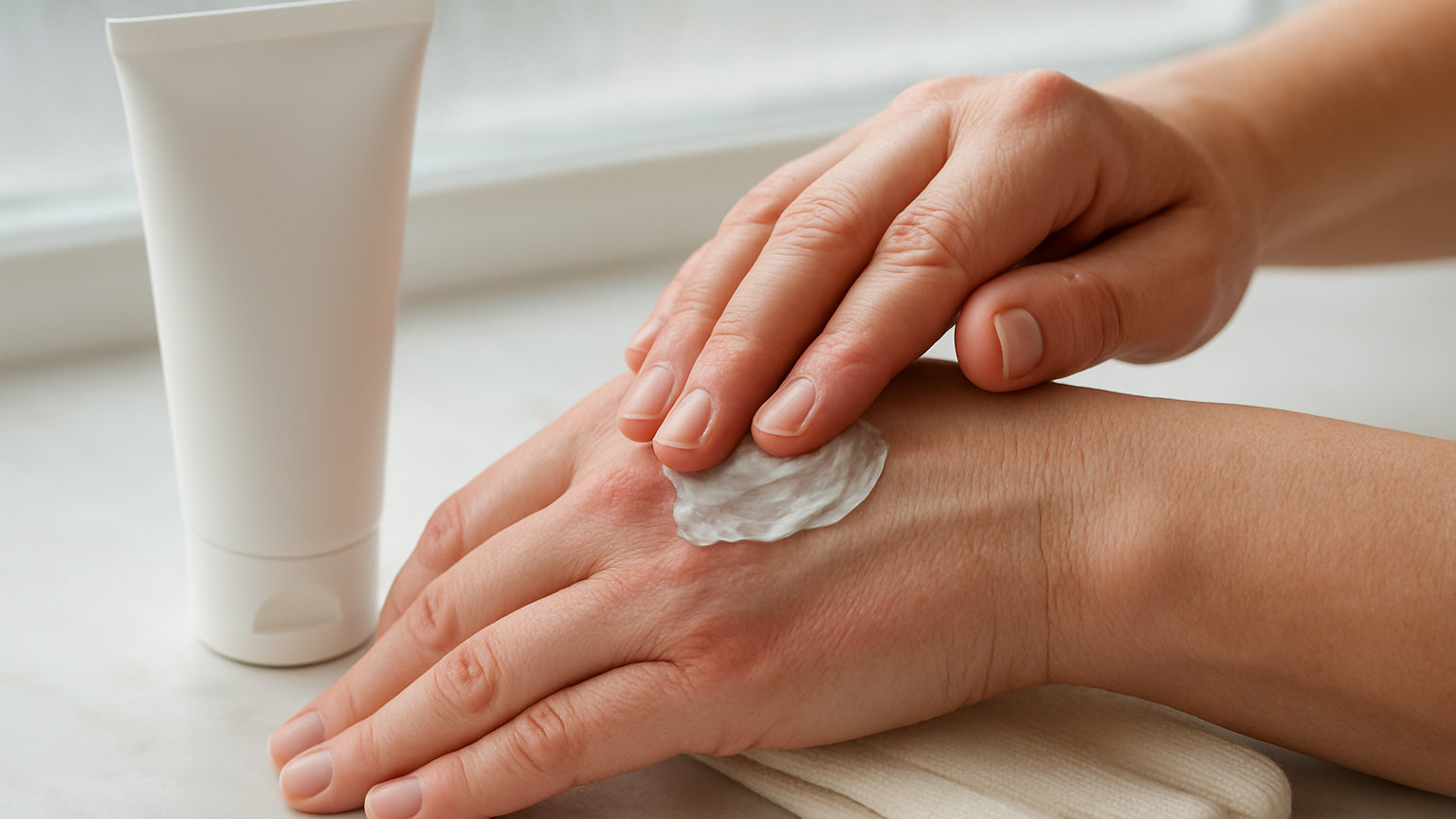
Hands crack in winter for three reasons that arrive together: cold air holds almost no moisture, central heating drops indoor humidity sharply, and hand washing increases. Each strips the barrier, and the skin does not recover between them.
Why is winter so much worse?
Cold air has a low capacity to hold water, so moisture leaves the skin into it. Indoor humidity in a heated house can drop below twenty per cent, comparable to a desert.
Moving between the two repeatedly stresses the barrier further. Wind strips the surface directly.
Hands also have very few sebaceous glands and thin skin, so they have less natural protection than almost anywhere else.
What should change in the routine?
Move from a lotion to a cream or ointment. Lotions are mostly water and are inadequate in winter regardless of how good they feel.
Look for urea at ten per cent or higher, glycerin, and an occlusive such as petrolatum or dimethicone. The occlusive is the part that matters most in cold dry air.
Apply after every hand wash without exception, which means keeping a tube at every sink rather than relying on memory.
A thick ointment at night with cotton gloves over it, which is the most effective single intervention for cracked hands and costs very little.
What about washing?
Lukewarm rather than hot water, which strips considerably more.
A gentle wash rather than a foaming antibacterial soap. Pat dry rather than rubbing, and moisturise while hands are still slightly damp.
Alcohol hand gel is drying with repeated use. Where washing is an option, washing and moisturising is gentler than gel.
What are chilblains?
Small itchy, painful red or purple swellings on the fingers and toes, appearing hours after cold exposure. They are a reaction to the blood vessels constricting in the cold and then reopening too quickly as the skin warms.
They are common in the UK because the climate is cold and damp rather than freezing, which is the combination that causes them.
The key preventive point is warming up gradually. Putting cold hands on a radiator or under hot water is exactly what triggers them.
They usually resolve within a few weeks. Keeping hands warm and dry, wearing gloves before going out rather than after, and avoiding rapid rewarming all help. See a GP if they blister, ulcer or keep recurring.
What about Raynaud's?
Different and worth distinguishing. Raynaud's phenomenon causes fingers to turn white, then blue, then red as circulation is temporarily cut off in response to cold or stress.
It is common, particularly in women, and usually primary and harmless though uncomfortable.
Keeping the whole body warm matters more than gloves alone, since the response is systemic. Avoiding sudden temperature changes, stopping smoking and reducing caffeine all help.
Secondary Raynaud's can be associated with autoimmune conditions, so a first episode in adulthood, or one with skin changes or ulcers, warrants a GP appointment.
What about gloves?
Worn before hands get cold rather than once they have, since rewarming is harder than staying warm.
Mittens are warmer than gloves, since fingers share heat. Layering thin liners under waterproof outers works better than one thick pair.
Rubber gloves for washing up all year, and particularly in winter when the barrier is already compromised. Cotton liners inside them if hands sweat.
What helps cracked skin?
Cracks that split and bleed, particularly around the fingertips and knuckles, need more than moisturiser.
An ointment applied thickly and covered, either with gloves overnight or with a plaster on a specific crack. Liquid skin or a barrier film seals a painful crack and lets it heal.
Urea at twenty per cent or higher on thickened areas around the crack.
If cracking is severe, itchy or recurrent, it may be hand eczema rather than dryness, which needs treating with a topical steroid from a GP alongside emollients.
What is worth doing before winter?
Starting the richer routine in October rather than in January, when the damage has already accumulated.
A humidifier in a heated room, which addresses the cause rather than the symptom and helps skin generally. Even a bowl of water near a radiator does something.


