
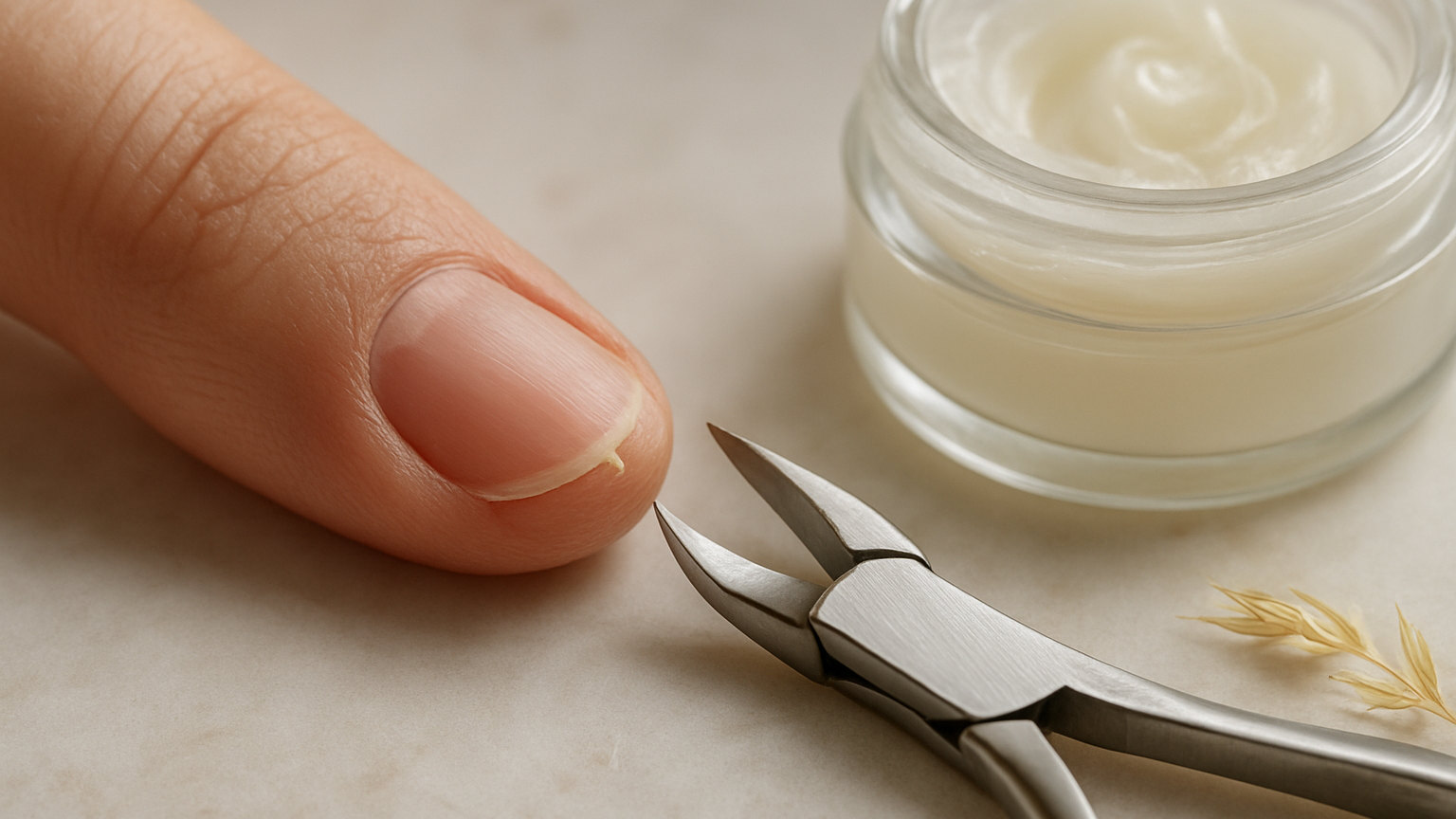
A hangnail is a small strip of skin that has torn away from the side of the nail. It is a dryness problem, and the two instinctive responses to one, pulling it off and cutting the cuticles back, are what turn a minor annoyance into an infection.
What causes them?
Dry skin around the nail, which loses flexibility and splits under everyday stress. That is the underlying cause in almost every case.
Frequent hand washing and detergents, which strip the lipids holding the skin together. Alcohol hand gel, which is drying. Cold weather and low humidity.
Nail biting and picking at the skin around the nails. Aggressive cuticle work during manicures. Acetone nail polish remover.
Wet work of any kind, which is why they are common in healthcare, catering and cleaning.
Why should you not pull them?
Because skin tears along the path of least resistance rather than where you want it to, so pulling removes a larger piece and creates an open wound.
That wound sits right at the nail fold, which is warm, frequently damp and constantly in contact with things. It is one of the easier places on the body to introduce infection.
Cut them instead, with clean nail scissors or cuticle nippers, as close to the base as possible without cutting into living skin.
Why should you not cut cuticles?
The cuticle is not dead skin waiting to be removed. It is the seal between the nail plate and the skin, and it keeps bacteria and water out of the space beneath.
Cutting it removes that seal, which is why regular cuticle cutting is associated with infection and inflammation.
Repeated cutting or aggressive pushing can also damage the matrix underneath, where the nail is produced, causing permanent ridges or deformity.
Push back gently after softening instead, and leave it there.
What is paronychia?
Infection of the skin fold around the nail, and the usual consequence of a torn hangnail or a cut cuticle.
Acute paronychia is bacterial, developing over a day or two with redness, swelling, throbbing pain and sometimes pus. It is the most common hand infection.
Chronic paronychia develops over weeks, usually in people with frequent wet work, and is often fungal or mixed. The nail fold becomes swollen and the cuticle disappears, and the nail may become ridged or discoloured.
How do you treat it?
For a mild acute case: warm salt water soaks for ten to fifteen minutes three or four times a day, keeping the area clean and dry between.
Most settle within a few days. An antiseptic can help.
See a GP or pharmacist if there is pus, if it is spreading, if pain is significant, or if it has not improved in a few days. An abscess may need draining, and antibiotics are sometimes needed.
Chronic paronychia needs the wet work addressing as well as treating, and it takes weeks to months to settle.
Anyone with diabetes or a weakened immune system should have hand infections seen promptly rather than managed at home.
How do you prevent them?
Oil, applied consistently. Cuticle oil once or twice daily, worked into the nail fold and the surrounding skin. Jojoba absorbs well.
Hand cream after every wash, which does more for the skin around the nails than any nail product.
Rubber gloves for washing up and cleaning, which removes the largest single source of drying.
Avoiding acetone where possible, and moisturising immediately afterwards when you use it.
What should you ask for at a salon?
Cuticles pushed back rather than cut, which any competent technician will do on request.
Minimal filing of the nail surface. Tools that have been properly sterilised, which is worth asking about, since salon-acquired infections do occur.
If a technician cuts cuticles as standard and will not adjust, that is a reasonable basis for going elsewhere.
When is it something else?
Persistent swelling of the nail fold that does not settle, particularly with nail changes, which may be chronic paronychia or something needing assessment.
A painful swelling with no obvious cause. Recurrent infection in the same finger.
And any lesion at the nail fold that bleeds, ulcerates or does not heal, which needs a GP rather than another soak.


