
Home manicures fail for two reasons: the nail was not properly prepared, and the coats were too thick. Neither is about the polish, which is why expensive polish applied badly chips faster than cheap polish applied well.
What is the order?
Remove old polish. Shape the nails. Soften and push back the cuticles. Clean the nail plate. Base coat, two thin colour coats, top coat.
Moisturise and apply cuticle oil at the end, after the polish is dry, rather than before, since oil on the nail prevents polish adhering.
How should you prepare the nails?
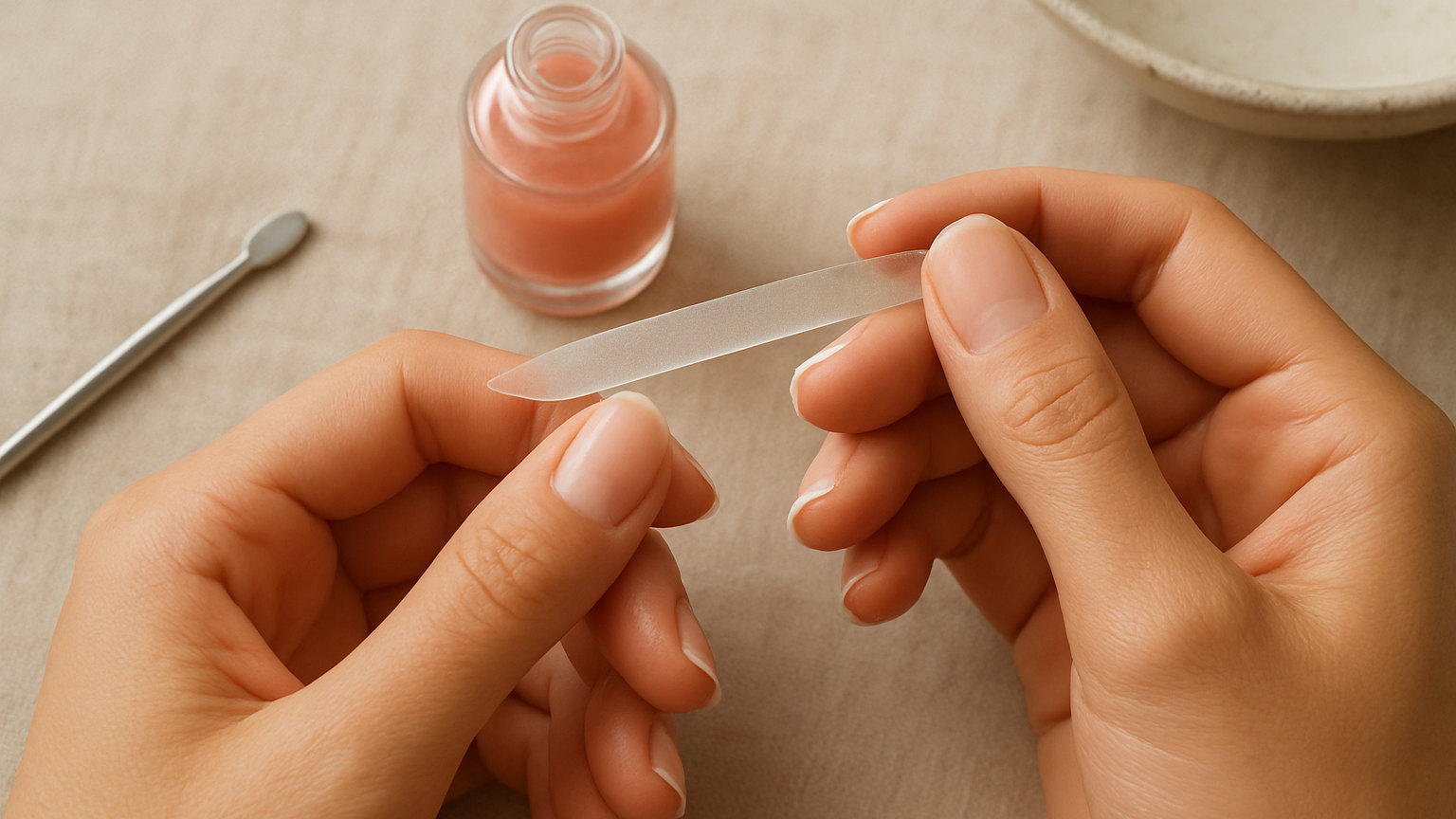
File on dry nails, in one direction rather than sawing back and forth, which separates the layers at the edge.
Soak briefly in warm water or apply cuticle remover, then push the cuticles back gently with a rubber-tipped tool or an orange stick. Do not cut them, since the cuticle seals the nail to the skin and cutting it invites infection.
Trim only genuinely loose hangnails.
Then wipe each nail with nail polish remover or surgical spirit to remove oil, which is the step most often skipped and the one that most affects how long it lasts. Even clean nails carry enough oil to prevent adhesion.
Why does a base coat matter?
Three reasons. It gives the polish something to grip, which extends wear considerably.
It prevents staining, particularly from dark reds and blues, which leave nails yellow otherwise.
And ridge-filling base coats smooth the surface, which makes colour sit more evenly.
Skipping it is the most common reason a manicure chips within two days.
How do you apply the colour?
Thin coats, always. Two thin coats dry harder and last longer than one thick one, which stays soft underneath and dents.
Wipe the brush against the bottle neck so it is not overloaded. Place the brush a small distance from the cuticle, push it gently back toward the cuticle, then draw it down the centre. Then one stroke down each side.
Three strokes per nail. Resist going back over an area that is already drying, which drags the polish.
Cap the free edge by running the brush along the tip of the nail, which seals it and is the single most effective anti-chip measure.
How long between coats?
Two minutes at least, and longer for dark or thick formulas. Applying the next coat before the previous one has set is what produces bubbles and a manicure that dents on contact.
Polish is touch-dry in minutes and fully hardened in a couple of hours. Anything done in the first hour risks marking it.
Quick-dry drops or sprays help the surface set and do not harden the layers underneath.
What makes it last?
Capping the free edge with every coat, including the top coat. Applying a fresh top coat every two or three days.
Rubber gloves for washing up, since water and detergent lift polish at the edges.
Avoiding hot water for the first few hours after painting.
And keeping nails shorter, since long nails flex and the polish cracks.
How do you tidy the edges?
A small brush dipped in nail polish remover, run around the cuticle and the sides. This is what makes a home manicure look professional rather than the application itself.
A cotton bud works if you do not have a brush. Do it before the polish fully hardens.
How do you remove it properly?
Acetone-free remover is gentler and slower. Acetone is faster and more drying, and better for glitter or dark shades.
Hold a soaked pad against the nail for ten to twenty seconds rather than rubbing immediately, which lets it dissolve the polish rather than smearing it.
Apply cuticle oil and hand cream afterwards, since remover of any kind dehydrates the nail plate.
Leaving nails bare for a day or two between manicures allows them to rehydrate, though nails do not need to breathe, which is a common misconception since they receive no oxygen from the air.


