
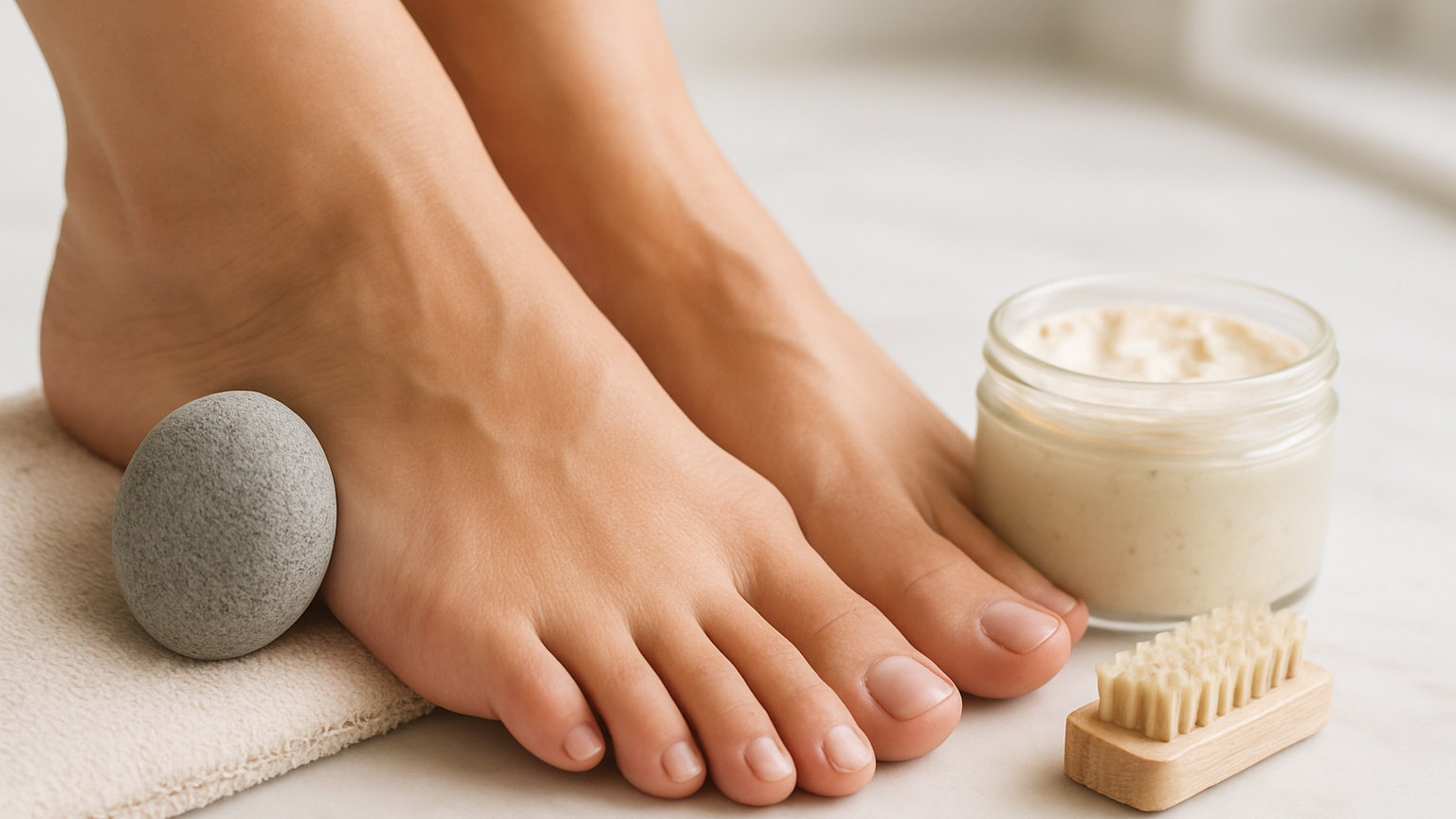
Feet are the most neglected part of most people's routine and the place where neglect produces genuine problems rather than cosmetic ones. They are also enclosed, warm and damp for most of the day, which favours everything you would rather not have.
What causes hard skin and cracked heels?
Pressure and friction, which cause the skin to thicken as a protective response. That is a callus, and it is functional rather than a fault.
The problem comes when thickened skin becomes dry and inflexible, at which point it cracks under the pressure of walking. Cracked heels can bleed and become infected.
Contributing factors include open-backed shoes, standing for long periods, being overweight, dry skin generally and low humidity.
How do you treat it?
Moisturise, with something considerably richer than a hand cream. Urea is the key ingredient here: at ten per cent it hydrates, and at twenty-five to forty per cent it actively softens and breaks down thickened skin.
Apply at night and wear cotton socks over it, which is the most effective simple intervention available.
File gently with a foot file on dry skin rather than wet, which is more controlled. Little and often rather than removing a lot at once.
Do not use a blade or a corn plaster containing salicylic acid without advice, particularly if you have diabetes or circulation problems.
What about athlete's foot?
Extremely common, and frequently mistaken for dry skin. It produces itching, scaling and cracking, most often between the fourth and fifth toes.
It responds to antifungal cream from a pharmacy, applied for one to two weeks after the symptoms clear rather than stopping when they do. Stopping early is why it recurs.
It is also the usual reservoir for fungal nail infection, so treating it matters beyond the skin.
Dry thoroughly between the toes, change socks daily, alternate shoes so each pair dries out, and wear flip-flops in communal showers.
What causes foot odour?
Bacteria breaking down sweat, not the sweat itself. Feet have a high density of sweat glands and are enclosed, which is an ideal environment.
Wash daily and dry thoroughly. Change socks daily, and twice if you sweat heavily. Choose natural fibres or technical socks over nylon.
Alternate shoes rather than wearing the same pair daily, since a pair needs twenty-four hours to dry. Antibacterial foot spray or powder helps.
Persistent odour with pitted skin on the soles suggests pitted keratolysis, a bacterial condition that needs treating rather than washing harder.
What about corns?
Localised areas of thickened skin caused by concentrated pressure, usually from footwear. Hard corns on the tops of toes; soft corns between them.
They recur unless the pressure is addressed, which usually means different shoes. Padding relieves the pressure while the skin recovers.
A podiatrist can remove them properly. Cutting them yourself risks infection, and medicated corn plasters can damage surrounding skin.
How should you cut toenails?
Straight across, level with the end of the toe, not rounded at the corners and not too short. Rounding the corners is what causes ingrown nails.
File any sharp corner rather than cutting it away. Cut after a bath when the nail is softer.
What footwear matters?
Shoes with enough room in the toe box, since crowding causes corns, ingrown nails and bunion progression.
Alternating pairs. Replacing shoes when the support has gone, which is sooner than most people replace them.
Breathable materials. And going barefoot at home sometimes, which allows feet to dry out.
When do feet need medical attention?
Anyone with diabetes should have any foot problem seen promptly rather than treated at home, since reduced sensation and circulation mean small problems become serious ones quickly. Annual foot checks are part of routine diabetes care.
The same applies to anyone with peripheral arterial disease or neuropathy.
For everyone: any wound that is not healing, spreading redness, significant pain, numbness, or a change in the colour or temperature of the foot.
And any new mole or dark mark on the sole or under a toenail, since melanoma occurs there and is frequently found late.


