
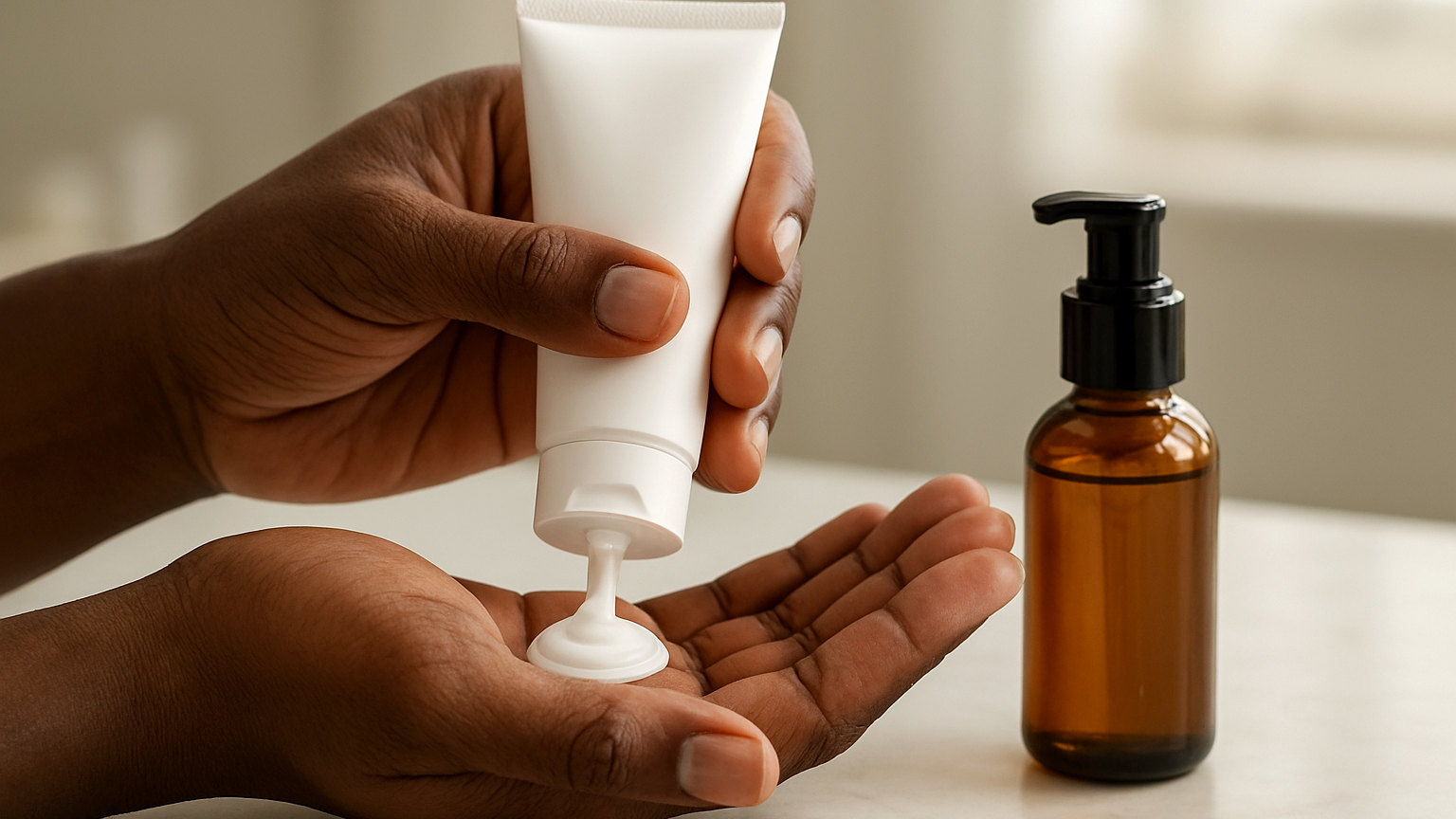
Hands receive comparable sun exposure to the face, have thinner skin, very little subcutaneous fat and few sebaceous glands, and are washed many times a day. They also get a fraction of the attention, which is why they frequently look a decade older than the face above them.
Why do hands age faster?
Thin skin with little fat underneath, so volume loss shows quickly as prominent veins and tendons.
Few oil glands, so they dry out readily and have less natural protection.
Constant sun exposure, including through car windows, which produces the pigmentation and texture changes that read most clearly as age.
Repeated washing, which strips the barrier several times daily in a way no other body area experiences.
What causes dryness and cracking?
Water and detergents, in combination. Each wash removes surface lipids, and the barrier does not fully recover before the next one.
Hot water, which strips more than warm. Alcohol hand gel, which is drying with repeated use.
Cold weather and low indoor humidity. Household cleaning products, which are alkaline and defatting.
Underlying conditions, particularly hand eczema, which is common in anyone whose work involves frequent wet work.
What is the basic routine?
Moisturise after every wash, which is the single most effective habit and the hardest to establish. Keeping a hand cream at every sink helps more than buying a better one.
Use lukewarm rather than hot water, and a gentle wash rather than harsh soap.
A richer cream or an ointment at night, when it has hours to work. Cotton gloves over it if hands are badly cracked.
Sunscreen on the backs of the hands, reapplied after washing.
What should be in a hand cream?
Humectants such as glycerin and urea, which draw water in. Emollients such as shea butter and squalane. Occlusives such as petrolatum and dimethicone, which prevent water leaving.
Urea at five to ten per cent is particularly effective for rough, thickened skin, and higher concentrations help cracked heels and hands.
For very dry or cracked hands, an ointment rather than a lotion, since a lotion is mostly water and evaporates.
Fragrance-free if your hands are sensitive or eczema-prone, since fragrance on damaged skin is a common cause of contact dermatitis.
Does sun protection matter here?
More than almost anywhere, and it is the most neglected part.
The backs of the hands accumulate ultraviolet exposure continuously, including while driving, and it produces solar lentigines, thinning and the crepey texture that develops from the forties.
Skin cancers also occur on the hands and are frequently found late.
The practical problem is that sunscreen washes off with every hand wash, which is why a hand cream containing SPF kept by the sink is a more realistic solution than remembering to reapply.
What about hand eczema?
Common, and worth distinguishing from ordinary dryness. It produces itching, redness, small blisters, cracking and sometimes weeping.
It is strongly associated with wet work, detergents and frequent hand washing, which is why it is common in healthcare, catering and hairdressing.
Management is barrier protection: gloves for wet work, frequent emollient use, and avoiding irritants. A GP can prescribe a topical steroid for flares, which is appropriate short-term treatment rather than something to avoid.
Persistent hand eczema warrants patch testing, since contact allergy to something specific is a common contributor.
What can be done about existing damage?
Pigmentation responds to the same treatments used on the face: azelaic acid, niacinamide, vitamin C and a retinoid, applied at night. It takes six to twelve months, since hand skin turns over slowly.
Texture improves with a retinoid and with regular use of a urea-containing cream.
Volume loss can be addressed with dermal filler, which is a clinical procedure. Intense pulsed light treats sun spots effectively.
Sunscreen from now on does more for the next decade than any treatment does for the last one.
What about gloves?
Rubber gloves for washing up and cleaning, which removes the largest single source of damage for most people.
Cotton liners inside them if hands sweat, since sweat trapped in rubber causes its own irritation.
Warm gloves in cold weather, since cold and wind strip the barrier and worsen cracking.


