
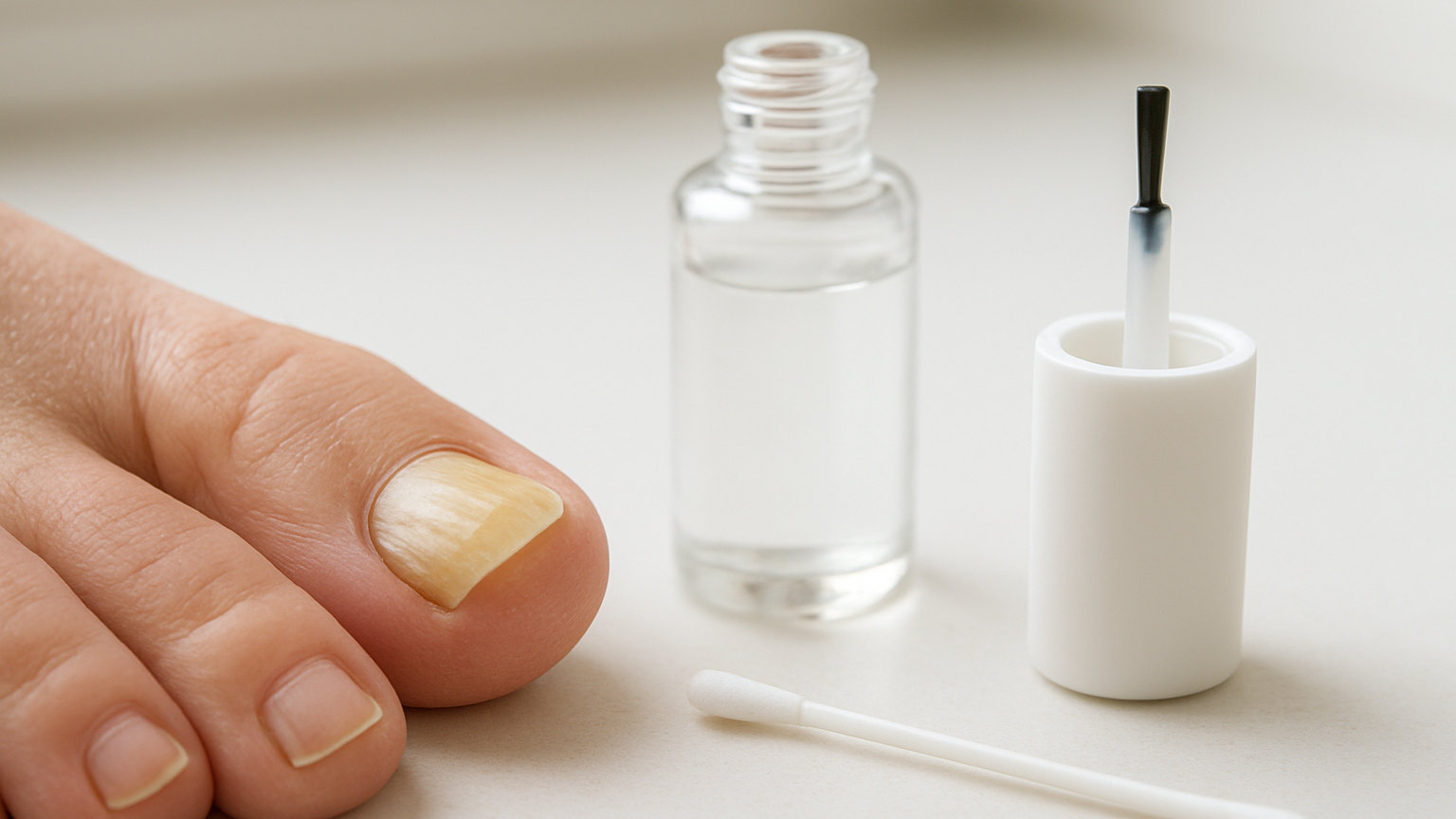
Fungal nail infection affects a substantial proportion of adults and becomes more common with age. It is slow to treat, frequently misdiagnosed, and worth confirming before starting, since treatment runs for six months to a year.
What does it look like?
Usually starting at the free edge or side of a toenail. The nail thickens, becomes yellow, white or brown, and may crumble at the edge.
Debris accumulates under the nail, lifting it from the bed. The nail becomes brittle and may develop an odour.
It typically affects one or two nails initially and spreads slowly. The big toe is the most common site.
Why does confirmation matter?
Because around half of thickened, discoloured nails turn out not to be fungal, and treating the wrong thing for a year is a poor use of time.
Psoriasis affects nails in a way that looks very similar. So does repeated trauma, common in runners and anyone whose shoes are slightly too short. Lichen planus, eczema and simple age-related thickening all mimic it.
A GP can take nail clippings for laboratory testing, which takes a few weeks and determines whether treatment is worth starting. Oral antifungals require blood monitoring in some cases, which is another reason not to take them speculatively.
What causes it?
Dermatophyte fungi, the same organisms causing athlete's foot, which is frequently present alongside and is often the original source.
Warm, damp conditions favour them: enclosed footwear, communal showers, swimming pools and gyms.
Risk rises with age, diabetes, poor circulation, a weakened immune system and any nail trauma that creates a way in.
It is mildly contagious, spreading between nails, between people in shared spaces, and via shared nail tools.
What treatments work?
Topical antifungal nail lacquers, usually amorolfine, available from pharmacies. Applied weekly for six months for fingernails and up to a year for toenails.
They work reasonably for mild infections affecting less than half the nail and not involving the matrix. Success rates are moderate rather than high.
Oral terbinafine is considerably more effective and is prescription-only. Typically six weeks for fingernails and three to six months for toenails. It can affect liver function, so blood tests are sometimes arranged.
Combining oral and topical treatment improves results for stubborn infections.
Why does it take so long?
Because the treatment does not repair the damaged nail. It stops the fungus, and the affected nail then has to grow out entirely.
Fingernails take around six months to replace fully; toenails take twelve to eighteen. Judging treatment before the nail has grown out is judging an incomplete process.
Filing the thickened nail down thinner helps topical treatment penetrate and speeds the visible improvement.
What does not work?
Vicks VapoRub, tea tree oil and vinegar soaks all circulate widely. There is limited evidence for any of them, and they are unlikely to clear an established infection.
Ordinary nail polish, which traps moisture and can make it worse. Antifungal creams intended for skin, which do not penetrate the nail plate.
Laser treatment is offered privately and the evidence is weak relative to the cost.
How do you stop it recurring?
Recurrence is common, which makes this the important part.
Treat any athlete's foot at the same time, since it is usually the reservoir. Continue treating it after the nail clears.
Dry feet thoroughly, especially between the toes. Change socks daily and choose breathable footwear. Alternate shoes so each pair dries fully.
Wear flip-flops in communal showers and changing rooms. Disinfect or replace nail clippers, and do not share them.
Antifungal powder or spray in shoes helps, and old shoes can harbour spores.
When should you see a GP?
Before starting treatment, for confirmation. If you have diabetes or poor circulation, where any foot infection needs proper assessment.
If several nails are affected, if the infection reaches the base of the nail, or if there is pain or spreading redness.
And if six months of topical treatment has produced no visible improvement at the base of the nail, which is where new growth appears first.


