
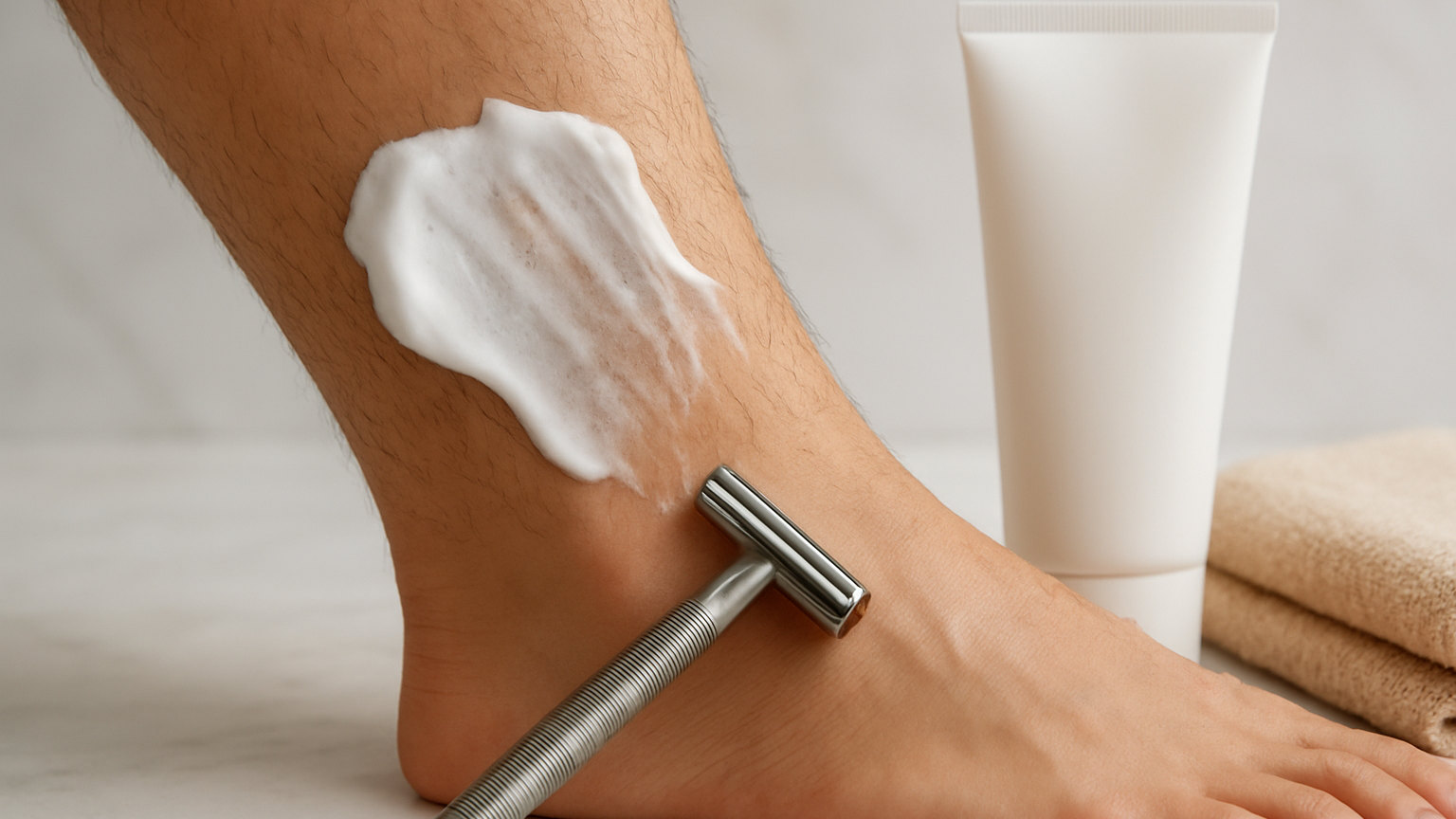
Something between the blade and the skin is not optional. It reduces friction, softens the hair and lets the blade glide rather than scrape. What that something is matters less than the fact that it exists, and several common substitutes are worse than nothing.
What does it actually do?
Three things. It lubricates, so the blade slides rather than dragging, which is the main protection against razor burn.
It hydrates the hair, softening it so it cuts with less force. Hair that has absorbed water can be up to a third easier to cut.
And it lifts the hair away from the skin slightly, so the blade meets it at a better angle. This is what a brush and a traditional cream do particularly well.
How do the types compare?
Foams from a can are convenient and the least effective. They are mostly air, provide limited lubrication and often contain alcohol, which dries the skin.
Gels provide better cushioning and glide, and transparent gels have the advantage of letting you see what you are shaving, which suits shaping.
Creams, either from a tube or a bowl, offer the best lubrication and are worth the extra step. Applied with a brush they lift the hair and produce a noticeably better shave.
Oils give excellent glide with no lather, suit sensitive skin and short stubble, and can clog cartridge razors.
Traditional shaving soap requires a brush and lathering and performs very well, with a learning curve.
What should you not use?
Ordinary bar soap or shower gel, which is the most common substitute and one of the worst. Soap has a high pH, strips the skin barrier and provides poor glide, and it leaves the skin more vulnerable to the blade rather than less.
Water alone, which offers almost no lubrication.
Nothing at all, which is dry shaving and reliably causes irritation, cuts and ingrown hairs.
Does hair conditioner work?
Surprisingly well as an emergency substitute, and it is a reasonable habit for legs.
Conditioner is designed to coat and provide slip, which is broadly what a shaving product does. It softens the hair and reduces drag effectively.
It does not lift the hair or produce visible coverage, and it can clog a razor more than a proper cream. As a fallback it is considerably better than soap.
Which suits sensitive skin?
Fragrance-free formulations, since fragrance is a common cause of irritation on skin that has just had its barrier disrupted.
Cream or oil rather than aerosol foam, which frequently contains alcohol and provides less cushioning.
Look for glycerin, aloe and allantoin. Avoid menthol and eucalyptus, which produce a cooling sensation that feels soothing and is irritant.
How much should you use, and how long should you leave it?
Enough for a visible layer that you cannot see skin through, and considerably less than a canful.
Leave it for thirty to sixty seconds before starting, which is the step almost everyone skips. That minute allows the hair to absorb water and soften, and it makes a noticeable difference to comfort.
Reapply between passes rather than shaving over bare skin, which is where most irritation happens.
Do you need a brush?
Not essential, and it genuinely improves the result. A brush lifts hairs away from the skin, exfoliates gently, and produces a more even lather with less product.
Synthetic brushes perform as well as badger hair, cost less and involve no animal welfare question. A cheap synthetic brush and a bowl of cream is one of the better value upgrades in grooming.
What about aftershave?
Alcohol-based aftershaves sting because they are irritating skin whose barrier has just been disrupted. The antiseptic argument is weak for ordinary shaving.
A fragrance-free balm or moisturiser applied to slightly damp skin does considerably more. If you want the scent, apply fragrance to clothing rather than to freshly shaved skin.
How much does it cost to do this properly?
Less than most people assume. A tube of shaving cream lasts months and costs a few pounds; a synthetic brush costs about the same and lasts years.
Set against the cost of aftershave balms bought to soothe irritation that better lubrication would have prevented, proper preparation is one of the cheapest improvements available in grooming. The expensive part of shaving is almost always the blades, not what goes under them.


