
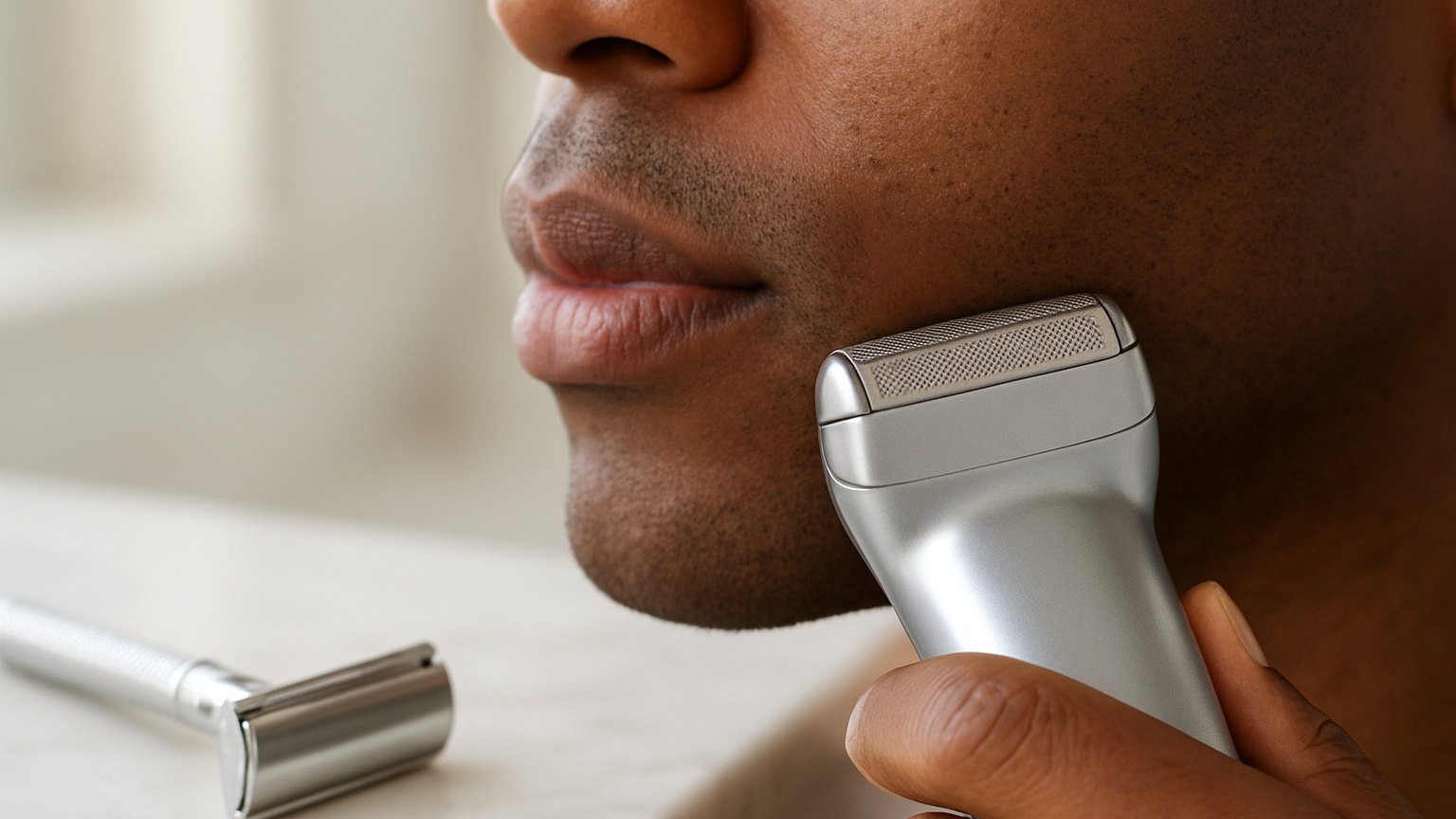
An electric shaver cuts hair above the skin surface; a blade cuts at or below it. That single difference explains the trade-off entirely: less close, considerably less irritation.
Who do they suit?
Anyone with chronic razor burn, since the blades never touch the skin directly and the barrier is not scraped.
Anyone prone to ingrown hairs, particularly with curly coarse hair, since hair cut above the surface cannot grow back into the follicle.
Anyone with acne, eczema or rosacea on the shaved area, where a blade over inflamed skin causes real problems.
And anyone who shaves daily and needs speed more than closeness.
Who do they suit less?
Anyone who needs a genuinely close finish, since an electric shave is visibly less close and stubble reappears sooner.
Anyone with very fine sparse hair, which foil shavers can struggle to catch. Anyone shaving large body areas, where a blade is faster.
And anyone who has not used one before and expects immediate results, since skin usually takes two to four weeks to adjust.
What is the difference between foil and rotary?
Foil shavers use oscillating blades behind a perforated metal screen. They give a closer, more precise result and suit straight hair, daily shaving and defined lines.
Rotary shavers use three or four spinning heads that pivot to follow contours. They handle coarse or curly hair better, cope with longer stubble, and suit less frequent shaving and awkward areas such as the neck and jaw.
Neither is superior in general. Foil for daily and straight, rotary for coarse and contoured is a reasonable rule.
Wet or dry?
Dry shaving with an electric is faster and can be done anywhere. It also creates more friction and heat.
Wet-capable shavers used with a gel or foam are gentler and produce a slightly closer result, at the cost of time and cleaning.
For sensitive skin, wet use with a lubricant is generally more comfortable. For speed, dry on clean skin works well.
How do you use one properly?
On clean dry skin if shaving dry. Washing the area first and drying it thoroughly removes oil that reduces the shaver's grip.
Move against the direction of growth, which is the opposite of blade shaving, since the shaver needs to catch and lift the hair.
Use short strokes and let the shaver do the work. Pressing harder does not improve the result and causes irritation and heat.
Hold the skin gently taut with the free hand, and go over the neck and jaw slowly, since growth direction changes.
Why does it take weeks to adjust?
Because hair that has been cut below the surface by a blade emerges at a different angle, and because the skin is used to a different kind of contact.
Most people find the first two to four weeks give a poorer result than their blade did, then it improves. Giving up in week one is the most common reason people conclude electric shaving does not suit them.
How do you maintain one?
Clean after every use, either by rinsing under water if it is wet-capable or brushing out the head. Hair and skin debris left in the head is the main cause of poor performance.
Oil the blades regularly if the manufacturer recommends it. Replace foils and cutters every twelve to eighteen months, and rotary heads every eighteen to twenty-four.
A shaver that has stopped performing is usually one with worn heads, and people frequently replace the whole unit when a head replacement would have fixed it.
Is the cost worth it?
Over several years, generally yes. A mid-range shaver costs roughly what two years of cartridges do, and replacement heads are cheaper than a year of blades.
The stronger argument is comfort rather than cost. For anyone whose skin reacts to blades every time, the calculation is not really about money.
Can you use one on the body?
Yes, and body groomers are a distinct category worth knowing about. They typically pair a foil shaver with adjustable guards, so you can trim rather than shave where a close finish would cause ingrown hairs.
For chest, back and the bikini area, a body groomer used with a short guard avoids the mechanism behind razor bumps entirely. For legs, a blade is faster and generally tolerated fine, so the case is weaker there.


