
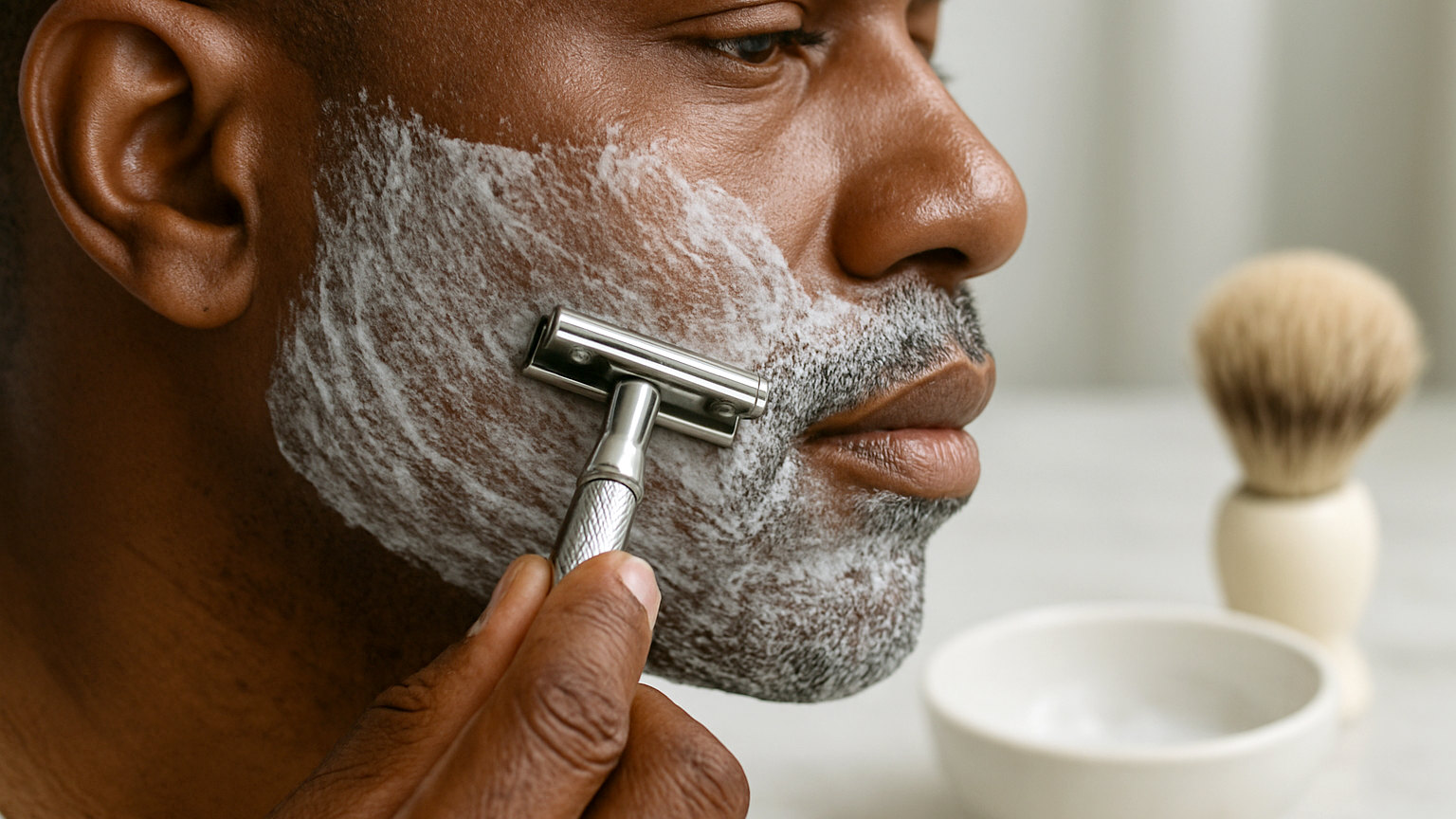
Shaving is technique before it is equipment. The same razor produces a comfortable shave or a rash depending almost entirely on preparation and pressure, and none of what follows costs anything.
Why does preparation matter so much?
Because hair absorbs water and softens considerably when wet. A hydrated hair is much easier to cut, which means less pressure and fewer passes.
Two to three minutes of warm water is roughly what it takes. Shaving at the end of a shower rather than the beginning is the single easiest improvement most people can make.
Warm water also softens the skin surface and opens follicles slightly, which reduces drag.
What should you use as a lubricant?
A dedicated shaving cream, gel or oil. Not soap, which strips the skin and provides poor glide, and not water alone.
Apply it and leave it for thirty to sixty seconds before starting, which allows it to soften the hair further.
Creams applied with a brush lift the hair away from the skin, which is why traditional wet shaving produces good results. A brush is not essential and it does help.
Which direction should you shave?
With the direction of growth, which is gentler and produces less irritation and fewer ingrown hairs.
Against the grain gives a closer result and cuts hair below the skin surface, which is precisely what causes ingrown hairs when it grows back.
Growth direction is not uniform. On the face it commonly runs downward on the cheeks and upward or sideways on the neck. On the legs it usually runs downward. Working out your own pattern, by running a hand over stubble in different directions, is worth doing once.
How much pressure should you use?
Almost none. A sharp blade cuts under its own weight, and pressure is what causes the blade to scrape the skin rather than glide over it.
If you need to press, the blade is blunt. That is the most reliable signal available, and it is usually ignored for several shaves too long.
Short strokes, rinsing the blade every two or three, which clears the hair and cream that cause dragging.
What is the right order?
Warm water for two to three minutes. Apply lubricant and wait a minute. Shave with the grain in short light strokes, rinsing frequently.
If you need it closer, reapply lubricant and go across the grain rather than against it. Never shave the same patch repeatedly without reapplying, which is dragging a blade over bare skin.
Rinse with cool water at the end, which reduces immediate inflammation.
What should you do afterwards?
Pat dry rather than rubbing. Apply a fragrance-free moisturiser or balm while the skin is still slightly damp.
Avoid alcohol-based aftershaves, which sting because they are damaging a barrier you have just disrupted. If you want fragrance, apply it to clothing rather than freshly shaved skin.
Leave the area alone for a few hours: no tight clothing over freshly shaved legs, no sun exposure, no exfoliating.
How do you look after the razor?
Rinse it thoroughly and shake it dry rather than wiping the blades, which dulls them. Store it somewhere dry rather than in the shower, since constant moisture corrodes the edge and encourages bacteria.
Replace cartridges every five to seven shaves, or sooner if you have coarse hair. Most people stretch this considerably and blame their skin for the result.
What if you shave every day?
Daily shaving gives skin no recovery time, so technique matters more and blade sharpness matters more still.
Alternating direction between days, or accepting a slightly less close shave on consecutive days, reduces cumulative irritation. Skipping a day where possible helps considerably.
An electric shaver on alternate days is a reasonable compromise, since it cuts further from the skin surface and causes less barrier damage.
Does it differ by body area?
The principles hold everywhere and the details change. Legs are the most forgiving: skin is thicker, hair is usually straighter, and shaving against the grain is often tolerated.
Underarms have hair growing in several directions at once, so short strokes in multiple directions work better than long ones. The bikini line and neck are the least forgiving, with thin folded skin and coarse curly hair, and both do considerably better with the grain and with fewer blades.


