
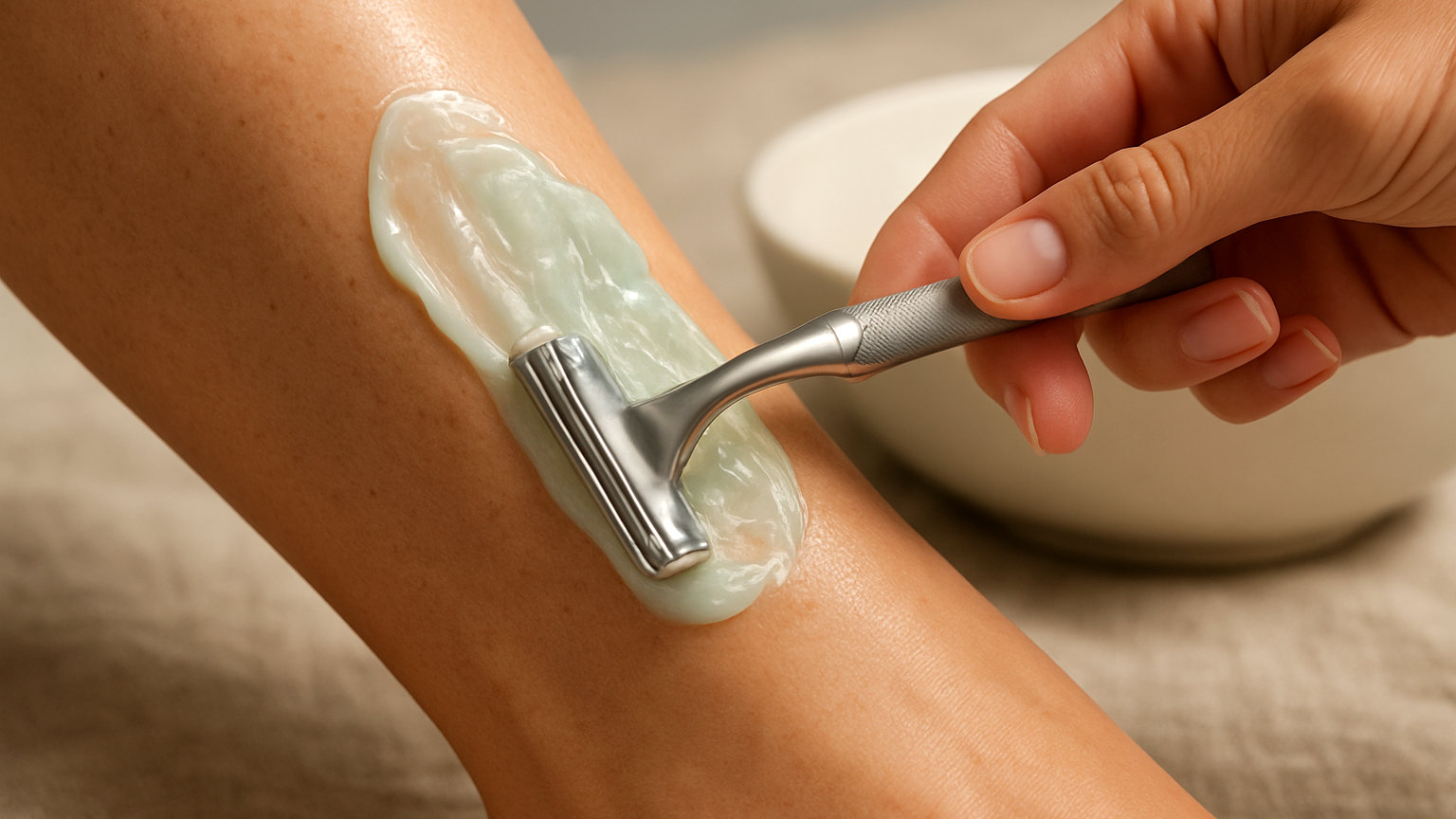
Legs are the most forgiving area on the body to shave, which is exactly why people take shortcuts there. Dry shaving with a blunt disposable in a hurry is common, and so is the itchy, bumpy result.
Why are legs more forgiving?
The skin is thicker than on the face, the hair is generally straighter and finer, and the follicles are less densely packed.
That means legs tolerate shaving against the grain better than the face or bikini line, and ingrown hairs are less common. It does not mean preparation is optional, and the surface area involved makes blade sharpness matter more rather than less.
What is the right preparation?
Shave at the end of a shower or bath, not at the start. Three to five minutes of warm water softens the hair considerably, and leg hair is coarser than facial hair so it benefits more.
Exfoliate gently first, one or two times a week rather than every shave, which lifts flat-lying hairs and clears dead skin.
Use a proper shaving cream or gel. Conditioner works as a reasonable substitute on legs. Soap and shower gel do not, and they are the most common cause of the tight itchy feeling afterwards.
Which direction and what order?
Start at the ankle and work upward, which is against the grain and gives the closest result. Legs generally tolerate this.
If you are prone to bumps or irritation, go downward with the grain instead and accept slightly less closeness.
Work in sections rather than long sweeping strokes, rinsing the blade every few strokes. Long strokes over a large area load the blade with hair and cream and cause dragging.
How do you handle knees and ankles?
These are where most nicks happen, because the skin moves over bone and the surface curves.
For knees, bend the leg so the skin is taut over the kneecap, and shave in short strokes across it rather than straight up.
For ankles and shins, go slowly and let the razor follow the contour rather than pressing. The back of the knee is best done with the leg straight and the skin held gently.
Why do legs itch afterwards?
Usually barrier damage rather than the hair regrowing. Shaving removes surface lipids, and if you have used soap and hot water the barrier is stripped further.
Dry skin then itches, and the tight feeling is often mistaken for stubble. It is worst in winter, when skin is already dry.
Moisturising within a few minutes of getting out of the shower, on damp skin, resolves most of it. A fragrance-free cream rather than a scented body lotion, since freshly shaved skin absorbs more and reacts more.
How do you avoid stubble appearing quickly?
You largely cannot, since hair grows at its own rate, and closeness affects how soon it is visible.
Shaving against the grain cuts below the surface and buys perhaps a day. Exfoliating between shaves prevents dead skin trapping short hairs and making legs feel rough sooner than they are.
What does not work is shaving more often to slow regrowth. Shaving has no effect on the follicle, and increased frequency simply increases irritation.
What about the bikini line and the back of the thighs?
Both are less forgiving than the shins. The skin is thinner, the hair is often coarser and curlier, and folds make the razor angle awkward.
Shave those areas with the grain, use a fresh blade, and do not stretch the skin taut. Ingrown hairs are considerably more common there.
How often should you replace the blade?
Every five to seven shaves for a cartridge, and legs get through blades faster than a face does simply because of the area covered.
Store the razor outside the shower, which is where most leg razors live and where blades corrode fastest. Rinse and shake dry after each use rather than wiping the blades.
Is shaving in the bath worse than the shower?
Slightly, and mainly for hygiene rather than technique. Bath water contains everything already washed off, so shaving in it introduces more bacteria to freshly opened follicles.
The softening effect is the same or better, so if a bath is easier, shave near the end and rinse the legs with clean water from the shower head afterwards. Rinse the razor under running water rather than swirling it in the bath, which is how blades pick up debris and dull faster.


