
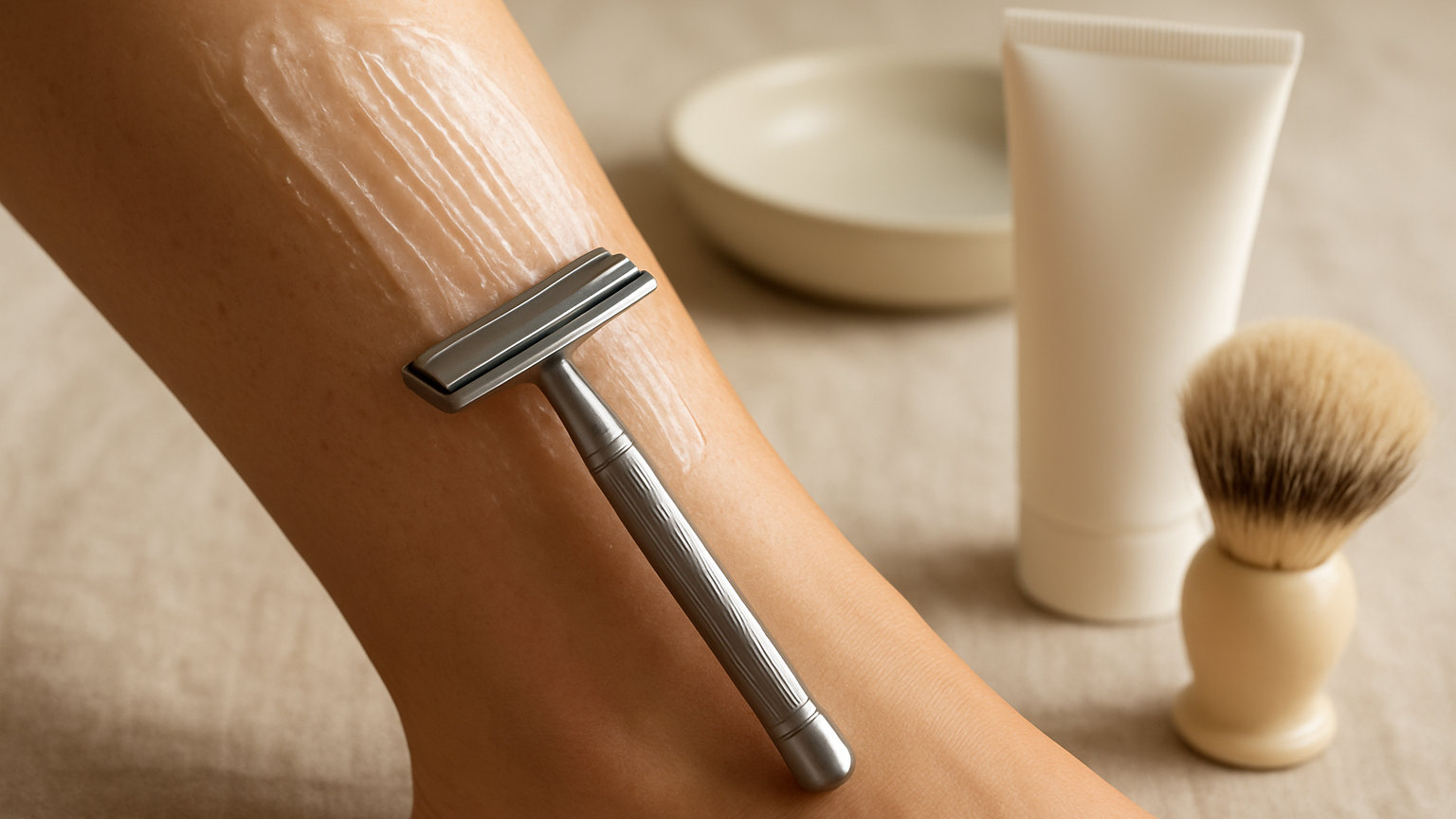
Shaving done well is close to harmless and arguably mildly beneficial. Shaving done badly for twenty years leaves marks that outlast the habit. The difference is almost entirely technique, which is a more encouraging conclusion than it sounds.
What does shaving actually do to skin?
It removes hair and, unavoidably, the outermost layer of dead skin cells. That is a form of mechanical exfoliation, and it happens whether the shave is comfortable or not.
Done with a sharp blade and proper lubrication, that is roughly comparable to a gentle exfoliation and the skin recovers within a day.
Done with a blunt blade and no lubricant, it removes living cells as well and damages the barrier, which takes considerably longer to repair.
Is there any benefit?
Some, and it is rarely mentioned. Regular gentle exfoliation improves cell turnover and can help skincare products penetrate.
Men who shave their faces daily have been observed to show certain signs of ageing more slowly on the shaved area than the unshaved, which has been attributed to that repeated exfoliation. The evidence is limited and the effect is modest.
The more reliable point is that shaving is not inherently damaging, which contradicts a good deal of received wisdom.
What accumulates over decades?
Post-inflammatory hyperpigmentation from repeated irritation, which is more persistent in deeper skin tones and is the most common lasting mark.
Scarring from picked ingrown hairs and repeated folliculitis. Keloid formation at the jawline and nape in susceptible people.
Chronic barrier impairment in anyone who shaves daily with harsh products, which presents as skin that reacts to everything.
None of these is caused by shaving itself. All are caused by shaving badly and repeatedly.
Does it age the skin?
Not meaningfully on its own. The main drivers of facial ageing are ultraviolet exposure, smoking and intrinsic change, and shaving is not on that list.
Where it contributes indirectly is through chronic inflammation. Persistent low-grade inflammation degrades collagen over time, so decades of daily irritation is not neutral.
A comfortable shave causes no meaningful inflammation, which is why technique is the whole answer here.
Does it change the hair?
No. Shaving cuts the shaft above the skin and cannot affect the follicle below it, so hair does not grow back thicker, darker or faster.
The blunt cut end feels coarser than a tapered tip and looks darker because more pigmented shaft is exposed. That is the entire basis of a myth tested repeatedly since the 1920s.
What does the evidence say about frequency?
Daily shaving gives the barrier no recovery time, and the skin of daily shavers has been shown to have measurably higher water loss than unshaved skin.
That recovers within a day or two once shaving stops or reduces. Every other day, or alternating with an electric shaver, allows repair to keep pace.
What are the habits that matter most?
Changing the blade often enough. Using a real lubricant rather than soap. Shaving with the grain. Light pressure and a single pass.
Moisturising afterwards with something fragrance-free. Not using alcohol-based aftershave. Not shaving over broken, inflamed or sunburnt skin.
Those seven habits between them prevent nearly all the lasting effects described above, and none of them costs anything beyond blades.
When should you reconsider the method?
If irritation happens every time despite good technique. If you have chronic ingrown hairs, particularly with curly hair. If you have eczema, rosacea or acne on the shaved area.
An electric shaver, a trimmer, or laser hair removal are all reasonable alternatives, and so is simply not removing the hair. None of those is a failure, and twenty years of daily irritation is a poor thing to accept out of habit.
Can damage already done be improved?
Much of it, yes. Post-inflammatory marks fade over three to twelve months once the irritation stops, helped by azelaic acid, niacinamide and daily sunscreen on exposed areas.
Barrier impairment recovers within two to four weeks of gentler shaving. What does not reverse is established scarring and keloids, which need medical treatment rather than a change of razor. That is the argument for changing habits now rather than after another decade.


