
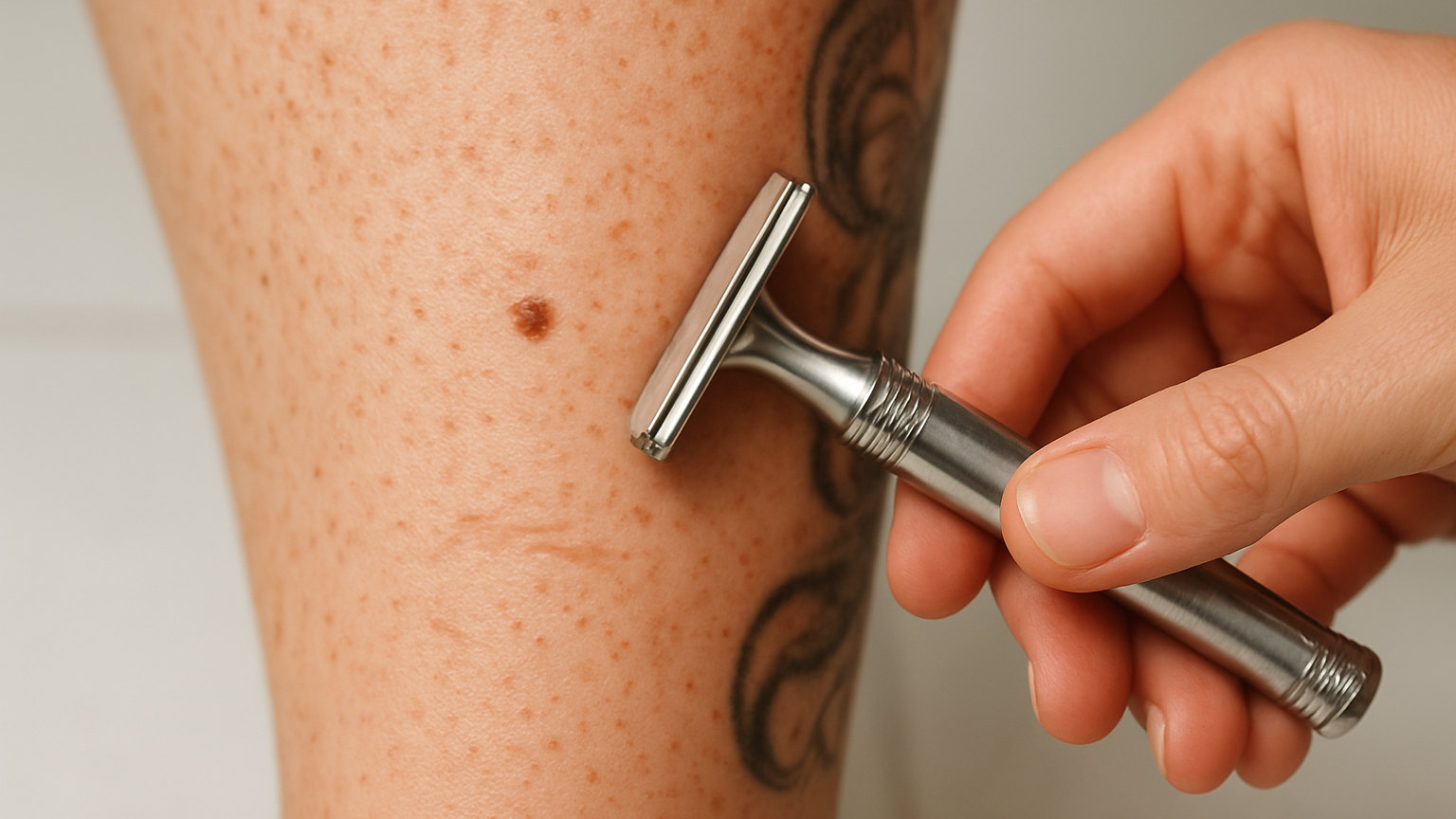
Raised areas of skin are where a razor catches, which makes moles, skin tags, scars and spots the most common source of nicks. In most cases the consequence is a bit of bleeding, and there are a couple of situations where it matters more.
Is it dangerous to cut a mole?
Not in the way the folklore suggests. The persistent belief that nicking a mole causes cancer is not supported by evidence; trauma does not turn a benign mole malignant.
What cutting a mole does do is bleed more than you expect, since moles have a good blood supply, and make the mole harder to assess afterwards because the surface has changed.
The genuine concern is different: a mole that bleeds easily, repeatedly or without obvious trauma is one of the warning signs of skin cancer, and it can be masked by assuming the razor caused it.
What should you do if you cut one?
Apply pressure with a clean tissue until the bleeding stops, which may take longer than an ordinary nick. Keep it clean and let it heal.
Then watch it. If it heals normally within a couple of weeks, that is reassuring. If it does not heal, keeps bleeding, changes shape or colour, or develops an irregular border, see a GP.
Do not attempt to remove a mole or skin tag yourself with a blade, thread or a home removal kit. That risks infection and scarring, and it destroys the tissue a doctor would need to examine if it turned out to matter.
How do you shave around raised skin?
Learn where they are, which sounds obvious and is the main step. Run a hand over the area before shaving and note anything raised.
Go around rather than over, leaving a small margin of stubble, which is far preferable to a cut.
Use short strokes and light pressure nearby. An electric shaver is considerably safer over uneven skin and is a sensible option for anyone with several moles or skin tags on the shaved area.
Do not stretch the skin flat over a raised area to shave across it, which is how they get caught.
What about scars?
Flat mature scars can generally be shaved over normally, and the skin may be slightly more sensitive.
Raised or keloid scars should be avoided, since catching them causes bleeding and repeated trauma can worsen a keloid. Keloids are more common in deeper skin tones and at the jawline and neck.
New scars should be left entirely until fully healed, usually several weeks at minimum, and longer for surgical wounds. Follow whatever advice came with the procedure.
Can you shave over a tattoo?
A healed tattoo, yes, and normal shaving does not fade it. Skin is shaved above the level the ink sits at, so the pigment is not affected.
A new tattoo, no. Wait until it is fully healed, which is usually two to four weeks for the surface and longer underneath, and follow the artist's advice. Shaving a healing tattoo risks infection and can genuinely pull ink out.
Once healed, use a sharp blade and plenty of lubricant, since dragging over tattooed skin causes the same irritation as anywhere else. Sunscreen matters for keeping the tattoo sharp, more than shaving does.
What about spots and acne?
Shave around them. Cutting the top off a spot introduces bacteria, spreads it to adjacent follicles and increases the risk of a lasting mark.
If acne is widespread on the shaved area, an electric shaver is a considerably better option, and shaving less frequently helps.
When should you see a GP?
Any mole that changes size, shape or colour, has an irregular border, itches, bleeds without trauma, or does not heal.
Any new raised lesion appearing in adulthood. Any firm bump at the nape that persists, which may be a keloid or acne keloidalis nuchae.
And any lesion you find yourself repeatedly catching with the razor, since removal by a doctor is straightforward and is a better outcome than cutting it every week.


