
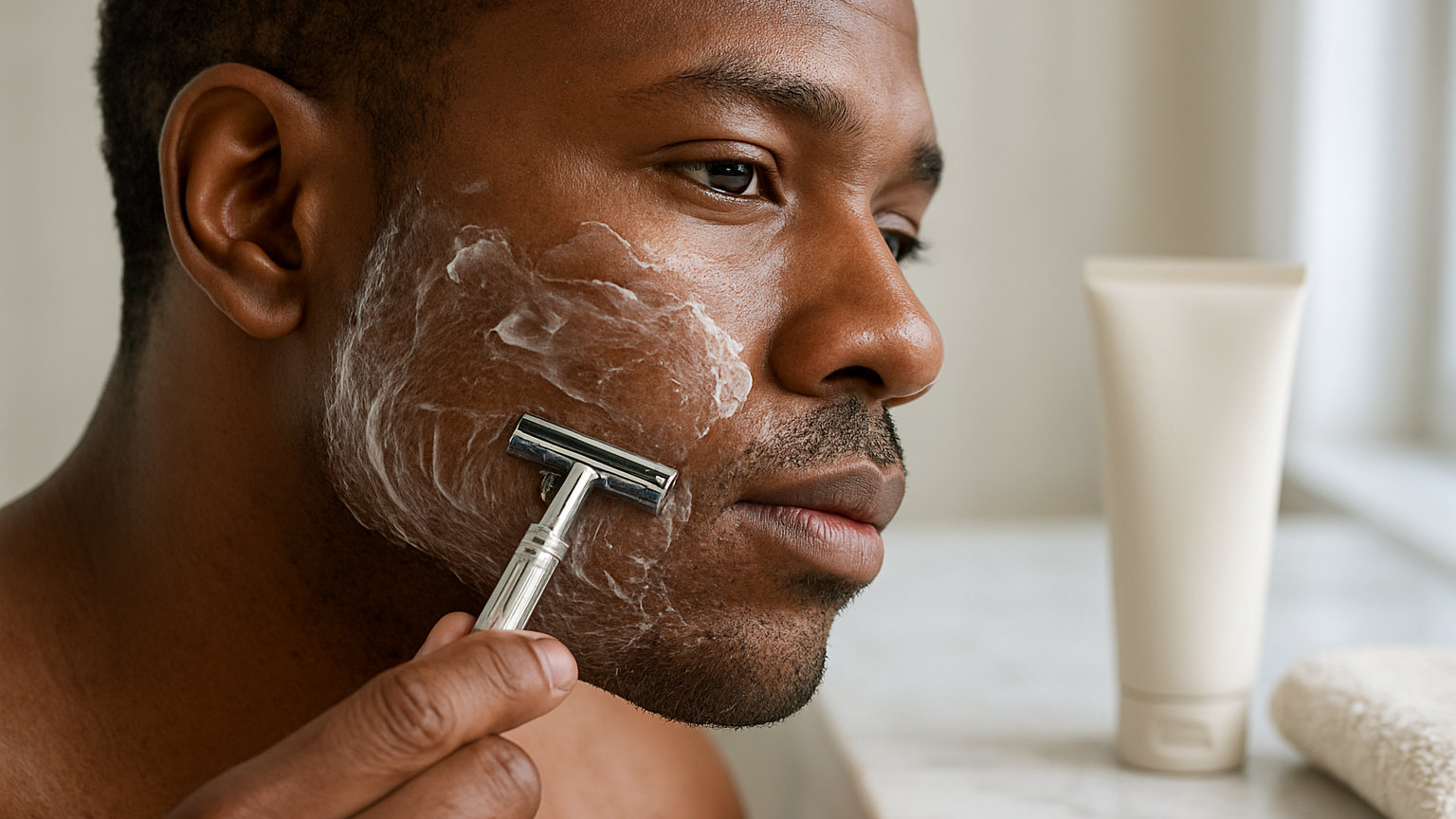
Sensitive skin and a close shave are in direct conflict, and the resolution is usually accepting slightly more stubble. That trade is what makes shaving sustainable rather than a weekly cycle of irritation.
What makes skin react to shaving?
Shaving removes the top layer of skin along with the hair. Skin with an already compromised barrier has less to spare, so the same shave produces more inflammation.
Conditions make it worse. Eczema and psoriasis mean the barrier is already impaired. Rosacea means blood vessels react readily to friction and heat. Acne means shaving over inflamed lesions.
Fragrance and preservatives in shaving products add a chemical irritant on top of a mechanical one.
What should you change first?
Blade sharpness, since a blunt blade requires pressure and repeated passes, which is the largest single cause of irritation.
Shave with the grain only. Accept a less close result, which is the core adjustment and the one that resolves most problems.
Reduce the number of passes to one wherever possible, reapplying lubricant if you need to go over an area again.
Which razor suits sensitive skin?
Fewer blades. Multi-blade cartridges cut hair below the skin surface by design, which increases both irritation and ingrown hairs.
A two-blade cartridge or a single-blade safety razor causes less drag. A safety razor requires learning the angle and rewards it.
An electric shaver is the gentlest option available, since it cuts above the skin surface and does not scrape the barrier. For anyone with persistent irritation, it is the change most likely to work.
Which products?
Fragrance-free, always. Fragrance is the most common cause of cosmetic contact allergy and is being applied to skin that has just been abraded.
Cream or oil rather than aerosol foam, which frequently contains alcohol. Look for glycerin, aloe, allantoin and colloidal oatmeal.
Avoid menthol, camphor and eucalyptus. They produce a cooling sensation that reads as soothing and are irritants.
Avoid alcohol-based aftershave entirely.
How should the routine go?
Warm water for three minutes, at the end of a shower. Apply a fragrance-free cream and leave it a full minute.
Shave with the grain in short strokes with almost no pressure, rinsing the blade every two or three strokes. One pass.
Rinse with cool water, pat dry, and apply a fragrance-free moisturiser or balm while skin is still damp.
Leave the area alone: no exfoliating, no fragrance, no tight clothing, no sun for a few hours.
How often should you shave?
Less often, if you can. Skin needs a day or two to repair, and daily shaving on sensitive skin means it never gets it.
Every other day is a reasonable target. Alternating with an electric shaver on the days in between works well for anyone who needs to be clean-shaven.
What if you have acne or eczema?
Shave around active lesions rather than over them, since cutting the top off a spot introduces bacteria and increases scarring risk.
For eczema, avoid shaving during a flare entirely. An electric shaver is considerably safer on eczematous skin.
If you use topical retinoids or benzoyl peroxide, the skin is more fragile and more easily abraded. Shave before applying rather than after, and consider reducing frequency.
When should you stop shaving altogether?
Temporarily, whenever the skin is broken, actively inflamed, sunburnt or infected. Shaving over any of those makes it worse and risks spreading infection.
Permanently, if irritation happens every single time despite good technique and gentle products. At that point the method is the problem, and laser hair removal or simply growing the hair are legitimate answers rather than defeat.
How long should improvement take?
A fortnight of gentler shaving before judging any change, since existing irritation needs time to settle and the barrier takes two to four weeks to rebuild.
Change one thing at a time. Switching razor, product and technique simultaneously means that if it improves you will not know which change did it, and if it does not you will have nothing left to try.


