
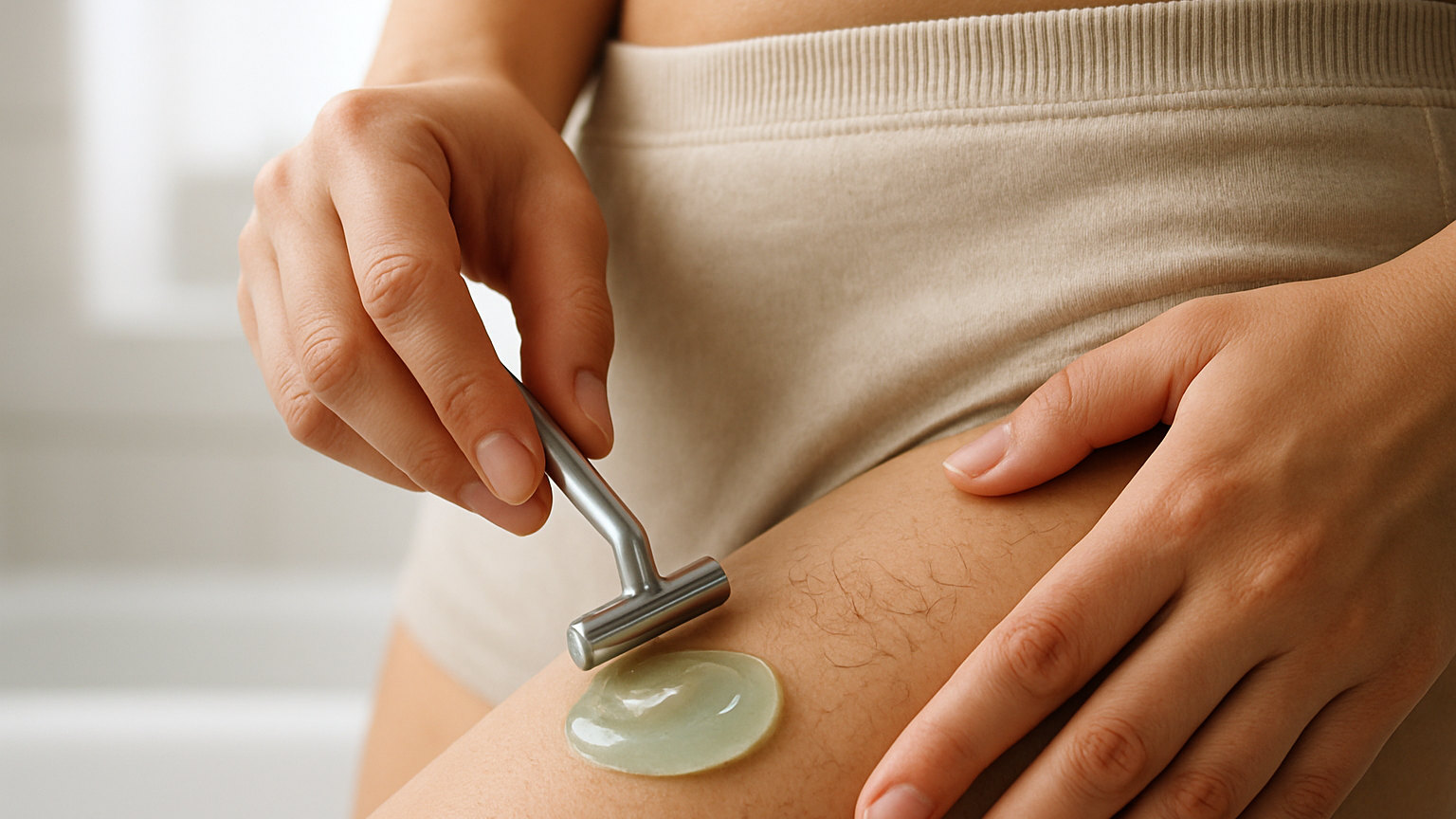
The bikini line combines every factor that makes shaving difficult: coarse curly hair, thin skin, folds and creases, and constant friction from clothing afterwards. The usual advice about getting a close shave works directly against you here.
Why is it so prone to problems?
Pubic hair is among the coarsest on the body and grows from curved follicles, so a freshly cut sharp tip is angled back toward the skin. That is the mechanism behind ingrown hairs.
The skin is thin and folds, so the razor meets uneven surfaces and it is easy to nick. It is also occluded by clothing, warm and moist, which favours bacteria and makes folliculitis more likely.
Regrowth is uncomfortable because coarse stubble against underwear produces genuine itching.
How should you prepare?
Trim first if the hair is long, using scissors or a guarded trimmer. Shaving long hair clogs the razor, requires more passes and causes most of the irritation.
Soften in warm water for at least five minutes, since coarse hair takes longer to hydrate.
Exfoliate gently a day or two before rather than immediately before, which clears dead skin without adding irritation on the day.
Use a fragrance-free shaving cream or gel. Fragrance on this skin is a common cause of contact irritation.
What technique should you use?
With the grain, always, in this area. Against the grain gives a closer shave and reliably produces ingrown hairs on curly coarse hair.
Short strokes, minimal pressure, rinsing the blade frequently. A fresh blade every time or close to it, since a blunt blade here causes disproportionate trouble.
Do not stretch the skin taut, which lifts the hair so it is cut below the surface. Support the skin gently instead.
Use a mirror and good light rather than working by feel, and go slowly around the folds.
What should you do afterwards?
Rinse with cool water and pat dry rather than rubbing. Apply a fragrance-free moisturiser or a light barrier balm.
Wear loose cotton underwear for the rest of the day. Tight synthetic fabric traps heat and moisture against freshly abraded skin, which is a reliable route to folliculitis.
Avoid swimming, hot tubs and heavy exercise for a day where possible, since both introduce bacteria to broken skin.
How do you prevent ingrown hairs?
Do not shave too close, which is the central adjustment. Trimming rather than shaving removes the mechanism almost entirely.
Exfoliate two or three times a week between shaves, using a chemical exfoliant with salicylic or glycolic acid rather than a scrub. Products sold as ingrown hair treatments are usually exactly this.
Keep the skin moisturised, since dry skin makes it harder for hair to break through.
Extend the interval between shaves where you can, giving the skin time to recover.
What if bumps become infected?
Small pustules around hairs are folliculitis and usually settle with warm compresses and leaving them alone.
See a pharmacist or GP if there is spreading redness, increasing pain, significant swelling or a boil-like lump, since these need treating rather than waiting out.
Do not attempt to lance anything yourself in this area. And avoid shaving over any active infection, which spreads it.
Is another method better?
For many people, yes. Trimming with a guard avoids the ingrown hair mechanism entirely and is the lowest-risk option.
Waxing removes hair from the root so regrowth is softer and slower, at the cost of pain and a different set of ingrown hair risks. Laser hair removal is the most effective long-term answer for anyone with chronic bumps.
And leaving it is a legitimate choice. Pubic hair has a protective function, reducing friction and bacterial transfer, and the assumption that it must be removed is a fashion rather than a hygiene requirement.
How do you manage the itch as it grows back?
The itching is coarse stubble catching on clothing rather than anything wrong with the skin, and it peaks two to four days after shaving.
Moisturising daily helps considerably, since softer skin and hair reduces the friction. Loose cotton underwear rather than synthetic. A gentle chemical exfoliant twice a week prevents dead skin trapping the emerging hairs. Resist scratching, which introduces bacteria to follicles that are already open.


