
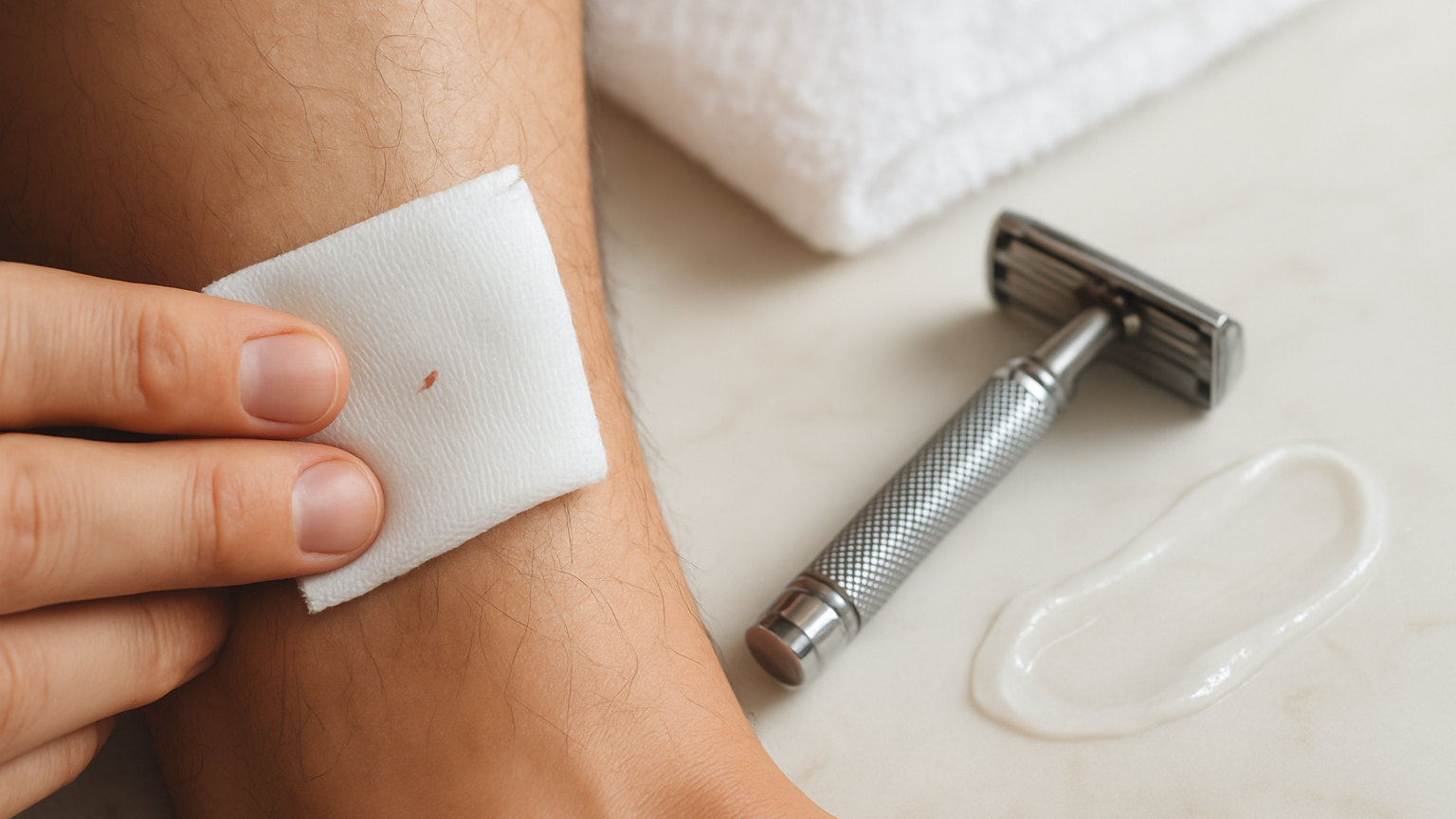
Nicks are almost always caused by one of three things: a blunt blade, an awkward angle over a contour, or too much pressure. All three are fixable, and stopping the bleeding is simpler than the folk remedies suggest.
Why does a blunt blade cause more cuts?
Counterintuitively, dull blades cut more often than sharp ones. A blunt blade catches and skips rather than gliding, and it requires pressure, so when it does catch it digs in.
A sharp blade under light pressure passes over the skin. If you are getting more nicks than usual with the same technique, the blade is the likeliest cause.
Where do they happen most?
Wherever skin moves over bone or curves sharply. The jawline, the chin, under the nose, the Adam's apple, knees, ankles and shins.
The neck is particularly awkward because growth direction changes and the skin is loose. The area under the nose is difficult because there is little room to angle the blade.
Slowing down at those points, and using shorter strokes, prevents most of it.
How do you stop the bleeding?
Rinse with cold water, which constricts the blood vessels. Apply gentle pressure with a clean tissue or flannel for a minute or two without lifting to check.
An alum block or styptic pencil, dampened and pressed to the cut, stops bleeding within seconds. It stings briefly and is the most effective thing available.
Petroleum jelly or lip balm applied over a small nick seals it. A dab of an antiseptic cream afterwards is sensible.
Toilet paper stuck to the face is the traditional method and works badly, since it sticks to the clot and reopens the cut when removed.
What is an alum block?
A block of potassium alum, an astringent mineral that constricts small blood vessels and has mild antiseptic properties.
Wet it and rub gently over the whole shaved area after shaving, or apply directly to a nick. It stings for a few seconds and stops small cuts almost immediately.
It is cheap, lasts years, and is more effective than most aftershave balms at the specific job of settling a shave. Rinse it off after a minute if you find it drying.
How do you prevent them?
Change the blade more often. Use light pressure and short strokes. Slow down over contours.
Do not shave in a rush, which is when most nicks happen. Do not shave over a spot, mole or raised area.
Use enough lubricant and reapply between passes rather than shaving over bare skin.
Make sure you can see what you are doing. Poor light and a steamed-up mirror account for a good proportion of cuts.
What if a cut will not stop bleeding?
Most small nicks stop within five minutes with pressure. Facial skin bleeds readily because it has a rich blood supply, so a small cut can look dramatic.
If bleeding continues beyond ten to fifteen minutes of steady pressure, or if the cut is deep or gaping, seek medical advice.
People taking anticoagulants or antiplatelet medication bleed longer and should be particularly careful, and an electric shaver is frequently recommended for that reason.
Do cuts leave marks?
Small nicks generally heal without trace within a week. Deeper cuts can leave post-inflammatory marks, particularly in deeper skin tones, which fade over months.
Keep the area clean, do not pick the scab, and use sunscreen on healing facial cuts, since ultraviolet exposure darkens marks and extends how long they take to fade.
Repeated cutting in the same place is worth taking seriously, since it usually indicates a technique or blade problem rather than bad luck.
Should you use antiseptic afterwards?
For an ordinary nick, cleaning with water and letting it clot is enough. A small dab of antiseptic cream is reasonable and rarely necessary.
Alcohol-based aftershave is not antiseptic in any useful sense at the concentrations used, and it stings because it is irritating skin whose barrier has just been broken. If you want something with a genuine antibacterial effect after shaving, an alum block does more and does not dry the skin in the same way.


