
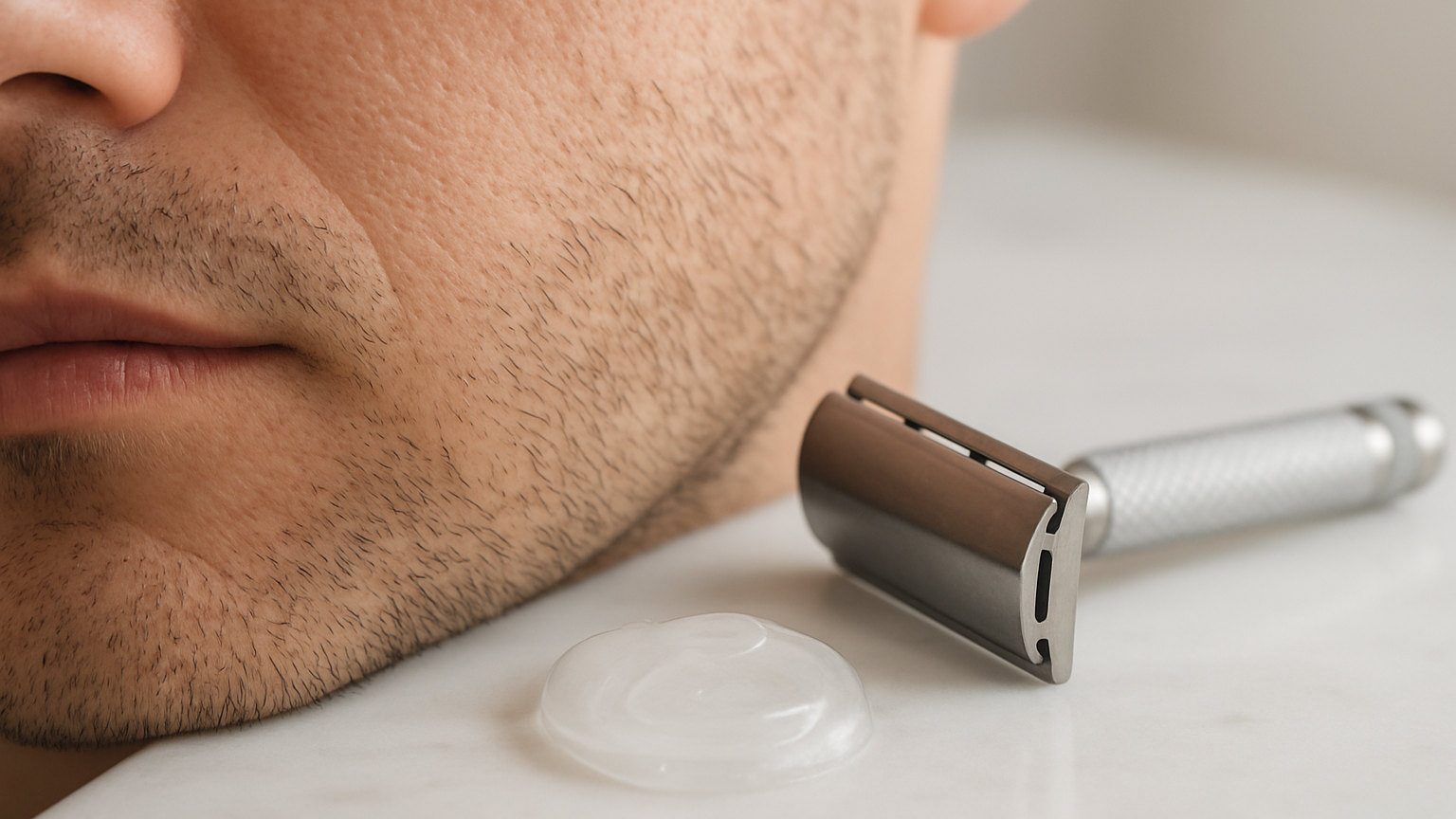
An ingrown hair is one that has grown back into the skin rather than out of it, producing a tender bump with the hair visible beneath the surface. The habits that produce the closest shave are the same ones that cause them, which is the central tension in this topic.
How do they form?
Two ways. A hair cut below the skin surface, which happens when shaving against the grain or stretching the skin taut, grows upward and can fail to break through, curling back into the follicle wall.
Or a hair emerges and curves back into the skin nearby, which happens most readily with curly hair because the shaft is naturally curved.
The skin responds to a hair in the wrong place as it would to any foreign object: inflammation, a raised bump, and sometimes pus.
Why is curly hair more affected?
Because the follicle is curved and the hair grows with a natural bend, so a freshly cut sharp tip is angled toward the skin rather than away from it.
This is why pseudofolliculitis barbae, the medical term for razor bumps, is substantially more common in people with tightly curled hair, particularly on the beard area and neck.
It is a matter of hair structure rather than of skin or hygiene, and it means the standard advice about shaving close needs adjusting rather than following.
How do you prevent them?
Do not shave too close. This is the core of it and the hardest part to accept, since closeness is usually the aim.
Shave with the grain, never against. Do not stretch the skin taut while shaving, which pulls the hair up so it is cut below the surface. Use a single-blade or two-blade razor rather than a five-blade cartridge, which lifts and cuts.
Exfoliate gently two or three times a week between shaves, which clears the dead cells that block the follicle opening. A chemical exfoliant with salicylic or glycolic acid works better than a scrub.
Keep the area moisturised, since dry skin makes it harder for hair to break through.
How do you treat one?
Leave it alone in the first instance. Most resolve on their own within a week or two as the hair works its way out.
Warm compresses for ten minutes several times a day soften the skin and encourage the hair to surface. A salicylic acid product applied to the area helps clear the follicle opening.
Do not dig at it with tweezers or a needle. That introduces bacteria, worsens inflammation and is a common route to scarring and dark marks that outlast the bump by months.
If a loop of hair is clearly visible above the skin, it can be gently lifted with sterilised tweezers without digging. If it is not visible, leave it.
What if they keep happening?
Stop shaving for two to four weeks if you can, which allows existing ingrowns to resolve and gives the skin time to recover. This is the single most effective intervention and the least convenient.
Consider changing method: an electric shaver or clipper leaves hair slightly longer and cuts above the skin, which removes the mechanism entirely.
Consider laser hair removal, which is the definitive solution for chronic razor bumps and is often recommended medically for severe cases rather than purely cosmetically.
What about the marks left behind?
Post-inflammatory hyperpigmentation, which is more common and more persistent in deeper skin tones.
They fade over three to twelve months provided the area is not repeatedly re-inflamed. Azelaic acid, niacinamide and daily sunscreen all speed it. Picking at ingrown hairs is the largest controllable factor in whether they form at all.
When should you see a GP?
If bumps are widespread, painful or persistently infected. If there is significant scarring, or firm raised bumps that could be keloids, particularly at the back of the neck.
Prescription options include topical antibiotics, retinoids and eflornithine, and severe cases warrant referral rather than another razor.


