
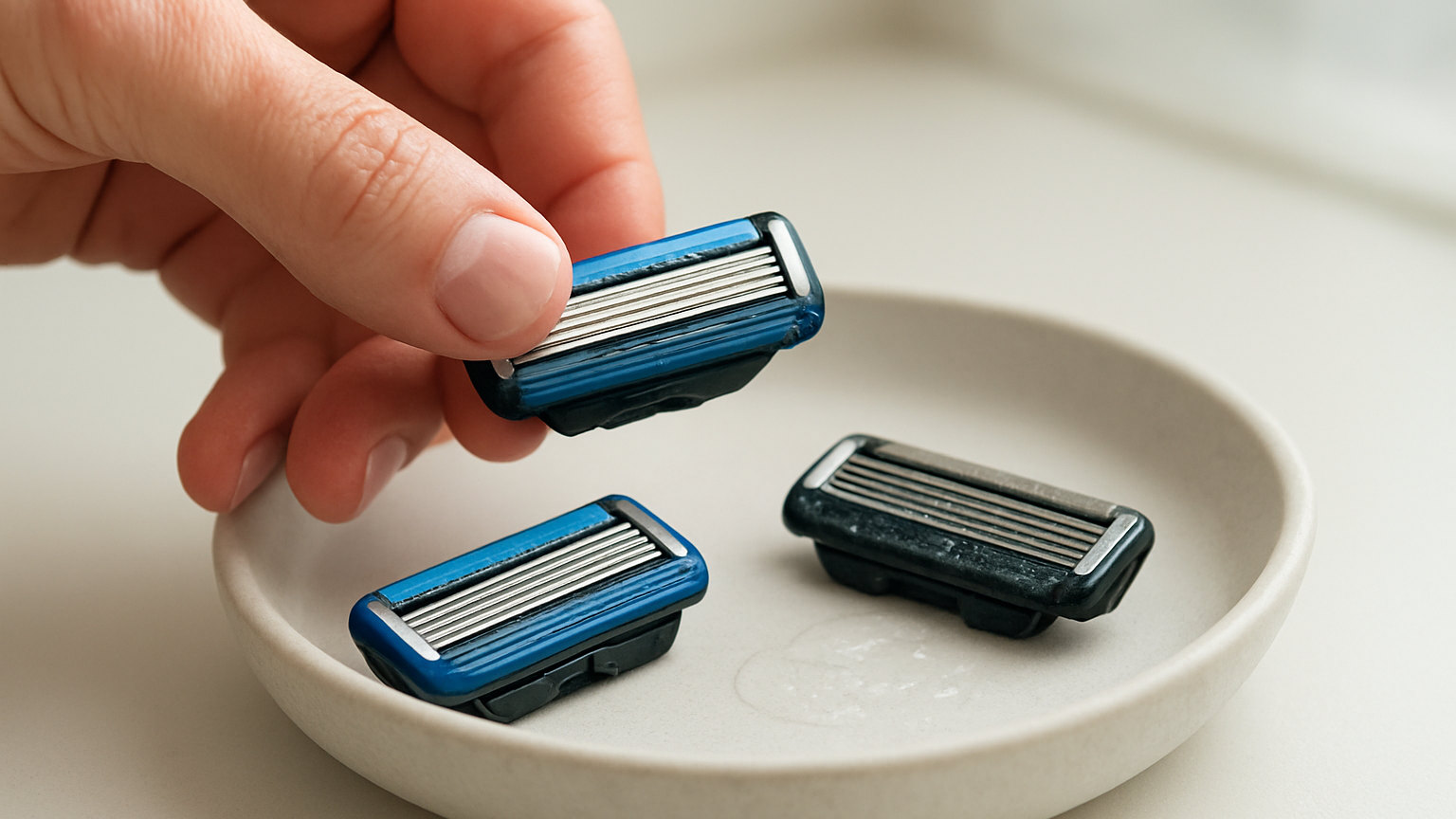
Blade sharpness is the largest single variable in whether shaving is comfortable, and almost everyone stretches blades well past the point they should be replaced. The cost of the blades is why, and the cost of the irritation is usually higher.
How long should a blade last?
Cartridges: five to seven shaves. Safety razor blades: three to five. Disposables: two or three.
Those are shaves rather than weeks, which matters. Someone shaving a full face daily gets through a cartridge in under a week; someone shaving their legs weekly might get a month from the same blade.
Coarse hair, thick stubble, large areas and shaving against the grain all shorten blade life.
How do you know it is blunt?
Needing to press, which is the clearest signal. A sharp blade cuts under its own weight.
Tugging or pulling at hairs rather than cutting cleanly. Needing multiple passes over the same area. More nicks than usual, which is counterintuitive and happens because a dull blade catches and skips.
Irritation, redness or burning appearing when it did not before. And visible rust, discolouration or gaps in the blade edge.
Why do blades dull so quickly?
Less from cutting hair than most people assume. The edge of a razor blade is only a few molecules thick, and the main causes of dulling are corrosion and micro-damage.
Water left on the blade oxidises the edge, which is why storing a razor in the shower dramatically shortens its life. Wiping the blades on a towel bends the edge microscopically.
Hard water leaves mineral deposits. Dropping a razor onto a hard surface damages the edge immediately.
How do you make blades last longer?
Rinse thoroughly after each use, then shake off the water rather than wiping.
Dry the blade, either by patting the handle and shaking, or by blotting on a towel without dragging the edge across it. Some people dry the blade with a hairdryer, which sounds excessive and genuinely extends blade life.
Store it outside the shower, somewhere dry. This is the single most effective change.
Rinse in hot water before use to remove any residue, and consider a rinse in surgical spirit for anyone prone to folliculitis.
Does stropping work?
Running a blade backward along denim or a leather strop realigns a microscopically bent edge, and it does extend usable life somewhat.
It does not sharpen a genuinely worn blade and it will not rescue a corroded one. Treat it as a way to get an extra shave or two rather than a substitute for replacement.
What does a blunt blade actually cause?
Razor burn, since more pressure and more passes mean more friction against the skin.
Ingrown hairs, because a dull blade tears rather than cutting cleanly, leaving a ragged tip more likely to catch in the follicle.
Nicks and cuts, folliculitis from bacteria on an old blade, and general irritation that people commonly attribute to sensitive skin rather than to the equipment.
Is there a hygiene issue?
Some. Blades left damp accumulate bacteria, and a rusty blade on broken skin is a genuine infection risk.
Never share a razor, since blood-borne infection transmission is a real if small risk. Do not use a razor on someone else's skin.
If you have had folliculitis or an infection, replace the blade rather than continuing with the one that was in use.
How do you reduce the cost?
A safety razor, where blades cost a few pence each rather than several pounds. That removes the incentive to stretch a blade past its useful life, which is the main reason they suit people who shave daily.
Subscription services reduce cartridge costs meaningfully. Buying supermarket own-brand cartridges compatible with a common handle is another route.
Whatever you use, replacing more often is cheaper than treating the skin problems a blunt blade causes.
How should you dispose of them?
Not loose in a household bin, where they are a genuine hazard to anyone handling the waste.
Safety razor blades can go into a blade bank, a small tin that seals once full and goes to metal recycling. Cartridges are mixed plastic and metal and are not recyclable through most household collections, though some brands run take-back schemes. Wrapping a used cartridge in tape or card before binning it is the minimum courtesy.


