
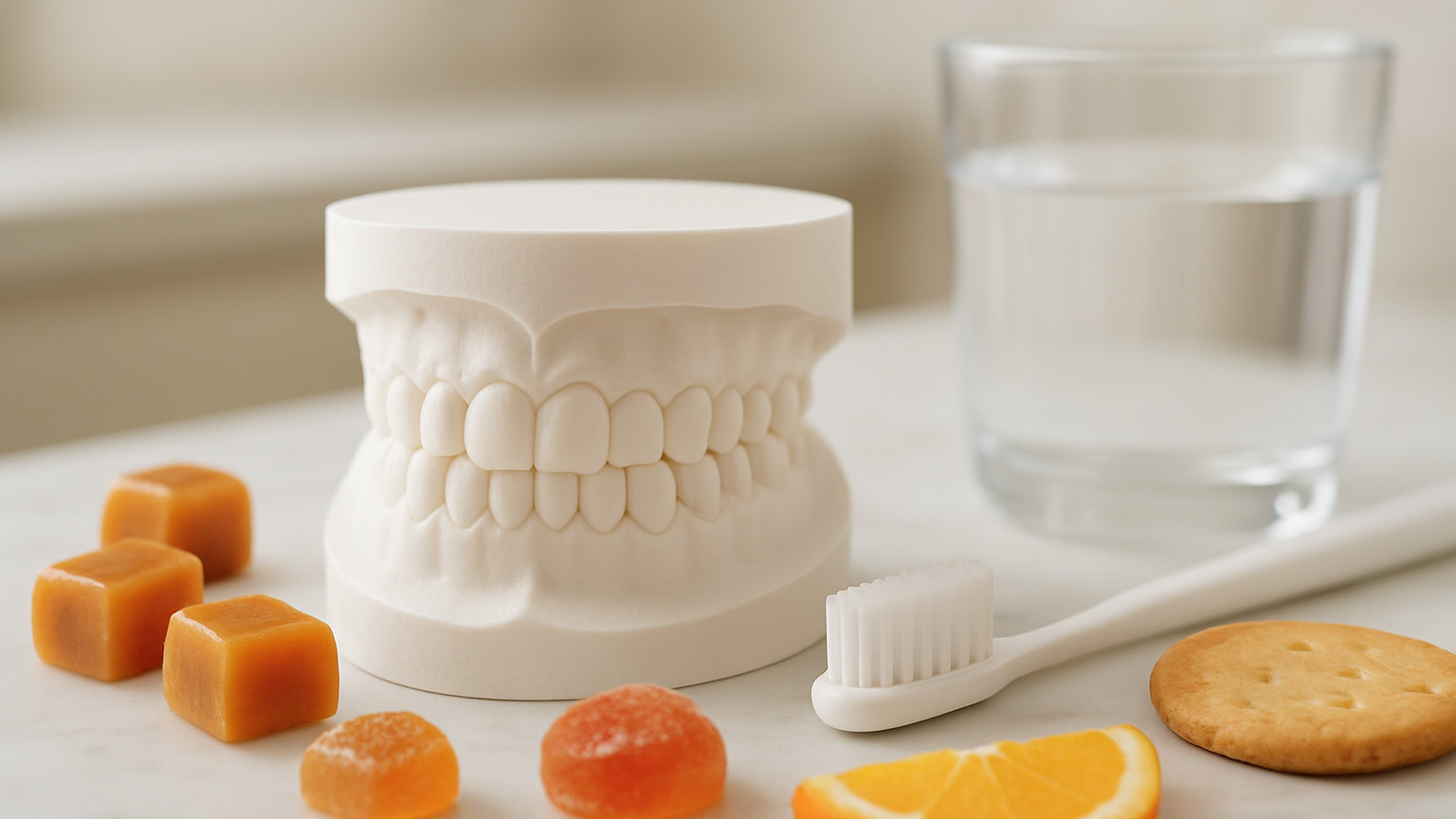
The most useful fact about diet and teeth is that frequency matters more than quantity. Someone eating a whole chocolate bar in one sitting does less harm than someone eating the same bar in six pieces across a day.
Why does frequency matter more?
Because of what happens after eating. Bacteria in plaque metabolise sugar and produce acid, and the mouth becomes acidic within minutes.
Below a certain pH, enamel begins to demineralise. Saliva then neutralises the acid and remineralises the enamel, which takes twenty to sixty minutes.
Each exposure to sugar triggers a fresh acid attack. Six separate exposures means six periods of demineralisation with limited recovery time between. One exposure means one.
This is why grazing and sipping are more damaging than eating the same things at mealtimes.
What about acidic foods and drinks?
These cause erosion directly, without involving bacteria at all. The acid dissolves enamel on contact.
The main culprits are fizzy drinks including diet versions and plain sparkling water, fruit juice, smoothies, citrus fruit, wine, vinegar-based dressings and some flavoured waters.
Sugar-free fizzy drinks are frequently assumed to be safe for teeth and are not, since the phosphoric and citric acids erode enamel regardless of sugar content.
Erosion is permanent. Enamel does not regrow, and thinner enamel means more sensitivity and darker-looking teeth as the dentine shows through.
What are the worst habits?
Sipping a fizzy drink or juice across an afternoon, which keeps the mouth acidic for hours.
Sucking sweets, mints or lozenges, including sugar-containing cough sweets, which prolong sugar exposure.
Frequent snacking between meals. Sugary drinks in a bottle for young children, particularly at bedtime.
Brushing immediately after anything acidic, when enamel is softened and brushing abrades it. Wait an hour.
What protects teeth?
Cheese, which is genuinely useful. It is alkaline, high in calcium and phosphate, and stimulates saliva, so a small piece after a meal helps neutralise acid and remineralise enamel.
Milk and plain yoghurt, for similar reasons. Water, particularly fluoridated where available, which rinses and dilutes.
Sugar-free chewing gum, especially with xylitol, which stimulates saliva substantially for twenty minutes after a meal. One of the more evidence-backed things you can do.
Fibrous vegetables, which stimulate chewing and saliva flow.
What about hidden sugars?
Worth knowing because a great deal of dietary sugar is not in obvious sweets.
Dried fruit, which is sugary and sticky, and adheres to teeth for longer than most sweets. Fruit juice and smoothies, which release sugars from the fruit structure.
Sauces, cereals, flavoured yoghurts, sports drinks and many savoury processed foods. Honey and syrups, which are chemically no different from other sugars as far as teeth are concerned.
Medication, particularly liquid medicines for children, which are frequently sugar-based. Sugar-free versions are available and worth asking for.
Do any diets cause problems?
Frequent snacking on healthy foods still triggers acid attacks, so grazing on fruit is better than grazing on sweets and worse than eating fruit with meals.
Low-carbohydrate and fasting diets can cause dry mouth and distinctive breath. Vegan diets may need attention to vitamin B12 and calcium, both relevant to oral health.
Eating disorders involving vomiting cause severe erosion of the inner surfaces of the upper front teeth, and a dentist is often the first to notice. That is worth raising gently rather than avoiding.
What is the practical summary?
Keep sugar to mealtimes rather than spreading it through the day. Drink water between meals rather than anything else.
Use a straw for acidic drinks and finish them rather than sipping. Follow acidic or sugary food with cheese, milk or sugar-free gum.
Wait an hour before brushing after anything acidic. And accept that the timing of what you eat is doing more work than the specific list of what you avoid.
Do children need different advice?
The same principles apply with more urgency, since developing enamel is more vulnerable and habits set early.
The specific things worth knowing: never put a baby to bed with a bottle of anything except water, since prolonged contact overnight causes severe decay in the upper front teeth. Move from bottles to a free-flow cup from around six months. Ask for sugar-free versions of any liquid medicine.
Children in the UK are entitled to free NHS dental care, and taking them from the age of one, before anything is wrong, establishes the habit and catches problems while they are small.


