
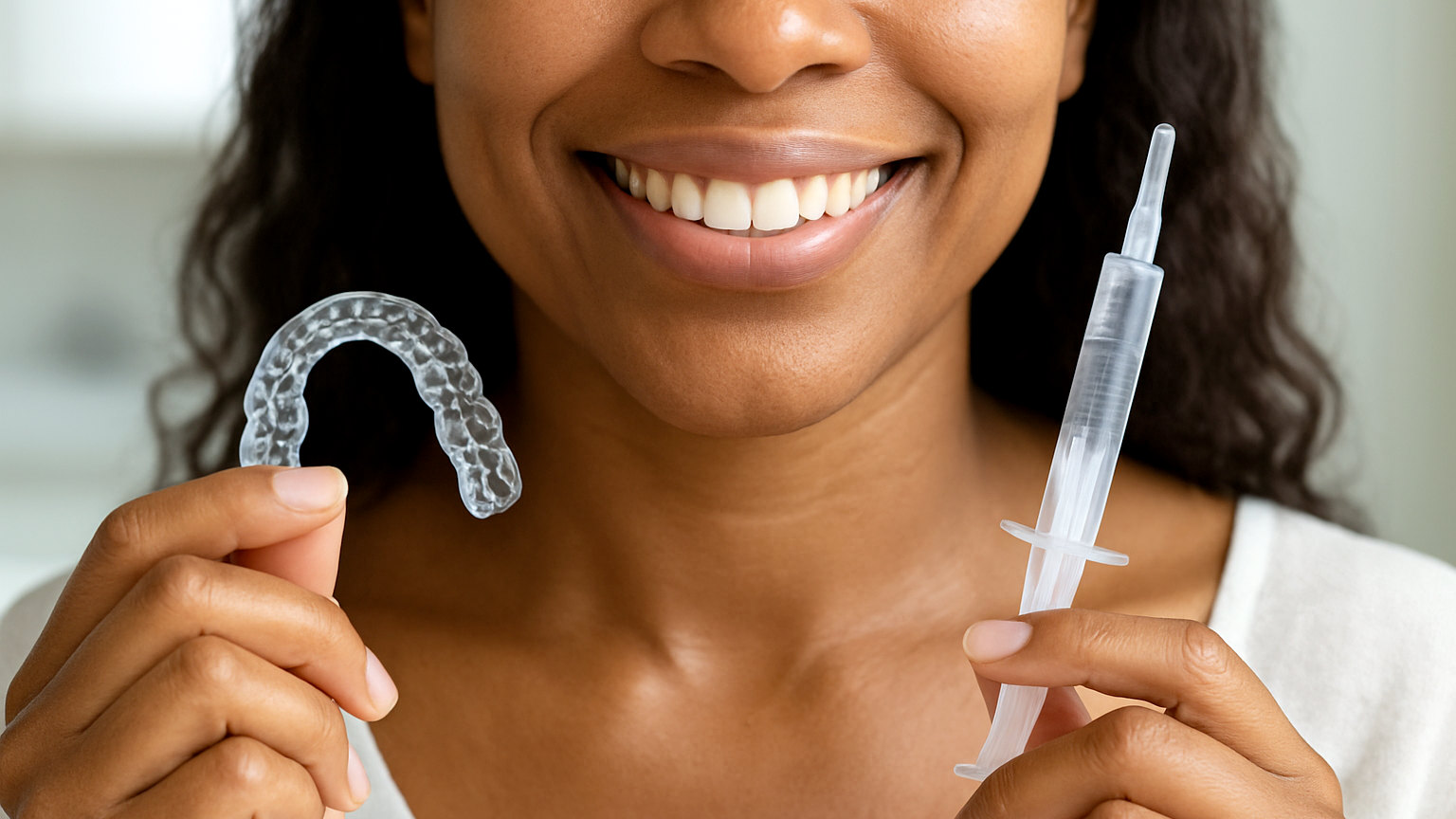
Professional teeth whitening works and produces a genuine change. It is also legally restricted in the UK in a way most people are unaware of, and that restriction exists because of what the unregulated versions do.
What does the law say?
In the UK, teeth whitening is the practice of dentistry. It can only legally be carried out by a dentist, or by a dental hygienist or therapist on the prescription of a dentist.
Beauty salons, mobile whitening services and non-dental practitioners offering whitening are acting illegally, and the General Dental Council prosecutes for it.
Products sold to consumers may legally contain up to 0.1 per cent hydrogen peroxide. Products containing between 0.1 and 6 per cent may only be supplied to a dentist, who administers the first use and may then supply it for home use.
Anything above 6 per cent is not legal for cosmetic whitening in the UK at all.
Why does that matter?
Because illegal whitening at high concentrations causes chemical burns to the gums and lips, permanent damage to tooth enamel and nerve damage.
Salon operators also cannot legally assess whether your teeth are suitable, which matters: whitening applied over untreated decay, gum disease or exposed root surfaces causes significant harm.
The low price is the sign. A whitening session at a fraction of dentist prices is either illegal or ineffective.
How does it work?
Hydrogen peroxide or carbamide peroxide penetrates the enamel and breaks down the pigmented molecules causing discolouration, through oxidation.
It changes the colour of the tooth itself rather than removing surface staining, which is what distinguishes it from a scale and polish.
Light and laser activation is offered by some clinics and the evidence that it improves results beyond the peroxide alone is weak.
How much difference does it make?
Several shades, typically, with results varying by starting colour and the cause of the discolouration.
Yellow-toned teeth respond best. Grey-toned teeth respond less well. Discolouration from tetracycline antibiotics or fluorosis responds poorly.
Crowns, veneers, fillings and bridges do not whiten at all, which is a genuine practical problem: whitening natural teeth around existing white fillings can leave the restorations looking darker and needing replacement.
What about whitening toothpastes?
They remove surface stains through mild abrasives and, in some cases, enzymes or low levels of peroxide. They do not change the underlying colour of the tooth.
That is a real if modest benefit for stain removal, particularly from tea, coffee and smoking. It is not whitening in the sense the marketing implies.
Highly abrasive whitening pastes used long-term can wear enamel, which exposes the yellower dentine underneath and makes teeth look darker over time.
What about strips and kits?
Legally sold UK products contain at most 0.1 per cent hydrogen peroxide, which produces minimal change.
Products bought from overseas sellers frequently contain considerably more, which is why they work better and why they are not legal here. Using them without a dental assessment carries the same risks as salon whitening.
Charcoal and baking soda products are abrasive, do not whiten, and can damage enamel with regular use.
What are the side effects of legitimate whitening?
Tooth sensitivity, which is very common and usually temporary, settling within a few days. A sensitive toothpaste used beforehand reduces it.
Gum irritation, particularly if trays do not fit well, which is one reason custom trays from a dentist outperform generic ones.
Results are not permanent. Expect one to three years depending on diet and smoking, with top-ups extending it.
Who should not have it?
Anyone under eighteen, for whom cosmetic whitening is not legal in the UK. Anyone pregnant or breastfeeding, as a precaution.
Anyone with untreated decay, gum disease, cracked teeth or exposed roots, which need treating first.
Anyone with extensive crowns or veneers on visible teeth, where the result will be uneven.
How do you keep the result?
The first forty-eight hours matter most, since the enamel is temporarily more porous and stains readily. Avoid tea, coffee, red wine, curry and anything strongly coloured during that window.
Afterwards, the habits that prevent staining generally are what extend the result: rinsing after staining drinks, using a straw where practical, and regular hygienist appointments. Top-up trays supplied by a dentist keep it going with occasional short applications rather than repeating the full treatment.


