
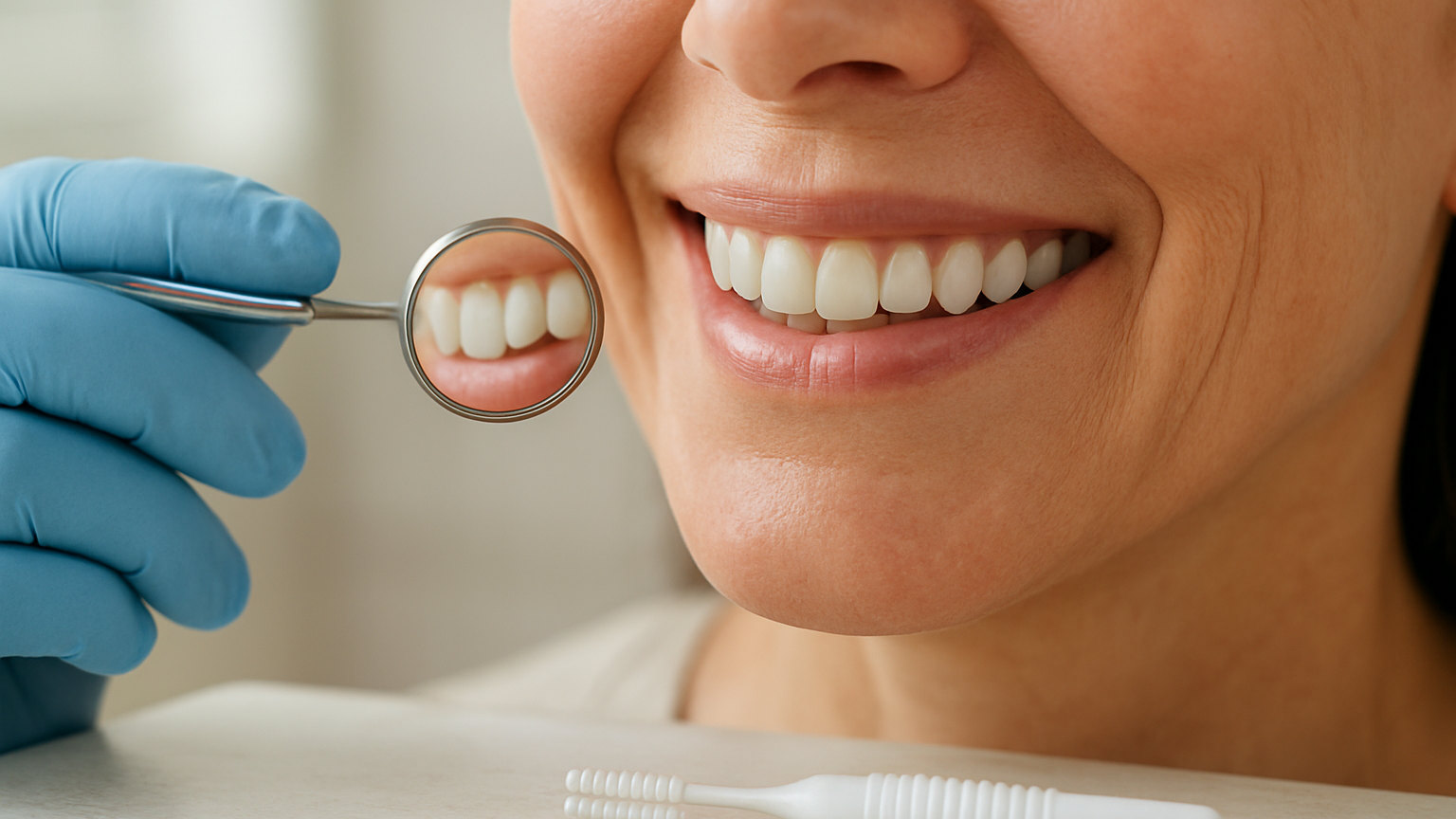
The six-monthly check-up is one of the most widely followed pieces of health advice in Britain and it is a convention rather than a clinical rule. Guidance in the UK is based on individual risk.
What does the guidance say?
NICE recommends intervals set according to risk, ranging from three months to twenty-four months for adults, and from three to twelve months for children under eighteen.
Someone with excellent oral health, no history of decay or gum disease and no risk factors may reasonably be seen every one to two years.
Someone with active gum disease, a history of frequent decay, dry mouth, or who smokes needs to be seen more often, sometimes every three months.
Your dentist should tell you the recommended interval and why, and it is reasonable to ask.
What raises your risk?
Smoking, which is the single largest modifiable factor for gum disease and oral cancer.
A history of decay or gum disease. Dry mouth, whether from medication or a medical condition. Diabetes, particularly if poorly controlled.
A diet high in sugar frequency. Extensive existing dental work, since restorations fail eventually and need monitoring. Braces or other appliances.
What does a check-up involve?
Examination of the teeth for decay, cracks and failing restorations. Assessment of the gums, usually including measuring pocket depths.
An oral cancer check, examining the tongue, floor of mouth, cheeks, palate and throat. This is one of the most valuable parts of the appointment and the part patients notice least.
X-rays periodically, since decay between teeth is invisible otherwise.
A discussion of any changes and a recommended interval before the next visit.
What does a hygienist do that a dentist does not?
Removes calculus above and below the gum line, which cannot be removed by brushing once it has hardened.
Removes surface staining, which is what produces the visible improvement. Provides tailored advice on technique and on which interdental sizes fit your mouth.
For anyone with gum disease, hygienist appointments matter more than dental check-ups, and the recommended frequency may be every three to six months.
How do NHS dental charges work?
NHS dentistry in England uses three bands. Band 1 covers examination, diagnosis and preventive advice including a scale and polish where clinically necessary. Band 2 covers fillings, extractions and root canal treatment. Band 3 covers crowns, dentures and bridges.
You pay one charge per course of treatment regardless of how many items are needed within that band.
Charges differ in Scotland, Wales and Northern Ireland. Some people are exempt, including under-18s, those under 19 in full-time education, pregnant women and those who have had a baby in the previous twelve months, and people on certain benefits.
Purely cosmetic treatment is not available on the NHS.
What if you cannot find an NHS dentist?
Access has become genuinely difficult in many areas, and it is worth knowing the practical options.
Practices are not required to keep waiting lists, so contacting several directly and asking whether they are taking NHS patients is more effective than waiting.
The NHS website lists practices and whether they are accepting patients, though the information is often out of date. NHS 111 can help with urgent problems, and emergency dental services exist for pain, swelling and trauma.
You do not need to be registered with a practice to be seen, since dental registration in the NHS sense no longer exists.
What counts as urgent?
Severe pain not controlled by painkillers. Facial swelling, particularly if it affects the eye or throat or is spreading, which needs same-day attention.
Bleeding that will not stop. Trauma to a tooth, particularly a knocked-out adult tooth, which should be seen within an hour and can sometimes be replanted.
Any of these warrants contacting an emergency dental service rather than waiting for a routine appointment.
Is it worth going if nothing hurts?
Yes, which is the whole argument for check-ups. Decay and gum disease are painless until they are advanced, and by the time a tooth hurts the treatment is considerably more involved.
The oral cancer examination is also a genuine benefit that has nothing to do with symptoms, and outcomes depend heavily on how early it is found.


