
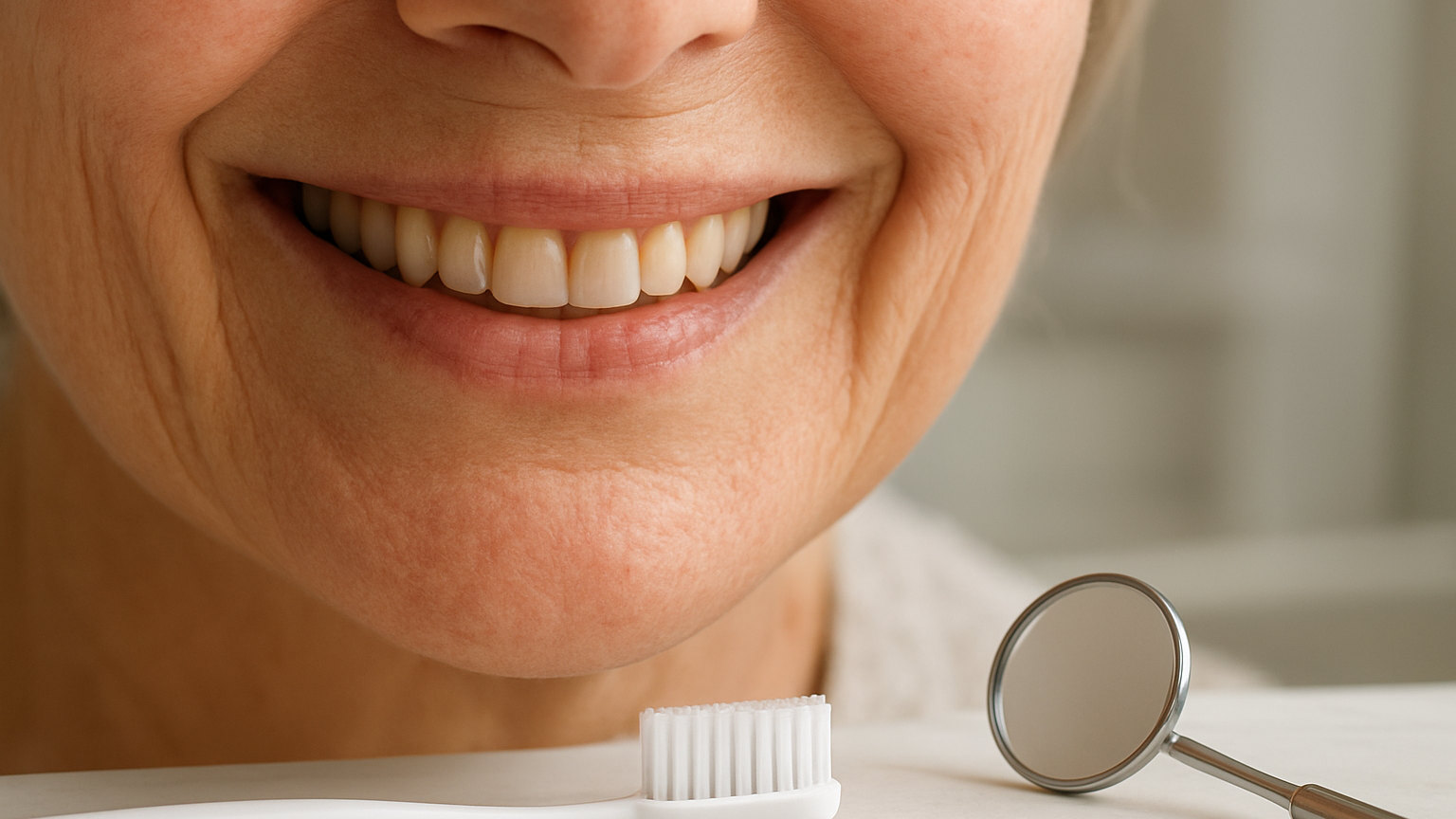
Teeth change in predictable ways across a lifetime: they darken, they wear, they shift, and the gums recede. Losing them is not on that list, and the assumption that it is remains one of the more damaging beliefs about oral health.
Why do they darken?
Two things happening together. Enamel thins gradually through wear and acid exposure, and it is translucent, so less of it means more of what is underneath shows through.
What is underneath is dentine, which is naturally yellow and which also darkens with age as it becomes denser.
Accumulated surface staining from decades of tea, coffee and wine adds to it, and that part responds to cleaning while the rest does not.
This is why whitening produces a smaller change on older teeth: much of the colour is internal rather than surface.
Why do they wear down?
Attrition from tooth-to-tooth contact over decades, which is normal and gradual. Grinding accelerates it considerably.
Erosion from dietary acid, which is cumulative and permanent. Abrasion from hard brushing, which produces notches at the gum line.
Worn teeth look shorter and squarer, lose the translucent edges that read as youthful, and become more sensitive as dentine is exposed.
What happens to the gums?
Recession, which exposes the root surface. This is partly age-related and mostly the result of gum disease and hard brushing over years.
Exposed roots are covered by cementum rather than enamel, which is thin and wears quickly, leaving dentine exposed. That means both sensitivity and a considerably higher risk of decay.
Root decay is one of the commonest problems in older adults and is frequently the reason teeth are lost late in life.
Do teeth move?
Yes, throughout life. Teeth drift forward and crowding of the lower front teeth is extremely common from middle age, including in people who had orthodontic treatment as teenagers.
Losing a tooth accelerates it, since neighbouring teeth tip into the gap and the opposing tooth over-erupts.
Crowded teeth are harder to clean, which makes decay and gum disease more likely, so the change is not purely cosmetic.
What about dry mouth?
The most important age-related change and the least discussed. Ageing itself has a modest effect on saliva production; medication has a large one.
Hundreds of common drugs reduce saliva, including antidepressants, antihistamines, blood pressure medication, diuretics and painkillers. Someone taking several is at meaningful risk.
Saliva is the mouth's main defence, so reduced flow means faster decay, more gum disease, difficulty wearing dentures and increased infection risk.
Saliva substitutes, sugar-free gum, frequent water and high-fluoride toothpaste all help. It is worth raising with both a dentist and a GP, since alternative medications sometimes exist.
What should change in your routine?
More attention to the root surfaces near the gum line, which are now the vulnerable area rather than the biting surfaces.
Interdental brushes rather than floss, since gaps widen with recession and brushes clean them better.
A soft brush and lighter pressure, since further recession is largely preventable.
High-fluoride toothpaste if your dentist recommends it, which is common for anyone with dry mouth or exposed roots.
More frequent hygienist appointments rather than fewer.
Is tooth loss inevitable?
No. Most tooth loss is caused by decay and gum disease, both of which are preventable and treatable, rather than by age itself.
Keeping your own teeth for life is a realistic expectation with consistent cleaning and regular professional care, and the number of older adults doing so has risen substantially in recent decades.
What matters most?
Not stopping. The most common pattern in later life is reducing dental attendance because nothing hurts or because access is difficult, at exactly the point when risk is rising.
Root decay and dry mouth both progress quietly, and both are considerably easier to manage early than late.
What if you already wear dentures?
They need their own routine, and the tissue underneath needs attention as much as the denture does. Clean them over a basin of water or a towel so they survive being dropped, brush them daily with a soft brush and soap or denture cleaner rather than toothpaste, which is abrasive on acrylic.
Leave them out overnight, which allows the gums to recover and reduces the risk of denture stomatitis, a fungal inflammation that is common and easily treated. Continue seeing a dentist even with no natural teeth, both for the oral cancer check and because gums shrink over time and a denture that no longer fits causes ulceration.


