
Adult orthodontics is common and works well. Teeth move at any age, since the process depends on bone remodelling rather than growth. What has changed recently is the arrival of unsupervised at-home aligner treatment, and that distinction matters more than which appliance you choose.
What are the options?
Fixed braces, with brackets bonded to the teeth. The most versatile, capable of correcting complex problems, and visible unless ceramic or lingual versions are used.
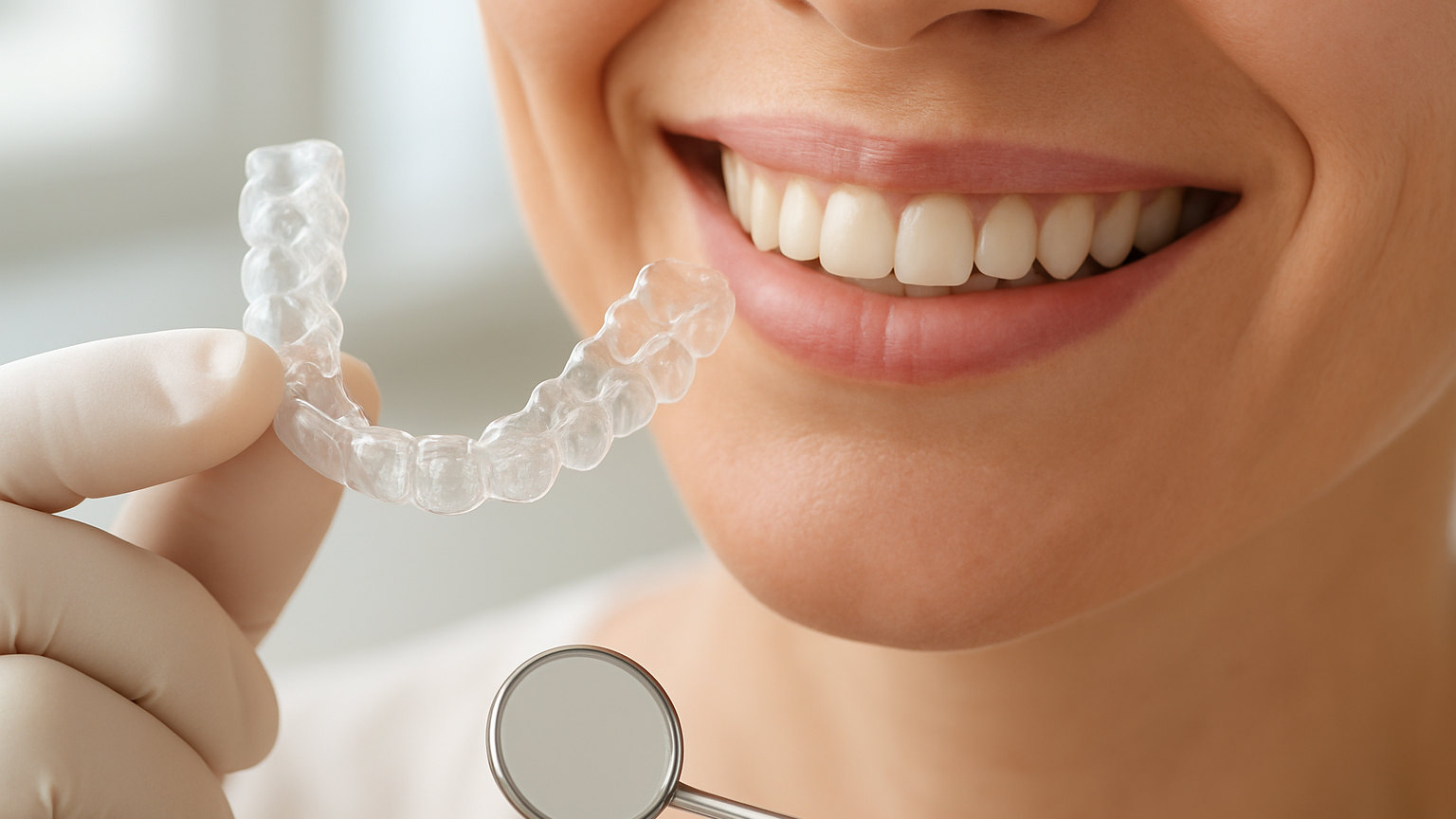
Clear aligners, a series of removable trays worn twenty to twenty-two hours a day. Discreet, removable for eating, and suited to mild to moderate problems.
Lingual braces, fixed behind the teeth. Invisible and more expensive and initially more uncomfortable.
Which is appropriate depends on what needs correcting, and that is a clinical judgement rather than a preference.
How long does it take?
Six months to two years for most cases, depending on complexity. Minor front-teeth alignment may take six to nine months; significant bite correction takes considerably longer.
Treatment promising results in a few months is either addressing something very minor or is not moving teeth as far as implied.
Why does supervision matter?
Because moving teeth safely requires knowing what is underneath them, and that cannot be assessed from photographs.
Untreated decay, gum disease and root problems all need addressing first. Moving teeth in a mouth with active gum disease can cause rapid bone loss and tooth loss.
X-rays are essential, since root length and position determine what is safe. Aligners planned without them risk root resorption, where roots shorten permanently.
Bite problems can also be worsened rather than improved by aligning only the visible front teeth.
What are the risks of at-home kits?
The General Dental Council has been clear that orthodontic treatment must be prescribed and supervised by a registered dentist, with a clinical examination.
Direct-to-consumer models that rely on a home impression kit and remote photographs have generated a substantial number of complaints in the UK, including bite problems, loose teeth, root damage and treatment that had to be redone conventionally at greater cost.
The problems are structural rather than incidental: no examination, no X-rays, no in-person monitoring, and no one to notice when something is going wrong.
If a service does not involve seeing a dentist in person, that is the point at which to stop.
What should treatment involve?
An examination, X-rays and a discussion of what is realistic. A clear treatment plan setting out what will move and what will not.
Regular in-person reviews, typically every four to ten weeks. Someone accountable if something goes wrong.
And a clear explanation of retention, which is the part most often glossed over.
Why do you need retainers afterwards?
Because teeth move back. The fibres holding teeth in position have memory, and without retention teeth drift toward their original positions within months.
Retention is lifelong. That is not a sales tactic; it is how teeth behave, and anyone not prepared to wear a retainer indefinitely should factor that into the decision.
Options are a fixed wire bonded behind the front teeth, or a removable retainer worn nightly. Many people have both.
Relapse after stopping retainers is the most common reason people undergo orthodontic treatment twice.
What does it cost?
Adult orthodontics is almost always private, since NHS orthodontics is generally limited to under-18s with a clinical need.
Costs vary widely by complexity and location, typically running from a couple of thousand pounds for limited treatment to considerably more for comprehensive work.
Retainers and replacements are an ongoing cost worth asking about upfront.
Is it worth it?
For crowding that makes cleaning difficult, genuinely yes, since crowded teeth accumulate plaque and are harder to keep healthy.
For bite problems causing wear or jaw discomfort, yes. For purely cosmetic alignment, it is a personal decision and a substantial commitment in time and money.
What is worth avoiding either way is treatment that skips the examination, since the cost of correcting a bad outcome exceeds the saving that prompted it.


