
Around eighty to ninety per cent of bad breath originates in the mouth rather than the stomach, which is the opposite of what most people assume. Within the mouth, one location accounts for most of it.
Where does it come from?
The back of the tongue, in most cases. The surface is covered in papillae that trap food debris, dead cells and bacteria, and anaerobic bacteria there break down proteins into volatile sulphur compounds.
Those compounds are what you smell. They are the same class of chemicals responsible for the smell of rotten eggs and decaying matter, which is why the effect is so pronounced from such small quantities.
Gum disease is the second major source, since the pockets around inflamed gums are exactly the low-oxygen environment those bacteria prefer.
Why is it worse in the morning?
Because saliva flow drops substantially during sleep, and saliva is what continually washes bacteria and debris away.
A dry mouth for eight hours allows bacteria to multiply undisturbed. This is normal and clears within minutes of eating, drinking and brushing.
Mouth breathing and snoring make it considerably worse, as does alcohol the night before.
What are the main causes?
Inadequate cleaning, particularly of the tongue and between the teeth. Gum disease. Dry mouth from medication, dehydration, mouth breathing or salivary gland problems.
Tooth decay, abscesses and food trapped around old fillings or under bridges. Poorly cleaned dentures.
Smoking, which causes it directly and by drying the mouth and promoting gum disease.
Certain foods: garlic and onion produce compounds absorbed into the bloodstream and exhaled from the lungs for up to two days, which no amount of brushing addresses.
Crash dieting and low-carbohydrate diets, which produce ketones with a distinctive sweet smell.
How do you check your own breath?
Difficult, since you acclimatise to your own smell. Breathing into a cupped hand tells you very little.
Licking the inside of your wrist, letting it dry for ten seconds and then smelling it is more reliable. Scraping the back of the tongue with a clean spoon and smelling the residue is more reliable still.
Asking someone you trust is the most accurate method and the least comfortable.
What actually helps?
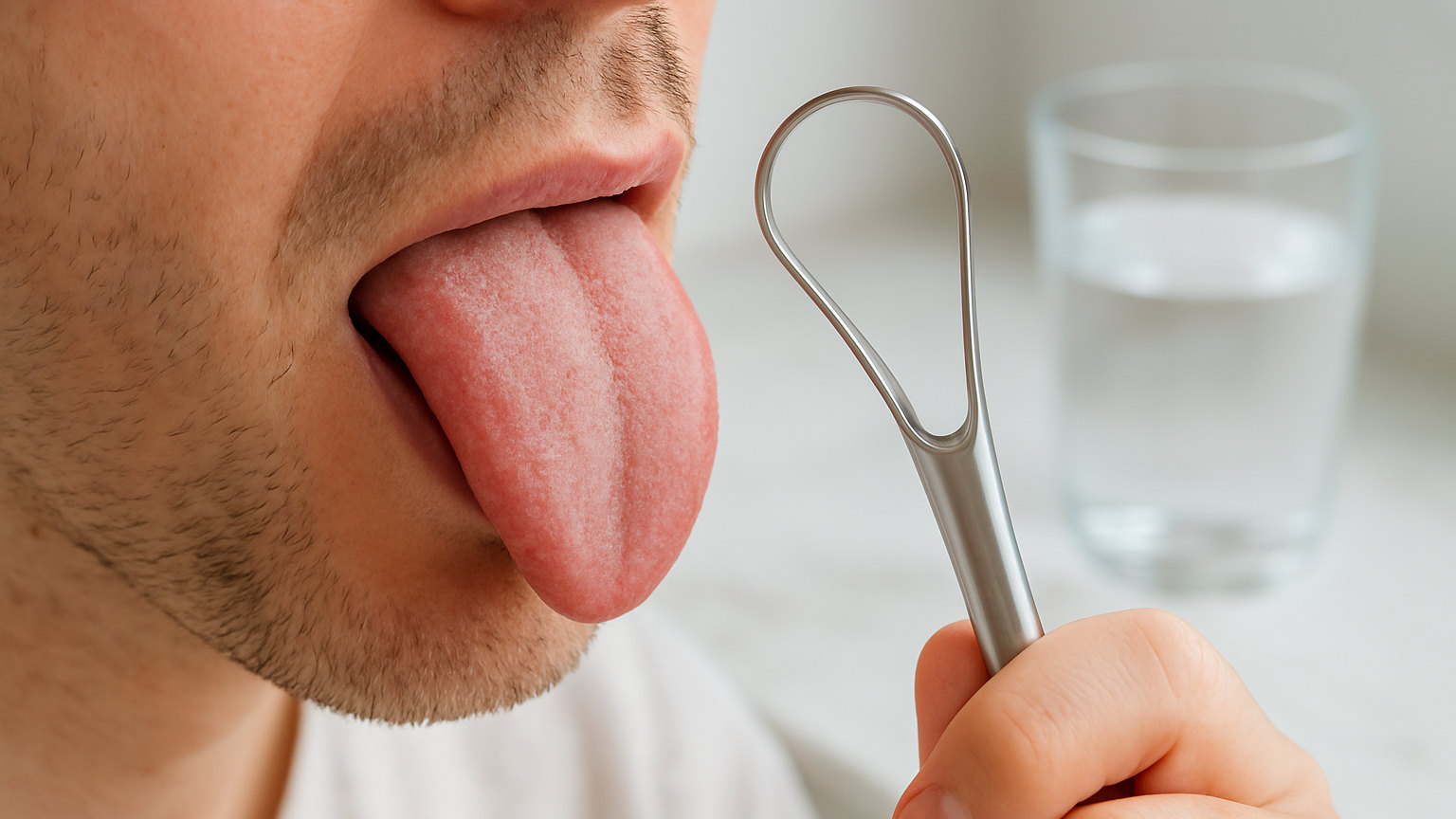
Cleaning the tongue, which is the single most effective intervention and the one most often missed. A tongue scraper is more effective than a toothbrush, used from as far back as you can tolerate, forward, several times, rinsing between.
Cleaning between the teeth daily, since trapped debris is a direct source.
Treating gum disease, which requires a hygienist rather than a product.
Staying hydrated. Chewing sugar-free gum, which stimulates saliva and is genuinely useful rather than just masking.
What about mouthwash?
Antibacterial mouthwashes containing chlorhexidine, cetylpyridinium chloride or zinc compounds reduce the bacteria producing the smell and are reasonably effective as an adjunct.
Alcohol-based mouthwashes are counterproductive for this specifically, since they dry the mouth and dry mouths smell worse. Look for alcohol-free.
Mints and sprays mask rather than treat, and sugar-containing ones feed the bacteria responsible.
When is it not coming from the mouth?
The remaining ten to twenty per cent of cases. Sinus infections and post-nasal drip, tonsil stones, and less commonly conditions affecting the lungs, stomach, liver or kidneys.
Uncontrolled diabetes produces a distinctive sweet or acetone smell. Severe kidney problems produce an ammonia-like smell.
The pattern that suggests a non-oral cause is breath that does not improve at all with thorough oral hygiene over several weeks.
When should you see someone?
A dentist first, since the odds strongly favour an oral cause and a dentist can identify gum disease, decay or a failing filling in one appointment.
A GP if oral causes have been excluded and treated, or if there are other symptoms alongside.
And worth saying plainly: persistent bad breath is a common medical complaint rather than a personal failing, and it is generally treatable once the source is found.


