
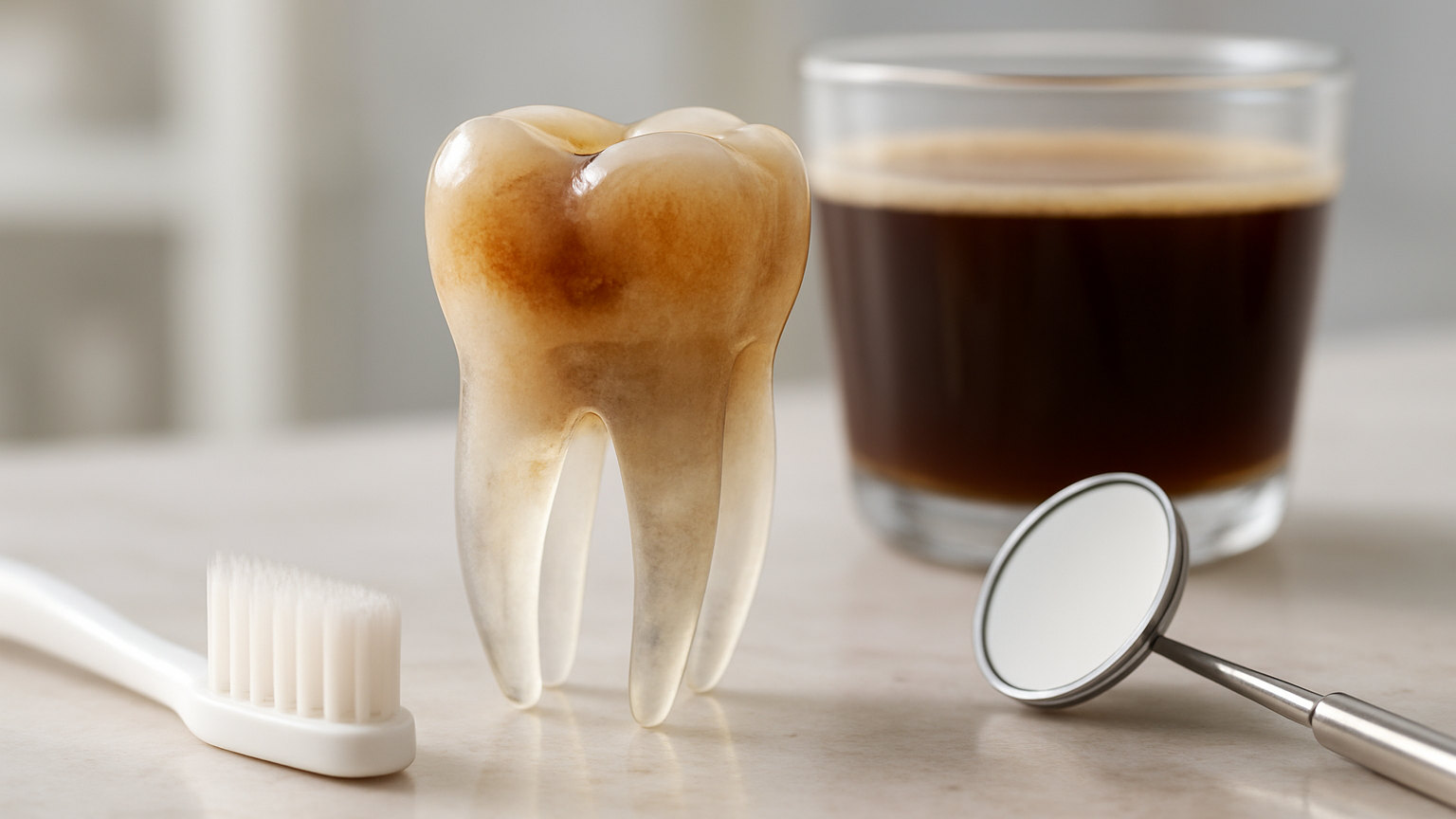
Tooth discolouration comes in two kinds that look similar and behave completely differently. Surface staining sits on the outside and can be removed. Internal discolouration is within the tooth and cannot be brushed away at any price.
What is surface staining?
Pigments from food, drink and smoking binding to the pellicle, a thin protein film that forms on enamel within minutes of cleaning.
It accumulates gradually and responds to brushing, professional cleaning and stain-removing toothpastes.
This is the kind most people are dealing with, and it is why a scale and polish produces such a noticeable difference.
What causes it?
Tannins are the main culprit, which means tea, coffee and red wine. Tea is frequently worse than coffee, which surprises people.
Smoking and tobacco, which produce heavy brown staining and are the most significant single cause.
Dark-coloured foods: curry, tomato-based sauces, soy sauce, balsamic vinegar, berries and beetroot.
Some mouthwashes, particularly chlorhexidine, which is prescribed for gum problems and causes brown staining with prolonged use.
Iron supplements in liquid form.
What is internal discolouration?
Colour change within the tooth structure itself, which no amount of cleaning affects.
The most common cause is simply age. Enamel thins over decades, and the dentine underneath, which is naturally yellow, shows through more. Dentine also darkens with age.
Trauma to a tooth, which can leave it grey or darker as the nerve dies.
Tetracycline antibiotics taken during tooth development in childhood, producing grey or banded discolouration. Excessive fluoride during development, causing fluorosis with white or brown mottling.
Decay, which darkens the tooth from within and needs treating rather than whitening.
How do you tell which you have?
Surface staining is usually more pronounced along the gum line, between teeth and in grooves, and it varies across the mouth.
Internal discolouration is uniform across the tooth and often affects all teeth evenly, or affects one tooth entirely after an injury.
A dentist can tell you in seconds, and it determines whether a hygienist appointment or whitening is the right answer.
Does enamel thinning matter?
Considerably, and it is the most under-recognised cause of teeth looking darker with age.
Enamel is translucent and slightly white; dentine underneath is yellow. As enamel thins, more dentine shows through.
Acid erosion accelerates it: fizzy drinks including sparkling water, citrus, fruit juice, wine and reflux all dissolve enamel. So does abrasive brushing and highly abrasive whitening toothpaste.
Once enamel is gone it does not regrow, which makes prevention the whole strategy.
How do you reduce staining?
Drink staining drinks through a straw where practical, which reduces contact with the front teeth.
Rinse with water after tea, coffee, wine or anything dark. Do not brush immediately after anything acidic, since enamel is temporarily softened and brushing then removes it. Wait an hour.
Brush twice daily with fluoride toothpaste and clean between teeth daily, since staining accumulates most where cleaning does not reach.
Stop smoking, which is by a distance the most effective single change.
What actually removes it?
A scale and polish by a hygienist, which removes surface staining and calculus and is the most effective and least damaging option.
Stain-removing toothpastes, which help maintain the result. Air polishing, offered by many practices, which is effective on heavy staining.
What does not work: charcoal products, which are abrasive and have no evidence for whitening. Baking soda scrubs. Lemon juice or vinegar rinses, which dissolve enamel and make teeth darker in the long run.
When should you see a dentist?
Any single tooth that has darkened, which suggests nerve damage or decay rather than staining.
Staining that has appeared rapidly. Any discolouration alongside sensitivity, pain or gum problems.
And before any whitening, which is both a legal requirement in practice and the only way to know whether whitening is the right treatment for the discolouration you have.
Does diet affect the colour beyond staining?
Indirectly, through erosion rather than pigment. Frequent acidic food and drink thins enamel over years, and thinner enamel shows more of the yellow dentine beneath, so teeth look darker regardless of how well they are cleaned.
Frequency matters more than quantity. Sipping fizzy drinks or juice across an afternoon keeps the mouth acidic for hours, where drinking the same amount in ten minutes gives saliva time to recover. Having acidic things with meals rather than between them is one of the more effective changes available.


