
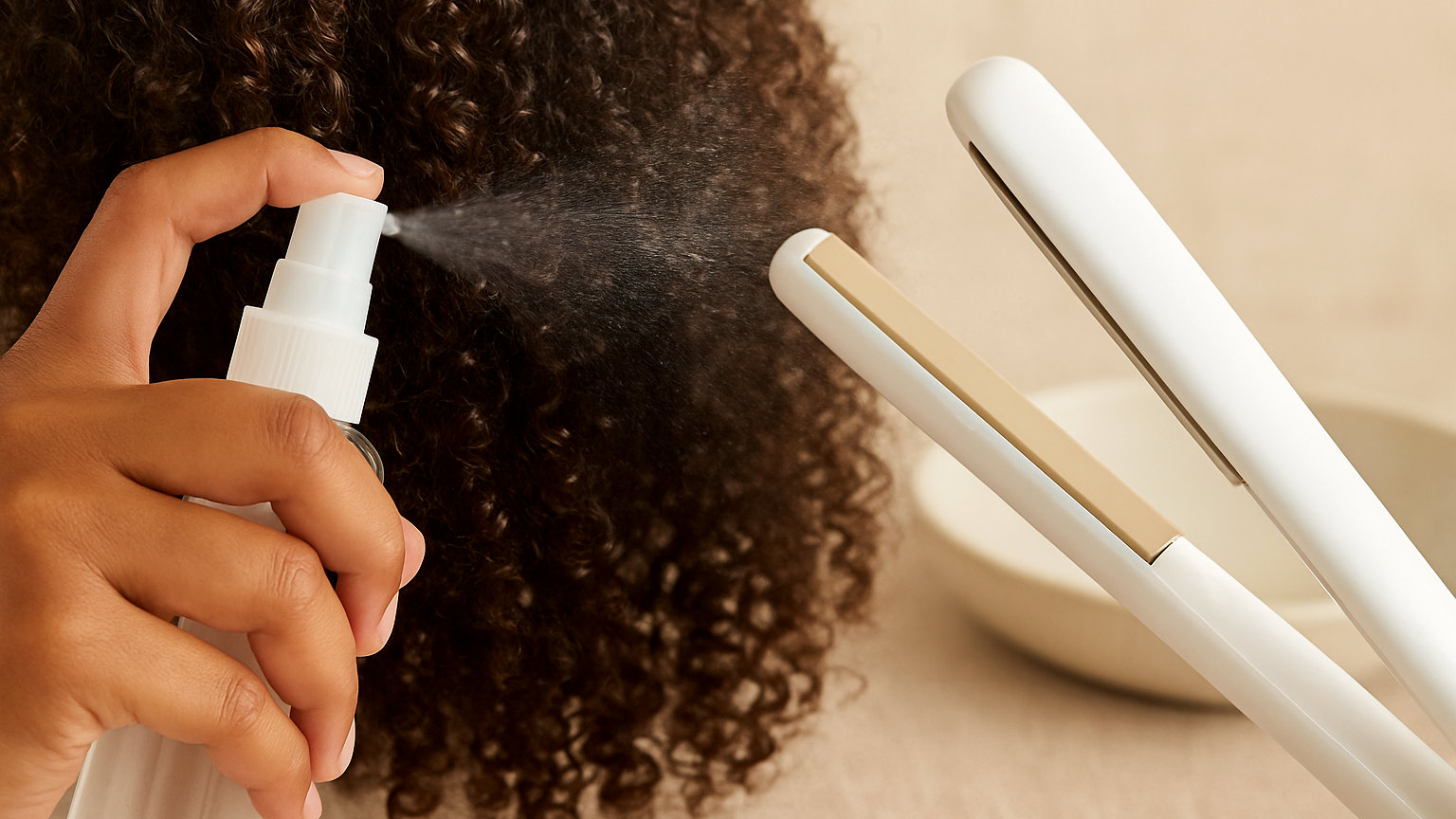
Heat protectant reduces damage measurably. It does not prevent it, and treating it as permission to turn the temperature up defeats the point, which is the most common way it gets used badly.
How does it work?
Two mechanisms. It forms a film on the surface that slows heat transfer into the shaft, and it distributes heat more evenly so no single point reaches a damaging temperature.
Some ingredients also reduce water loss during styling, which matters because the damage from heat comes largely from water inside the shaft turning to steam and forcing its way out.
Silicones such as dimethicone and cyclomethicone do most of the work. Hydrolysed proteins, panthenol and certain polymers contribute.
How much protection does it actually give?
Laboratory testing generally shows a meaningful reduction in damage markers, often described as reducing breakage by around half compared with unprotected hair at the same temperature.
That is a substantial benefit and it is not immunity. Hair straightened at 230 degrees with protectant is still worse off than hair straightened at 170 without a tool held on it repeatedly.
Temperature matters more than the product. Protectant is the second lever, not the first.
What temperature should you use?
Lower than most tools default to. Fine or damaged hair: 150 to 170 degrees. Normal hair: 170 to 190. Coarse or very thick hair: 190 to 210.
Above 215 degrees, keratin begins to degrade regardless of what has been applied. Tools reaching 230 exist because higher numbers sell, not because hair needs them.
If a section needs several passes at a low temperature, that is generally less damaging than one pass at a high one, provided you are not repeating it many times.
When should you apply it?
To damp hair for blow drying, then dry fully before using any other tool.
For straighteners or curling tongs, hair must be completely dry. Using them on damp hair, protected or not, causes the worst damage available, because the water inside vaporises violently.
Apply evenly through the mid-lengths and ends, comb through to distribute, and let it dry or settle before applying heat rather than styling immediately.
How much should you use?
Enough to coat, which for most people is more than they use. Uneven application means unprotected sections.
Sprays are easiest to distribute; creams suit thicker hair. Too much leaves hair greasy and can cause the product to cook onto the shaft, so aim for even rather than generous.
Do all products described as heat protectant work?
Not equally. There is no standardised test or labelling requirement in the way there is for sunscreen, so claims vary in meaning.
Look for silicones near the top of the ingredient list, which are the ingredients doing the protecting. A leave-in conditioner containing them offers real protection even if not marketed as a protectant.
Products consisting largely of water and fragrance with a heat protection claim on the front are doing very little.
Does natural oil work as heat protection?
Poorly, and some make things worse. Oils conduct heat, and several have smoke points below styling temperatures.
Coconut oil has been suggested as having some protective effect through reducing protein loss, and the evidence is not strong enough to rely on. Argan oil is frequently recommended for this and there is little to support it.
Applying oil before straightening is a poor idea in most cases. Use a formulated product.
What matters more than protectant?
Frequency. Styling daily at a moderate temperature with protectant causes more cumulative damage than styling weekly at the same temperature.
Technique too: fewer passes, moving the tool steadily rather than holding it, and avoiding going over the same section repeatedly. And letting hair air dry to eighty per cent before any heat, which reduces both the time and the temperature needed.
Does the tool itself matter?
More than most people allow for. Cheap straighteners often have inconsistent plate temperature, so one part of the plate runs far hotter than the display suggests, and hair passing over that spot takes more damage than intended.
Plate material matters less than the marketing implies, and even heat distribution and an accurate temperature control matter a great deal. A tool without a temperature setting, running at whatever it reaches, is the worst option regardless of what it is made of.


