
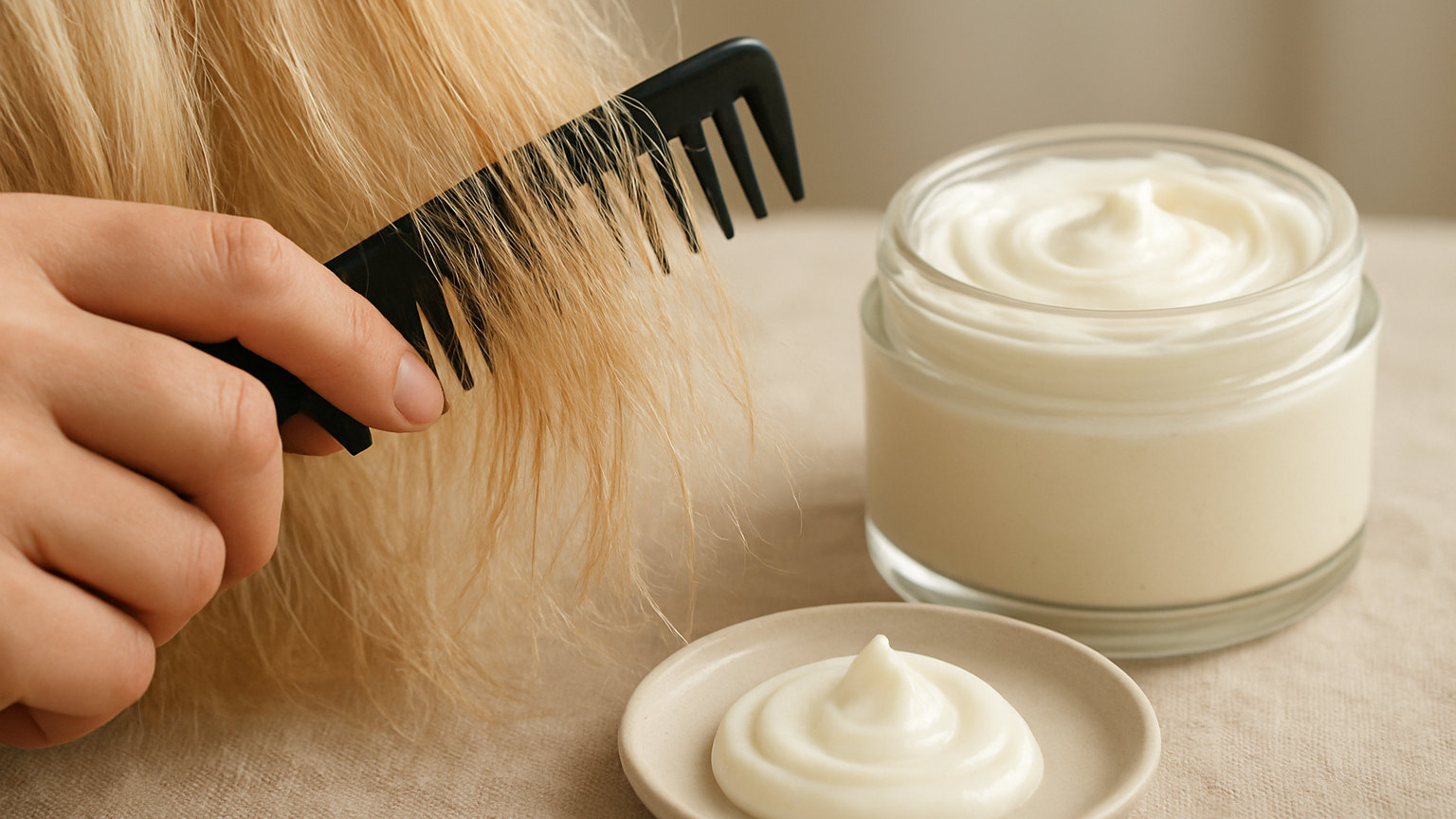
Bleached hair is not ordinary hair that needs more conditioner. Its internal structure has been altered, and a routine that does not account for that will keep failing.
What has actually changed?
Bleach raises the pH to open the cuticle, then oxidises melanin to remove colour. In doing so it degrades keratin and breaks disulphide bonds, the strongest links holding the hair together.
The result is hair that is more porous, weaker, more elastic when wet, and considerably more vulnerable to further damage. It absorbs water fast and loses it fast, which is why it feels rough within hours of conditioning.
None of this reverses. The hair that is bleached remains bleached until it is cut off.
What should the routine look like?
A sulfate-free or gentle shampoo, used on the scalp only, no more often than needed. Lukewarm water throughout.
Conditioner every wash without exception, on the mid-lengths and ends, left for two to three minutes. A leave-in conditioner on damp hair.
A weekly mask, and a bond-building treatment every one to two weeks, which is the one product category that acts on the broken bonds rather than the surface.
A light oil to seal the ends on damp hair.
How do you prevent breakage?
By treating wet hair as fragile, because bleached hair at its weakest is genuinely close to failing.
Detangle with a wide-tooth comb and plenty of conditioner, from the ends upward. Squeeze with a microfibre towel rather than rubbing. Avoid tying it up wet.
Reduce heat substantially, and never straighten damp hair. Sleep on silk or satin and plait loosely.
Space out further bleaching to at least eight to ten weeks, and consider having only the roots done rather than pulling bleach through the lengths again.
What is the gummy stage?
Worth recognising, because it is the point at which hair is failing structurally rather than simply damaged.
Hair that feels gummy, mushy or stretchy when wet, and that snaps rather than returning when gently pulled, has lost too much internal structure. It stretches and does not recover.
No treatment restores hair in that state. Protein and bond builders can hold it together temporarily, and the honest answer is that it needs cutting off before it breaks unpredictably.
How do you manage brassiness?
Brassy warmth appears as underlying red and yellow pigment is exposed and as toner fades. It is accelerated by sun, hard water, chlorine and heat.
Purple shampoo neutralises yellow tones, and it deposits pigment rather than cleaning, so it should be used once a week at most and left on for a few minutes.
Overusing it produces a dull, slightly grey or lilac cast, and it can be drying. Blue-toned products address orange tones in darker blonde and brunette hair.
A chelating shampoo occasionally removes the mineral deposits that cause brassiness in hard water areas, which purple shampoo cannot address.
Does it need protein?
Usually yes, and sparingly. Bleached hair has lost internal protein, and hydrolysed proteins temporarily fill the gaps.
The risk is overload, which makes hair stiff and brittle and causes more breakage. Every four to six weeks is a reasonable starting point, alternating with moisture-focused treatments.
The wet stretch test tells you which is needed: over-elastic and mushy suggests protein, snapping immediately suggests moisture.
Is there a point to growing it out?
For many people, yes. Bleached hair improves only as it is cut off, so a plan matters more than a product.
Options include growing the roots out with a deliberate shadow root or balayage to soften the line, gradually going darker with a semi-permanent colour, or a decisive cut. All three are more effective than trying to maintain heavily bleached lengths indefinitely, which becomes progressively harder as the hair weakens.
How often can you safely bleach?
Roots every eight to ten weeks at most, and never the same lengths twice if it can be avoided. Pulling bleach through previously lightened hair is the single most common cause of severe damage.
Going more than two or three shades lighter in one session is where problems start. A colourist recommending two or three appointments to reach a target shade is giving good advice, and it is the most frequently ignored thing said in a salon.


