
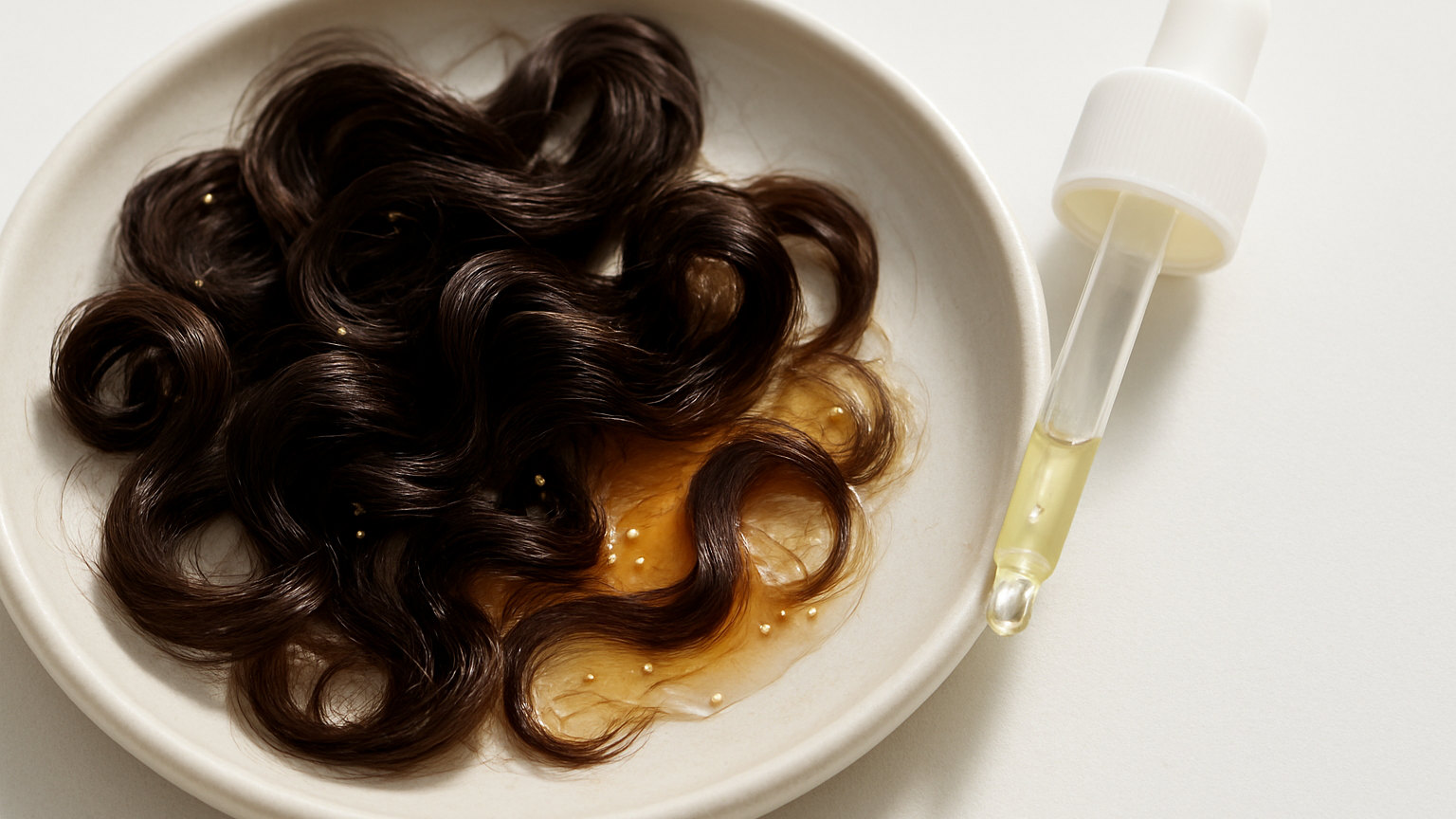
Hair oils divide into two groups with different jobs. A few penetrate the shaft and reduce protein loss; the rest sit on the surface and seal. Knowing which you have makes the difference between an oil that helps and one that weighs hair down.
Which oils penetrate?
Coconut oil is the best studied. Its molecular structure allows it to enter the shaft, and research has found it reduces protein loss when used before washing, which is a genuine and unusual claim in this category.
Avocado and olive oil penetrate to a lesser degree. Sunflower oil does to some extent.
Penetrating oils are most useful applied before shampooing, since they reduce the swelling and protein loss that washing causes. Left on for thirty minutes to a few hours, then washed out.
Which oils sit on the surface?
Argan, jojoba, grapeseed, almond and most others. They coat the shaft, smooth the cuticle, add shine and slow moisture loss.
These are sealing oils, and they belong on damp hair after washing rather than before. Applied to dry hair they lock moisture out rather than in.
Jojoba is technically a liquid wax and closely resembles human sebum, which makes it unusually well tolerated. Squalane is light, stable and suits fine hair that other oils weigh down.
Does coconut oil suit everyone?
No, and it is oversold as universal. It is high in lauric acid, which is why it penetrates, and that same property makes it stiffening for some hair.
People with low-porosity or protein-sensitive hair frequently find coconut oil makes their hair feel hard and brittle. If that describes your experience, it is not that you used it wrong.
It is also comedogenic on facial skin, which matters if it runs down while it sits.
How much should you use?
Far less than most people. Two or three drops for fine hair, up to half a teaspoon for thick or long hair, warmed between the palms first.
Apply to the mid-lengths and ends only. Oil at the roots weighs hair down and contributes to build-up, and for anyone prone to flaking it feeds the yeast involved in seborrhoeic dermatitis.
If hair looks greasy rather than glossy, the amount was wrong rather than the product.
Damp or dry?
Damp, for sealing oils, applied after a leave-in conditioner and before drying. This traps water inside the shaft.
Dry, for a small amount on the ends to add shine and reduce frizz during the day. The quantity should be smaller still.
Before washing, for penetrating oils used as a pre-shampoo treatment.
When does oil make things worse?
On a scalp prone to dandruff, since malassezia feeds on lipids and oiling the scalp is a common way to worsen flaking.
On low-porosity hair, which resists absorption and is easily coated. On fine hair in any quantity.
As a substitute for moisture, which is the most common misunderstanding. Oil contains no water and adds no hydration; it only slows the loss of water already present. Applying oil to dry hair and expecting it to soften is applying the wrong thing.
What about hair serums?
Most are silicone-based rather than oil-based, usually dimethicone or cyclomethicone. They smooth more effectively than natural oils and are lighter.
They coat rather than penetrate, wash out with a clarifying shampoo, and are entirely reasonable to use. The objection to silicones is largely aesthetic, and the practical point is to clarify occasionally so they do not accumulate.
Is there a best oil?
No, and the honest answer is that it depends on porosity, thickness and what you are trying to achieve.
A reasonable default: coconut oil before washing if your hair tolerates it, argan or jojoba on damp ends afterwards, and squalane if everything else feels heavy. Try one at a time, since layering three tells you nothing.
Do oils go off?
Yes, and rancid oil on hair smells stale and can irritate the scalp. Oils high in polyunsaturated fats, including rosehip, grapeseed and flaxseed, oxidise fastest.
Buy small bottles, keep them away from light and heat, and replace anything that smells different from when it was opened. Jojoba and squalane are considerably more stable than most and last far longer, which is a practical advantage over the more fashionable options.


