
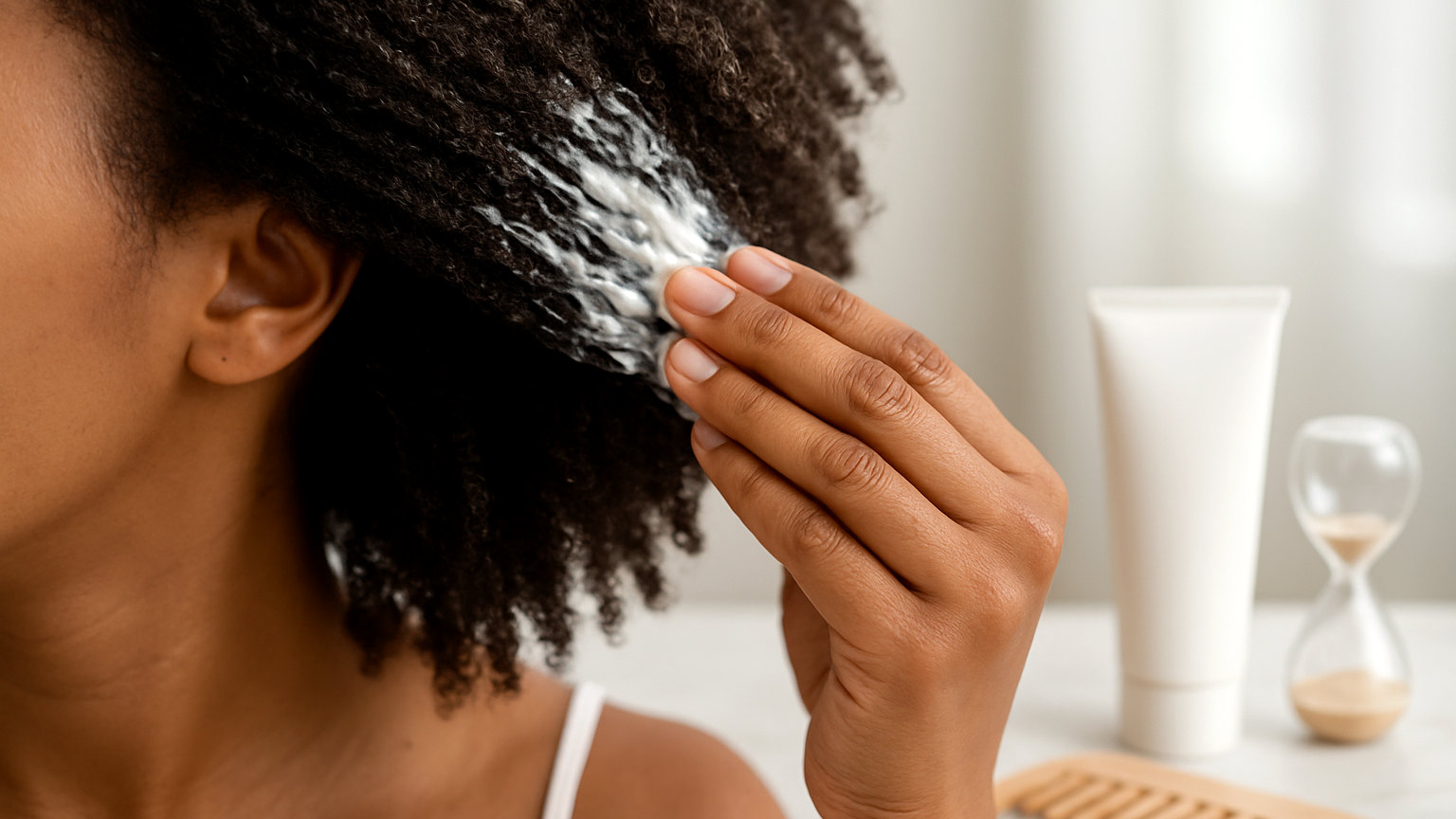
Conditioner does more for how hair looks and behaves than shampoo does, and most of what goes wrong with it is a matter of placement and timing rather than the product itself.
What does conditioner do?
Shampoo leaves the hair cuticle roughened and negatively charged. Conditioner deposits positively charged ingredients that bind to those damaged areas, smoothing the cuticle so it lies flat.
Flat cuticles reflect light, which is shine. They also slide past each other, which is why conditioned hair detangles. And they reduce moisture loss from the cortex beneath.
None of this repairs anything. Hair is dead protein and cannot heal, so conditioning is coating and smoothing rather than restoration, which is a limit worth knowing before buying anything sold as repair.
Where should it go?
Mid-lengths and ends, which are the oldest and most damaged parts of the hair. The last few inches of long hair may be several years old.
Not on the scalp. The scalp produces its own conditioning oil, and conditioner there weighs hair down, contributes to build-up and can cause flaking or itching.
The exception is very dry, curly or coily hair, where the scalp may genuinely need it and where the usual rule can be relaxed.
How long should you leave it?
One to three minutes for a rinse-out conditioner, which is longer than most people manage in a shower.
The binding happens quickly, so leaving a standard conditioner for twenty minutes achieves very little beyond the first few minutes. Deep conditioners and masks are formulated differently and do benefit from five to twenty minutes, sometimes with gentle heat.
Applying it, rinsing immediately, and concluding it does not work is the most common error here.
Should you rinse with cold water?
It helps slightly and is not the transformation it is often described as. Cooler water encourages the cuticle to lie flatter, which improves shine modestly.
The larger benefit is avoiding very hot water, which roughens the cuticle and strips more lipid. Lukewarm throughout with a cooler final rinse is a reasonable compromise that does not require standing under cold water.
What is the difference between the types?
Rinse-out conditioner is the everyday product, used after every wash, left for a minute or two.
Deep conditioner or mask is heavier and used weekly or fortnightly for dry or damaged hair, left for five to twenty minutes.
Leave-in conditioner is lighter still, applied to damp hair and not rinsed, useful for detangling, curl definition and protecting from heat.
Protein treatments are a separate category and work differently, temporarily filling gaps in the cuticle. They suit damaged or over-elastic hair and can make hair brittle if overused.
Can you condition before shampooing?
Yes, and it suits some people well. Reverse washing, conditioning first and shampooing after, leaves less residue and suits fine hair that is weighed down easily.
Pre-shampoo treatments are different again: an oil or mask applied to dry hair before washing, which reduces how much water the hair absorbs and limits the swelling that causes damage. Coconut oil has reasonable evidence for this specific use, since it penetrates the shaft rather than only coating it.
How do you know if you are using too much?
Hair that is limp, greasy at the roots within a day, or feels coated and difficult to style. A scalp that itches or flakes.
Fine hair needs considerably less than thick hair, and the amount on the bottle is a guide rather than an instruction. If hair feels heavy, use less and apply it further from the roots before changing product.
Do you need to rinse it out completely?
Yes, more thoroughly than most people manage. Conditioner left in the hair is one of the most common causes of what people describe as build-up, and it accumulates at the back of the head where rinsing is least thorough.
Rinse for longer than feels necessary, lifting sections and letting water run through them. Hair should feel smooth rather than slippery when you finish. A slippery feel usually means product is still there.


